
Vegetables
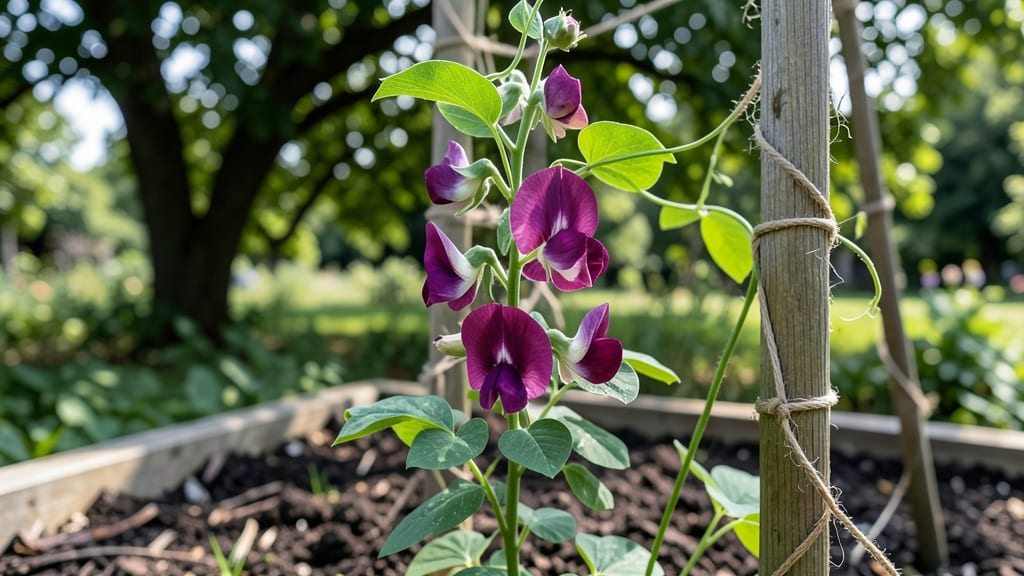
Sweet peas are annuals in most climates but can act as perennials in mild, frost-free winters, regrowing from their roots if protected from hard freezes. Cold-hardy varieties like 'Cupani' extend perennial potential in zones 5-9 with winter mulch.
Sweet peas behave differently depending on your climate—most varieties die back after their first growing season, but in warmer regions, they'll happily return year after year. 🌱 The key difference lies in their tolerance for cold snaps: while standard sweet peas won't survive freezing temperatures, specialized cold-hardy types can endure light frosts with proper care.
This makes them a great option for gardeners in zones 5-9 who want continuous blooms without replanting each spring.
For those in colder areas, overwintering techniques like thick mulching or protective covers can help preserve the roots, allowing the plants to bounce back in spring. The secret lies in protecting the crown—where the roots meet the stem—from freezing temperatures, which is what triggers dormancy in most sweet pea varieties.
💡 In This Article
- Sweet Pea Lifespan: Annual vs Perennial Behavior Explained
- Cold-Climate Sweet Pea Survival Strategies for Gardeners
Sweet pea lifespan: annual vs perennial behavior explained
The distinction between annual and perennial sweet peas comes down to their biological response to temperature. Most sweet pea varieties (Lathyrus odoratus) behave as annuals because their tender roots and stems can't survive freezing temperatures below 25°F.
When frost hits, the plant's cells rupture, killing the above-ground growth and often the roots too—this is why they typically complete their life cycle in one growing season.
However, some varieties like 'Cupani' and 'Perennial Sweet Pea' have evolved to handle milder winters. These types enter a natural dormancy when nights dip below 40°F, allowing their roots to survive underground until spring.
The key mechanism is their ability to store carbohydrates in the roots during summer, which fuels regrowth when temperatures warm again. 🌱 In zones 5-9, this means they can return year after year without replanting.
What most gardeners miss is how frost triggers this behavior. A hard freeze (20°F) will kill even cold-hardy sweet peas, but light frosts (28-32°F) often just shock the plant into dormancy.
The roots remain viable if protected, with studies showing perennial varieties can regrow from just 2 inches of remaining root stock. This is why mulching with 4-6 inches of straw or leaves becomes critical in borderline climates.
Another factor is the plant's growth habit. Perennial-tending sweet peas develop a thicker, woody base called the crown, which acts like a biological battery. This structure can withstand 10-15°F dips if insulated properly, unlike the delicate stems of annual varieties.
The trade-off? Perennial types often bloom later in the season as they prioritize root establishment over early flowering.
For visual comparison, imagine two sweet pea plants side by side: the annual variety will show crispy brown stems after 20°F nights, while the perennial type might just drop its leaves but leave the base green and firm.
This visual cue tells you whether your plant has the genetic potential to return next year. 💫
Interestingly, even annual sweet peas share some perennial traits. All varieties produce a taproot system that can reach 12-18 inches deep, allowing them to access moisture during dry spells.
The difference lies in how this root system handles winter—annuals simply can't survive the cold, while perennials have evolved to protect their energy reserves underground.