
Vegetables
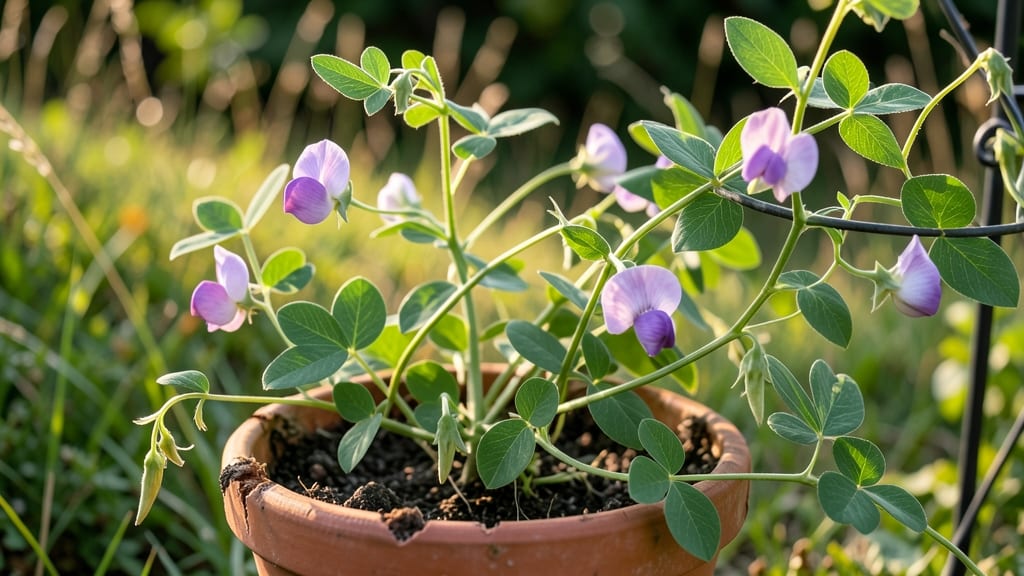
Sweet peas aren't true perennials in most regions, though they often self-seed prolifically and may regrow from roots in mild winter zones (USDA 7-10). Cold snaps typically kill them back to the ground annually, but hardy varieties can survive frost-prone areas with proper protection.
Sweet peas behave like annuals in most gardens because their tender vines and shallow roots can't withstand freezing temperatures. 🌱 That said, their ability to self-seed means you'll often see new plants popping up each spring without replanting.
In colder climates, gardeners can extend their lifespan by choosing hardier varieties or using mulch and cold frames to protect the roots through winter.
What sets them apart from true perennials like asparagus is their growth habit—they focus all their energy on producing flowers and pods rather than storing energy for regrowth. This makes them perfect for cut flower gardens or quick harvests, but not for long-term perennial planting.
💡 In This Article
- Why Sweet Peas Die Back in Cold Climates
- How to Extend Sweet Pea Lifespan in Frost-Prone Gardens
Why sweet peas die back in cold climates
Sweet peas (Lathyrus odoratus) are classified as tender perennials rather than true hardy perennials because their delicate vine structure and shallow root systems simply can't tolerate prolonged freezing temperatures.
Unlike true perennials like clover or comfrey, which develop deep, woody roots and thick stems to survive winter, sweet peas invest their energy in rapid above-ground growth during their short growing season.
Their stems, which can reach 6-8 feet in some varieties, contain minimal stored nutrients and lack the protective bark layer that helps perennials endure frost.
The real vulnerability lies in their root zone, which typically extends only 12-18 inches deep.
When soil temperatures drop below 20°F for more than a few hours, these shallow roots freeze solid, cutting off the plant's access to moisture and nutrients. 🌡️ The vines themselves may survive brief cold snaps if protected, but the root damage is usually irreversible.
Even in mild climates (USDA Zone 8), unexpected late frosts can kill back sweet peas completely, forcing them to rely on self-seeding for the next season's growth.
What makes this especially frustrating is how sweet peas mimic true perennials in their first year. They establish robust vines and produce abundant flowers, creating the illusion of hardiness.
However, their biological strategy prioritizes reproductive success over survival—once they've set seed, their energy reserves deplete, leaving them vulnerable to winter's harshness. This contrasts sharply with perennial vegetables like rhubarb, which allocate resources to both flowering and root storage simultaneously.
Another key factor is their origin in Mediterranean climates, where winters are cool but rarely freeze. When grown in colder regions, sweet peas experience cold shock—a physiological response where cell membranes rupture due to ice crystal formation.
This damage occurs even at temperatures above freezing if the cold persists for days. The result? A plant that looks healthy in summer but collapses under winter's first real test. 🥶
For comparison, consider true perennial vines like clematis or honeysuckle. These plants develop lignified stems (wood-like tissue) and deep taproots that can withstand -15°F or lower. Sweet peas, with their herbaceous stems and fibrous roots, simply lack these adaptations.
Their survival strategy relies instead on quick reproduction—producing thousands of seeds in a single season to ensure genetic continuity, even if the parent plant doesn't make it through winter.
The good news? While sweet peas won't survive winter unprotected in most gardens, their prolific seed production means you'll often find new volunteers popping up each spring. This self-seeding behavior compensates for their lack of true perennial hardiness, creating a natural cycle of renewal that many gardeners find charming.
However, if you want to grow them as reliable perennials, you'll need to implement protective strategies—something we'll explore in the next section.