
Plants
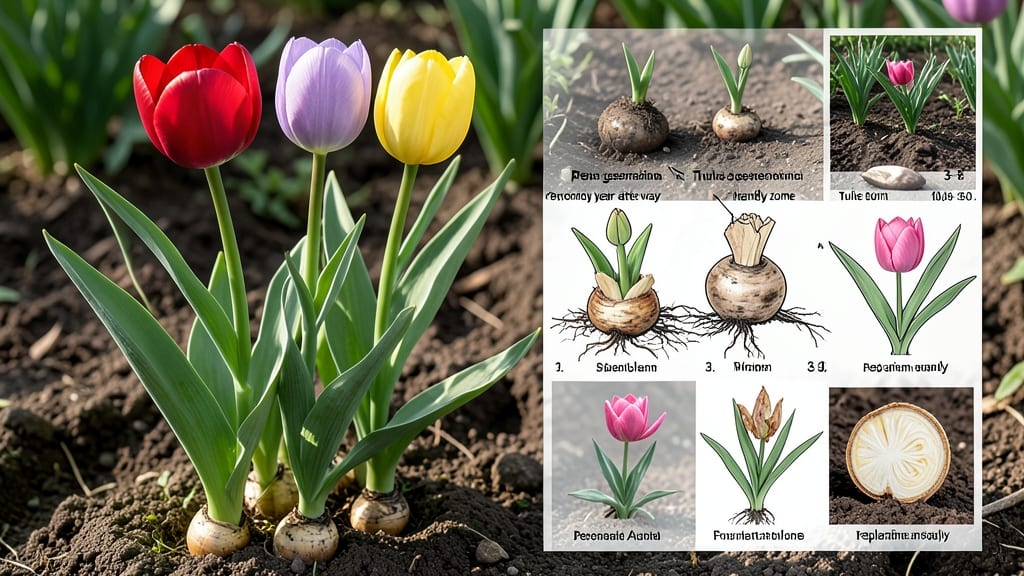
These tulips are perennial plants—they lose their leaves after blooming, but their bulbs stay alive underground, storing energy to regrow each spring with proper care.
Tulips might seem like annuals because their tops wither after flowering, but their underground bulbs act like living batteries. 🌱 These bulbs store all the nutrients they need to push new shoots through the soil next spring, provided they're given enough water and sunlight during their dormant phase.
The key is letting the foliage stay until it turns yellow naturally—this is when the bulb replenishes its energy reserves for another cycle.
Think of it like a rechargeable device: if you unplug it too soon, it won't last. That's why gardeners who cut back tulip leaves too early often see weaker blooms the following year—or no blooms at all.
The foliage might look dead, but it's actually working hard underground to prepare for next season's show.
💡 In This Article
- Why Tulips Die Back Annually Despite Being Bulb Plants
- How to Care for Tulip Bulbs to Maximize Their Perennial Lifespan
Why tulips die back annually despite being bulb plants
Tulips undergo a unique biological cycle where their above-ground parts appear to "die" each year, but their bulbs remain alive underground. This process starts when tulips bloom in spring, using stored energy from the bulb to produce flowers and foliage.
What most gardeners don't realize is that the bulb itself is a living organism that stores carbohydrates, proteins, and water—like a natural battery. During the growing season, the bulb converts sunlight into energy through photosynthesis in the leaves, which is then transported back underground to replenish its reserves.
The foliage plays a critical role in this cycle. While the flowers may wilt and drop, the leaves continue photosynthesizing for 6-8 weeks after blooming, even when they look yellow and crispy. This is when the bulb is actively refilling its energy stores for next year's growth.
If you cut back the foliage too soon, the bulb won't have enough energy to produce strong stems or flowers the following spring.
In fact, studies show that tulip bulbs can lose up to 50% of their energy reserves if the foliage is removed prematurely, leading to weaker or non-existent blooms.
This annual dieback is actually a survival mechanism. Tulips are native to Central Asia, where they evolved to thrive in regions with cold winters and hot, dry summers. The bulbs enter a dormant phase when conditions become unfavorable, conserving energy until spring.
The "death" of the foliage is just part of this natural cycle—it's not the end of the plant's life, but rather a transition to its dormant state. 🌱 What makes tulips perennial in nature is their ability to regenerate from the same bulb year after year, provided they receive proper care during both active and dormant phases.
Here's what's happening underground: The bulb contains specialized cells called "meristematic cells" that can differentiate into new roots, stems, and leaves. During dormancy, these cells remain alive but metabolically inactive, waiting for the right conditions to spring back to life.
This is why tulips can survive for years if given the right care—their bulbs are essentially living time capsules that store everything needed for regeneration.
The confusion often arises because many gardeners associate "perennial" with plants that stay green year-round, like hostas or daylilies. But tulips are what botanists call "geophytes"—plants that store nutrients in underground organs (bulbs, tubers, or rhizomes).
Their annual foliage dieback is a normal part of this adaptation, not a sign of weakness. In fact, some of the oldest recorded tulip bulbs, like those in the Netherlands, have been flowering for over 100 years because of their natural perennial growth cycle.
What most people don't realize is that this dieback cycle is actually more efficient than keeping foliage alive year-round. By shedding their leaves, tulips conserve water and energy during their dormant phase, which is crucial for their survival in harsh climates.
This strategy allows them to bloom spectacularly each spring without the energy drain of maintaining leaves through winter. The key takeaway is that tulips are perennial in the truest sense—they just express their perennial nature differently than other plants.