
Plants
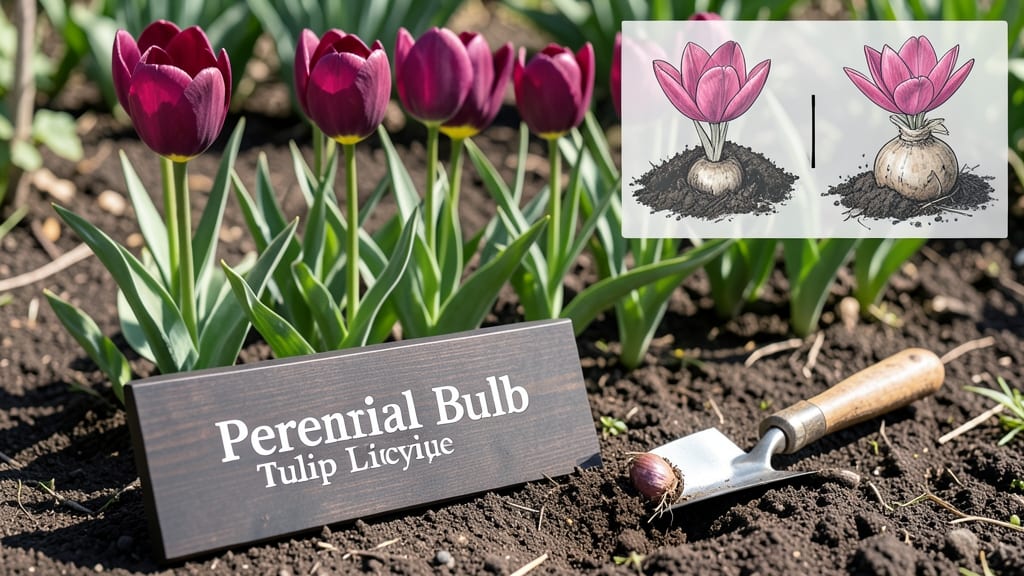
Tulips are perennials that regrow each spring from their dormant bulbs, though they often appear to die back completely after flowering due to their natural lifecycle and seasonal energy conservation.
This perennial behavior might seem confusing because tulips lose their above-ground foliage each fall, but their underground bulbs store energy like a natural battery. 🌱 The key difference between tulips and true annuals is that these bulbs remain viable for years—sometimes even decades—if given proper care.
Many gardeners mistakenly pull them up after flowering, not realizing they'll return stronger with the right conditions.
What sets tulips apart is their ability to bloom more vigorously in their second or third year, provided you don't disturb the bulbs or let the soil dry out completely during dormancy.
The secret lies in their bulb's layered structure, where each layer represents a year's growth—like nature's built-in memory system for regrowth.
💡 In This Article
- Why Tulips Appear to Die Every Year
- How to Extend Tulip Blooms as Perennials
Why tulips appear to die every year
Tulips undergo a carefully timed annual cycle where their above-ground growth wilts after flowering as part of their energy conservation strategy. This process begins when tulips complete their bloom phase, typically lasting 2-3 weeks in spring, after which the leaves gradually yellow and die back.
What most people don't realize is that this isn't death—it's dormancy. The bulb stores nutrients in its layers like a natural battery, converting sunlight into starches during the growing season to fuel next year's growth. 🌱
The bulb's layered structure is key to this survival mechanism. Each scale within the bulb acts as a storage compartment, with newer layers forming annually.
When tulips flower, they're essentially drawing from these reserves, which is why proper leaf care after blooming is critical—the leaves photosynthesize for 6-8 weeks after flowering to replenish the bulb's energy stores. Without this post-bloom care, the bulb weakens and produces smaller flowers over time.
Environmental factors dramatically affect this cycle. Tulips native to temperate climates (USDA zones 3-8) rely on cold winters to break dormancy—a process called vernalization. Without adequate chill hours (12-16 weeks below 40°F), bulbs may fail to bloom or produce weak stems.
Soil moisture also plays a role: bulbs need consistent moisture during growing season but must dry slightly during summer dormancy to prevent rot. This delicate balance explains why tulips often decline in regions with extreme heat or poor drainage.
What makes tulips unique among perennials is their ability to "rebloom" with proper care. Unlike many perennials that decline after 2-3 years, healthy tulip bulbs can produce vibrant flowers for decades. The record? Some heritage varieties have been blooming in Dutch gardens for over 100 years when given ideal conditions.
This longevity comes from their bulb's ability to regenerate new growth points annually from the basal plate at the bulb's base.
Here's what happens when tulips "die back":
- Post-bloom: Leaves yellow as the plant redirects energy to bulb storage
- Summer dormancy: Above-ground parts wither completely while bulbs remain alive underground
- Fall: New roots begin forming as bulbs prepare for spring growth
- Winter: Cold temperatures trigger dormancy break and flower bud formation
The confusion arises because many gardeners remove the foliage too soon after flowering, unaware that the leaves are still working to feed the bulb.
This premature pruning can reduce next year's bloom by up to 50%, making the plant appear to have "died" when it's actually just entering its dormant phase. 💫