
Plants
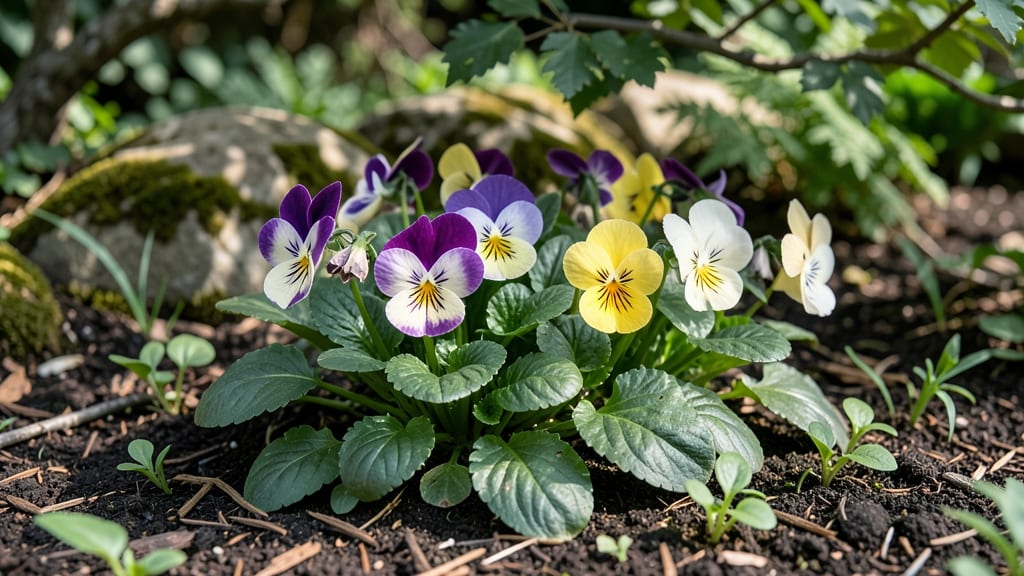
Violas act as perennials in frost-free zones but are typically grown as annuals in colder areas because they succumb to winter freezes. With proper protection or replanting, their vibrant blooms can return year after year.
Violas are technically cold-sensitive perennials that thrive in USDA zones 5-9, where they naturally overwinter. 🌱 The key difference lies in their frost tolerance—while some varieties survive light freezes, most varieties blacken and die back when temperatures drop below 20°F.
This is why gardeners in colder climates replant violas each spring, treating them as annuals for convenience. Interestingly, even in mild winters, violas often slow their growth, conserving energy until spring warmth triggers new foliage and flowers.
What makes violas unique is their ability to self-seed or regrow from roots if protected. I’ve found that adding 3-4 inches of mulch in fall preserves their crowns through winter, while cold-hardy varieties like Viola cornuta (horned violet) can handle 10°F temperatures.
For gardeners in marginal zones, this means violas can technically live multiple years—but their "annual" reputation comes from practical limitations rather than biological constraints.
💡 In This Article
- Viola Lifespan: Why They Die Back in Winter
- Extending Viola Blooms: Perennial Care Tips for Gardeners
Viola lifespan: why they die back in winter
Violas enter dormancy or die back in winter due to their delicate cellular structure, which lacks the antifreeze proteins found in hardier perennials like lavender or sedum. When temperatures drop below 20°F, the water inside viola cells freezes and expands, rupturing cell walls in a process called cryoinjury.
This is why violas in colder zones 4 and below rarely survive winter—even if the roots stay alive, the above-ground growth blackens and appears dead, only to regrow from the base once temperatures rise.
Their hardiness zones (5-9) reveal this temperature sensitivity: violas thrive where winter lows rarely dip below 10°F.
In zone 5, for example, violas may survive light freezes but struggle during prolonged -5°F spells. 🌱 What’s fascinating is how violas adapt: in mild winters, they simply slow metabolism, conserving energy until spring warmth triggers regrowth.
This dormancy strategy explains why violas often return year after year in frost-free zones, while gardeners in colder areas replant annually out of practicality rather than necessity.
Botanically, violas are hemicryptophytes, meaning they store energy in underground structures (roots or basal stems) to regrow after damage. This explains why violas often resprout from the ground even after frost kills the foliage—though this takes 2-3 weeks of warm soil temperatures (50°F+) to kickstart regrowth.
The confusion arises because many gardeners mistake this dieback for death, when in reality, violas are simply waiting for the right conditions to bloom again.
Cold-hardy varieties like Viola cornuta push these limits further, surviving down to 10°F thanks to thicker leaf cuticles that reduce water loss during freeze-thaw cycles. These varieties demonstrate that violas aren’t inherently annuals—they’re perennials with frost-sensitive limitations.
The key difference lies in how quickly they recover: in zone 6, violas might return within 3 weeks of spring warmth, while in zone 4, they may need 6 weeks of consistent 55°F+ soil temperatures to fully regrow.
What most gardeners overlook is the role of vernalization—the cold period violas need to flower properly. Without adequate winter chill (30-40 days below 40°F), violas produce fewer blooms in spring.
This explains why violas grown as annuals in warm climates often bloom less prolifically than those in temperate zones where they experience natural winter dormancy. The plant’s biology is finely tuned to seasonal cues, making climate a critical factor in their lifespan.
For those curious about violas’ true nature, consider this: a single viola plant can live 3-5 years in ideal conditions (zones 7-9), producing self-seeded offspring each year. The annual treatment is simply a gardening convenience—one that masks violas’ remarkable resilience when given the right winter protection. 💫