
Flowers
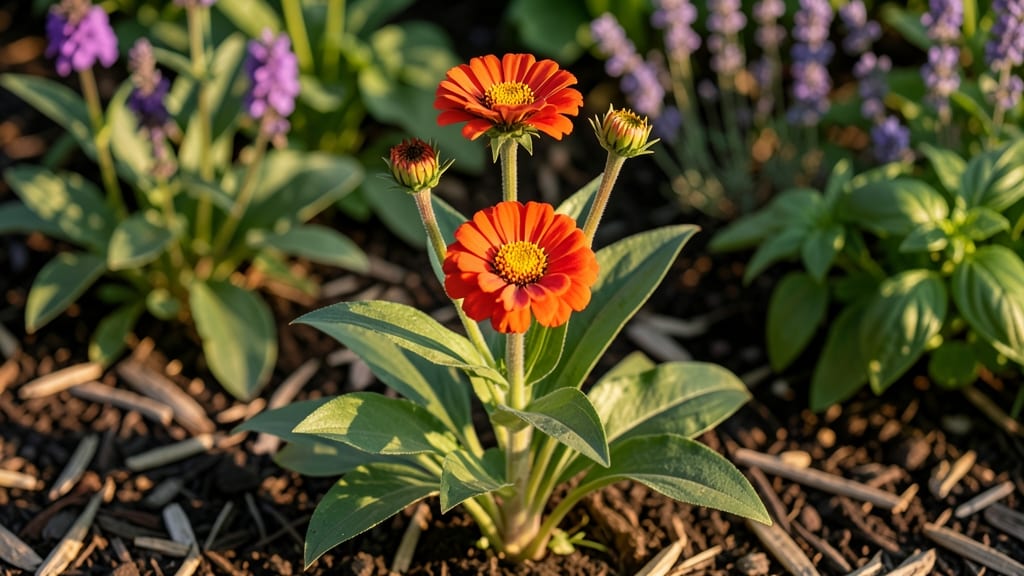
Zinnias are not perennials in most climates—they thrive as annuals, dying back after frost. However, in USDA hardiness zones 9-11, they may overwinter as tender perennials with proper care and mulching.
Zinnias are classified as annuals in most regions because they can't survive freezing temperatures—once frost hits, their delicate stems and leaves blacken and die. 🌱 Unlike hardy perennials like lavender or peonies, zinnias lack the deep root systems or protective mechanisms to endure winter's chill.
That said, in warmer zones (9-11), their growth cycle can stretch across multiple seasons with the right protection, like thick mulch or even bringing potted plants indoors during cold snaps.
What makes zinnias unique is their ability to self-seed prolifically. Even in colder climates, dropped seeds often sprout fresh plants the following spring, giving the illusion of perennial behavior. This natural reseeding is why many gardeners swear zinnias "come back" every year—though technically, each plant only lives one growing season.
For those in frost-prone areas, extending zinnias' lifespan comes down to two strategies: either grow them as annuals each year (which is simplest) or collect seeds from mature plants to start indoors before last frost.
Varieties like 'Profusion' or 'Benary's Giant' are particularly cold-tolerant, sometimes surviving light frosts better than other types.
💡 In This Article
- Why Zinnias Die in Cold Climates
- Extending Zinnia Lifespan in Cold Regions
Why zinnias die in cold climates
Zinnias belong to the Asteraceae family, and their botanical structure makes them highly sensitive to frost. Unlike true perennials such as coneflowers or black-eyed Susans, zinnias lack the deep, woody root systems that store energy for regrowth.
Instead, their fibrous roots are shallow and specialized for rapid growth during warm seasons. When temperatures drop below 32°F, the cell membranes in zinnia stems and leaves rupture, causing irreversible damage.
This sensitivity is why even a light frost turns their vibrant petals into a mushy, blackened mess within hours.
The contrast with hardy perennials becomes clear when comparing their growth cycles. True perennials like peonies or hostas develop thick, insulated root crowns that can survive -20°F or colder. Zinnias, however, prioritize above-ground blooms over winter survival—their energy goes into producing 100-200 seeds per plant rather than storing carbohydrates underground.
This trade-off explains why they thrive as annuals: their entire lifecycle is compressed into a single growing season, from seed to bloom to seed production.
What’s fascinating is how zinnias’ annual strategy aligns with their native habitat. Originating in Mexico and the southwestern U.S., these plants evolved in regions where winter dormancy isn’t necessary. Their rapid growth—some varieties mature in just 60-70 days—lets them complete their life cycle before summer’s end.
In colder climates, this adaptation backfires: zinnias simply don’t have the biological tools to pause and regrow like their perennial counterparts.
Even their leaves betray their frost intolerance. Zinnia foliage contains high moisture content, which freezes and expands, creating ice crystals that rupture cell walls. True perennials, by contrast, have thicker, waxier leaves that resist moisture loss and frost damage.
This is why zinnias wilt dramatically after even a light frost—unlike coneflowers, which might just drop their blooms but keep their stems upright.
There’s a silver lining, though: zinnias’ annual nature makes them incredibly resilient in other ways. Their prolific seed production means they often self-sow aggressively, creating the illusion of perennial behavior.
In fact, many gardeners in colder zones swear their zinnias “come back” year after year—what they’re really seeing is fresh seedlings sprouting from seeds dropped the previous fall. This natural reseeding is why zinnias remain a favorite for cut flowers and pollinator gardens, despite their frost sensitivity.
For those curious about the science, zinnias’ annual lifecycle is a classic example of r-selected species—plants that invest energy in rapid reproduction rather than longevity. Their bright colors and abundant blooms are evolution’s way of attracting pollinators to maximize seed production before the first frost.
In contrast, perennials like black-eyed Susans (Rudbeckia hirta) prioritize survival over speed, storing energy in roots to regrow year after year.