
Plants
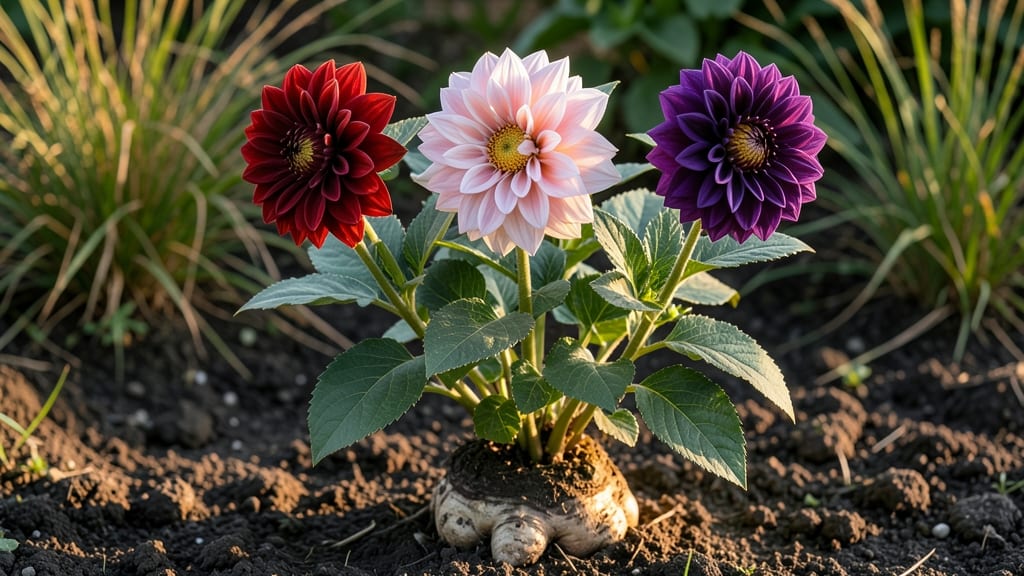
Dahlias are perennials in warm climates but typically treated as annuals in colder zones, since their tubers freeze and die back when temperatures drop below 20°F. With proper overwintering care—digging, curing, and storing—they can regrow for multiple seasons.
Here's why this matters: Dahlias are hardy perennials in USDA zones 8-11, where they naturally regrow each spring from their underground tubers. 🌱 In colder regions, though, frost kills the tops and roots, leaving only the dormant tubers.
The key to treating them as perennials lies in protecting those tubers—whether by storing them indoors or mulching heavily in the ground. Many gardeners mistakenly toss out their dahlias after the first frost, not realizing they could bloom again next year with a little extra effort.
What sets dahlias apart from true annuals is their tuber system. Unlike plants that complete their entire life cycle in one season, dahlia tubers store energy underground, allowing them to regenerate when conditions improve. This makes them semi-perennials—perennial in warm climates but requiring human intervention to survive colder winters.
💡 In This Article
- Why Dahlias Die Back in Cold Climates
- How to Overwinter Dahlias for Next Year’s Blooms
Why dahlias die back in cold climates
Dahlias enter dormancy when temperatures drop below 50°F, triggered by shorter daylight and cooler air. Their tubers—thickened underground stems—are freeze-sensitive, with most varieties dying back when exposed to 20°F or colder.
Unlike true annuals, which complete their life cycle in one season, dahlias store energy in these tubers, allowing them to regrow when conditions warm again. 🌱
The root system plays a critical role: dahlias develop a crown (where stems meet roots) that produces new shoots in spring. In cold climates, the above-ground foliage and roots freeze, but the tuber remains dormant.
This is why gardeners in USDA zones 3-7 must dig up tubers before frost—without intervention, the entire plant "dies" until the next growing season.
Climate zones 8-11 are where dahlias thrive as true perennials. Here, winter temperatures rarely drop below 30°F, allowing tubers to survive in the ground with minimal mulch protection.
In contrast, zones 4-7 experience harsh winters, forcing gardeners to mimic the plant's natural dormancy cycle by storing tubers indoors at 35-45°F and 50-70% humidity until spring.
What makes this unique is the tuber's ability to regenerate. Even after months of dormancy, a healthy tuber can produce multiple stems when replanted. This explains why some gardeners report dahlias blooming for 5-10 years with proper overwintering—far beyond the one-season lifespan of annuals like marigolds or zinnias.
One key difference from true annuals is the tuber's energy reserves. Annuals allocate all resources to seed production before dying, while dahlias redirect nutrients to their tubers. This adaptation lets them "reset" each year, provided the tubers aren't damaged by frost or improper storage. 💫
For example, in zone 5, where winters average 10°F, gardeners must dig tubers before the first hard frost (typically by mid-October**). Leaving them in the ground risks tuber rot from freeze-thaw cycles, which can kill the plant permanently.
This biological quirk is why dahlias are called "semi-perennials"—they behave like perennials in mild climates but require human intervention elsewhere.