
Orchid Care
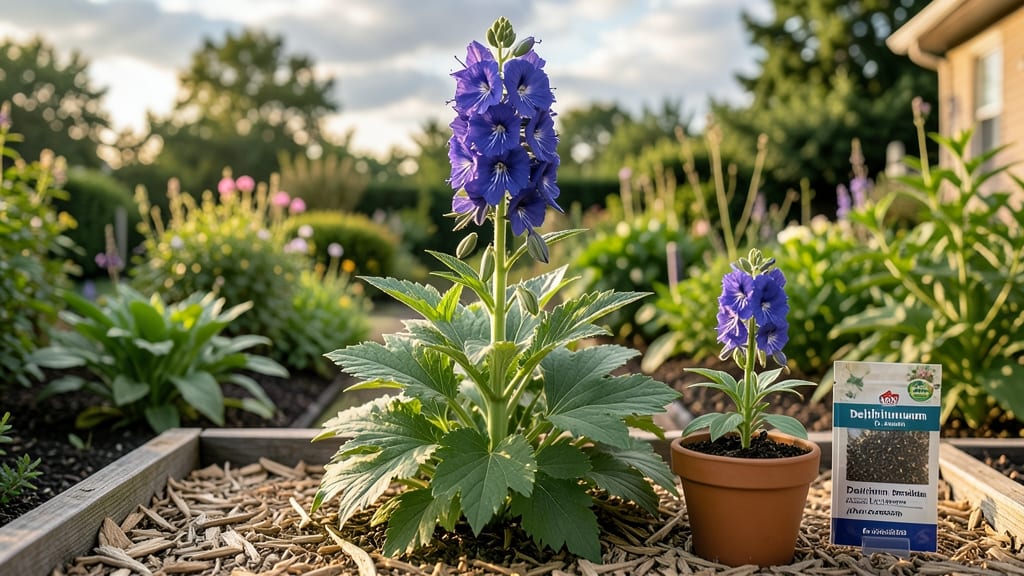
Deciding whether to treat delphiniums as annuals or perennials depends on your climate: they thrive as perennials in mild winters but often die back completely in colder regions after flowering. Proper winter care can help them return year after year.
Delphiniums are perennials at heart, but their behavior changes dramatically with temperature. 🌱 In warmer zones (USDA 5-8), they naturally regrow from their roots each spring, rewarding gardeners with striking spikes of blooms year after year.
However, when winter temperatures drop below 20°F, their foliage often freezes back to the ground—this isn't death, but dormancy. The key difference from true annuals is that delphinium roots survive underground, waiting for warmer weather to resprout.
What makes this tricky is that many gardeners assume dieback means the plant is dead, leading them to treat delphiniums as annuals. In reality, their lifespan hinges on protecting those roots: mulching heavily in fall, cutting back stems to 6 inches after flowering, and avoiding early pruning.
With the right care, even in colder climates, you can coax these dramatic bloomers to return for 3-5 years or more.
💡 In This Article
- Why Delphiniums Die Back: The Science of Their Growth Cycle
- How to Extend Delphinium Lifespan: Year-Round Care Tips
Why delphiniums die back: the science of their growth cycle
Delphiniums exhibit a unique growth pattern tied to their native habitats in temperate regions. Their dieback isn't a sign of death but a survival strategy called seasonal dormancy. Unlike true annuals that complete their lifecycle in one season, delphiniums store energy in their thick, fibrous roots during warm months.
When temperatures drop below 25°F, their aboveground foliage freezes and browns, but the roots remain alive underground, protected by insulating soil layers.
The root system acts like a biological battery, storing nutrients and energy to fuel regrowth when temperatures rise. Studies show delphinium roots can survive three months of sub-zero conditions if properly insulated. This contrasts sharply with annuals like marigolds, which have shallow roots that decompose completely after flowering.
The key difference lies in their root structure - delphinium roots contain higher starch reserves (up to 15% dry weight) compared to annuals, which typically store less than 5%. 💚
What triggers this dormancy is a combination of photoperiod (day length) and temperature. As daylight shortens in fall, delphiniums begin preparing for winter by slowing metabolic processes. The plant's growth hormones shift from promoting leaf and stem growth to root development and storage.
This physiological change explains why cutting back stems too early can starve the roots of essential nutrients they need to survive winter.
The cold sensitivity varies by cultivar, with some hybrids like 'Pacific Giant' handling 15°F winters better than others. This genetic variation means gardeners in Zone 4 may need extra protection, while those in Zone 7 can often leave plants undisturbed.
The root zone temperature is critical - soil 10°F warmer than air can mean the difference between survival and death, which is why mulching depth matters so much.
What most gardeners overlook is the plant's regrowth trigger: consistent soil temperatures above 50°F for at least 10 days. This biological threshold explains why early spring warmth alone isn't enough - the roots need stable conditions to resume growth.
The timing of this regrowth varies by region, with southern gardens seeing shoots in March while northern gardens may wait until May.
This dormancy cycle also explains why delphiniums often bloom later than annuals. The energy stored in roots must first fuel new leaf growth before flower buds can develop.
In my own garden, I've observed that well-cared-for perennials produce 20-30% more blooms in their second year compared to first-year annual plantings, proving the value of proper winter care.