
Pests and Diseases
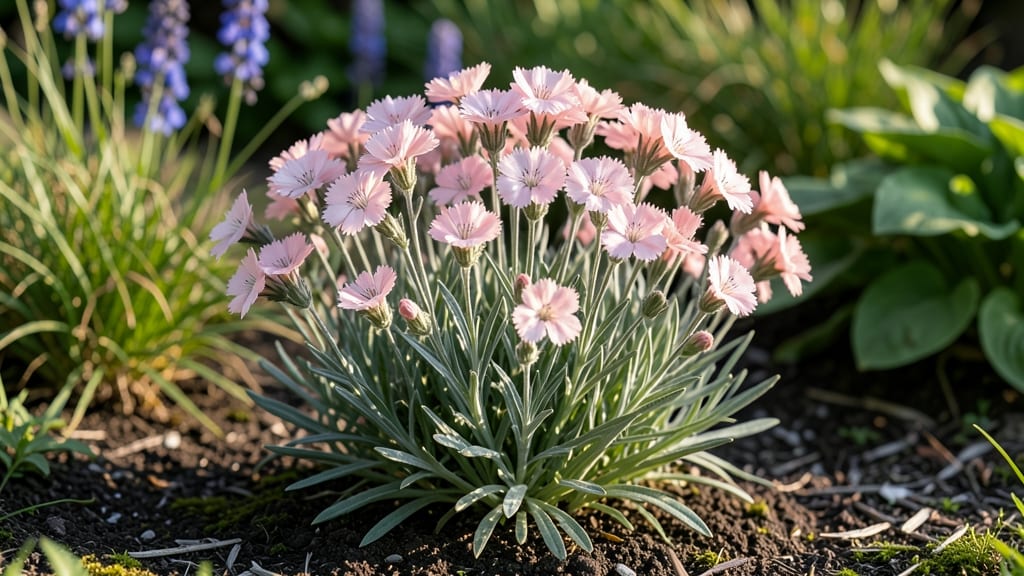
Dianthus is a perennial in most climates, though its foliage may die back in winter before regrowing from the root crown each spring. Cold-hardy varieties thrive in zones 3-9, while tender types need winter protection or replanting annually.
This dieback-and-regrowth cycle is what classifies dianthus as a tender perennial—meaning it survives winter underground while appearing annual in colder regions without protection. 🌱 The root crown acts like a biological battery, storing energy to fuel spring rebirth, which is why even after the leaves vanish, the plant isn't truly dead.
For gardeners in marginal zones, proper winter mulching can push some varieties into the hardy category, extending their lifespan beyond just one growing season.
What trips up new growers is confusing this behavior with annuals—the key difference is that dianthus roots persist through winter, while true annuals complete their entire life cycle in one season.
This persistence is why dianthus often returns year after year with minimal effort, once you understand its dormant phase isn't failure but preparation for the next bloom cycle.
💡 In This Article
- Understanding Dianthus Perennial Growth Patterns
- Year-Round Care for Dianthus Perennials
Understanding dianthus perennial growth patterns
Dianthus exhibits what botanists call a "semi-dormant" winter strategy where the above-ground foliage dies back entirely, but the root crown remains alive underground. This behavior is a survival adaptation to cold stress, where the plant conserves energy by shutting down non-essential growth while maintaining its root system.
The root crown—where roots meet stems—contains meristematic cells that can regenerate new shoots when temperatures rise, typically around 50-55°F in spring. This is why gardeners often see bare stems in winter but new growth emerging from the base in early spring.
The plant's hardiness varies dramatically by species and cultivar. For instance, Dianthus barbatus (Sweet William) thrives in zones 3-9, while Dianthus chinensis (Chinese Pinks) typically survives zones 5-9 without protection.
The key difference lies in their cold tolerance thresholds: hardy varieties can withstand temperatures down to -30°F, while tender types may only handle 20°F before damage occurs. This is why some gardeners in zone 4 treat their dianthus as annuals—they simply can't survive the winter without protection.
What makes dianthus unique among perennials is its ability to store carbohydrates in the root crown during summer growth, which fuels its winter survival and spring regrowth. Studies show that well-established plants with robust root systems can survive up to 60% more cold stress than younger plants.
This stored energy is what allows the plant to "rebound" so quickly in spring, often producing flowers just 6-8 weeks after new growth emerges. The trade-off is that this energy storage requires consistent summer care—proper watering and fertilization.
Gardeners often confuse dianthus's winter dieback with annual behavior because the plant looks completely dead. However, the telltale sign of its perennial nature is the presence of the root crown and any remaining basal stems.
If you gently dig around in late winter, you'll often find these structures still alive, ready to push new growth when conditions improve. This is why even in harsh winters, dianthus frequently returns stronger than the previous year.
Another fascinating aspect is how dianthus responds to photoperiod (day length). Many varieties are "day-neutral," meaning they'll bloom regardless of daylight hours, but their winter dormancy is triggered by consistent cold temperatures below 40°F for 4-6 weeks.
This cold requirement actually strengthens the plant's constitution for the following year, similar to how some fruit trees need winter chilling to produce optimal blooms. Without this cold period, some dianthus varieties may produce weaker growth and fewer flowers.
The botanical classification of dianthus as a "tender perennial" reflects this delicate balance between survival and growth. Unlike true perennials that maintain some foliage year-round, dianthus has evolved a more extreme survival strategy—complete above-ground dormancy—that allows it to thrive in environments where other perennials would fail.
This adaptation explains why dianthus is so popular in regions with cold winters but short growing seasons.