
Flowers
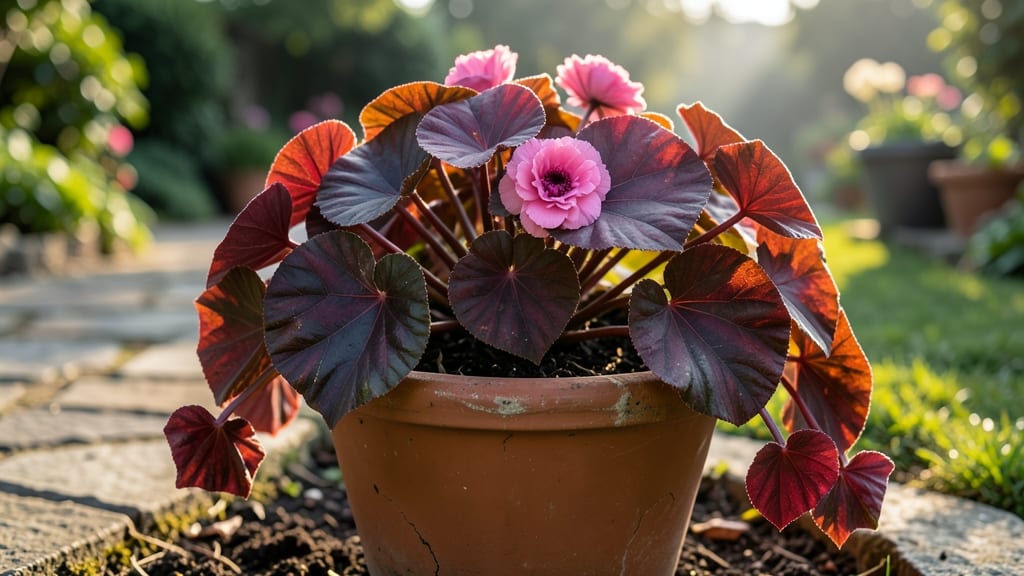
Whether Dragon Wing Begonia acts as a perennial or annual depends on your climate: it thrives year-round in warm zones but dies back in frost, though roots can survive for replanting in spring.
This tropical plant loves warmth and struggles when temperatures dip below 50°F.
In colder regions, gardeners often treat it as an annual because the foliage blackens with frost, but the roots can remain dormant underground until spring. 🌱 I’ve seen it bounce back when replanted after winter—just give it a few weeks indoors before moving it back outside in spring.
The key is protecting those roots during freezing months, whether through mulching or container overwintering.
In frost-free zones (USDA 10+), Dragon Wing Begonia grows continuously, producing vibrant foliage year-round with proper care. The difference comes down to temperature tolerance: while it can handle brief chills, sustained cold kills the plant back to the ground.
That’s why many gardeners in colder areas bring potted specimens inside before winter or grow them as seasonal bedding plants.
💡 In This Article
- Dragon Wing Begonia’s Lifespan in Different Climates
- Extending Dragon Wing Begonia’s Life in Cold Regions
Dragon Wing Begonia’s lifespan in different climates
The Dragon Wing Begonia’s classification as a perennial or annual hinges on your USDA hardiness zone. In zones 10-12 (average minimum temperatures above 30°F), this plant behaves as a true perennial, growing continuously with minimal stress.
Its thick, waxy leaves and fibrous root system allow it to thrive in warm, humid conditions year-round, much like its tropical cousins. The plant’s natural dormancy isn’t triggered, so it maintains vibrant growth without needing seasonal rest periods.
In contrast, zones 7-9 (where winters dip to 0-20°F) present challenges. While the foliage may die back with frost, the roots often survive if insulated by 4-6 inches of mulch or soil.
This is because Dragon Wing Begonia stores energy in its root crown during cooler months, similar to how daylilies or cannas prepare for winter.
However, prolonged exposure to freezing temperatures (28°F or lower) can kill even the roots, which is why many gardeners in these zones treat it as an annual.
The plant’s sensitivity to cold stems from its tropical origins. Dragon Wing Begonia evolved in Southeast Asia’s warm climates, where temperatures rarely drop below 55°F. Its leaves contain high moisture content (up to 85% water), which freezes and ruptures cell walls when exposed to frost.
This is why you’ll notice the foliage turning black and crispy after just 24 hours of sub-32°F temperatures—it’s not just wilting, but undergoing cellular damage.
What’s fascinating is how the plant’s growth cycle adapts. In warm climates, it grows continuously, producing new leaves and stems throughout the year. But in cooler regions, it enters a semi-dormant state where growth slows dramatically.
The roots remain active just enough to sustain themselves, ready to sprout new shoots as soon as soil temperatures rise above 55°F in spring. This adaptive behavior explains why many gardeners can successfully replant cuttings or divisions from overwintered roots.
For those in zones 5-6 (where winters can drop below -10°F), the challenge is greater. Here, even the roots struggle to survive without protection. The plant’s natural cold tolerance tops out at about 28°F for short durations, which is why container growing becomes essential.
When potted, you can easily move Dragon Wing Begonia indoors before the first frost, giving it a fighting chance to regrow in spring.
Consider this comparison: In Miami (zone 10), a Dragon Wing Begonia might live for 5+ years with minimal care, while in Chicago (zone 5), it’s typically treated as an annual unless you take active overwintering measures.
The difference comes down to how well you can mimic its native tropical environment during colder months. 🌿