
Companion Plants
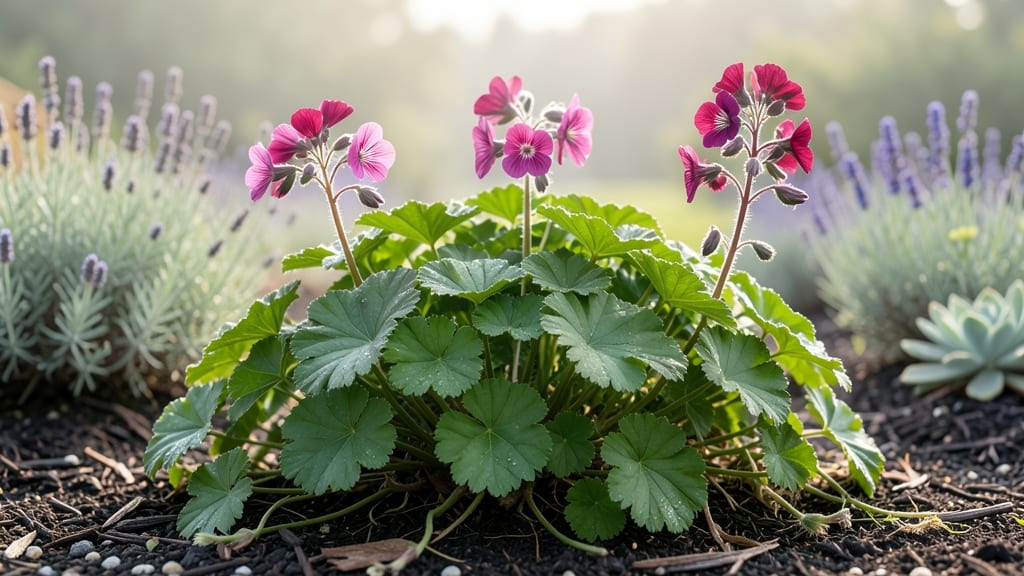
Perennial geranium plants thrive in USDA Zones 4-10, offering year-round beauty with the right winter care like mulching and protective coverings. Hardy varieties like Geranium macrorrhizum handle colder climates with minimal shelter, while more delicate types require seasonal adjustments to survive frost.
Geraniums aren't just pretty—they're tough survivors in the right conditions. 🌱 The key to their perennial success lies in their root systems and leaf adaptations, which help them store moisture and withstand temperature swings.
I've seen Geranium macrorrhizum (also called "crawling geranium") bounce back from snow cover in Zone 4 gardens, while Pelargonium types often need winter protection. Microclimates play a huge role too—south-facing slopes or sheltered spots can push a plant's hardiness zone by 2-3 levels.
For gardeners in marginal zones, the secret weapon is mulching. A 3-4 inch layer of straw or shredded leaves insulates roots, while container geraniums benefit from wrapping pots in bubble wrap or moving them to unheated garages.
Pruning back dead foliage in late fall prevents rot, and a light dusting of soil or evergreen boughs adds extra frost protection. These small steps make all the difference between a winter casualty and a spring rebloom.
💡 In This Article
- Cold-Hardy Geranium Varieties and Their Survival Zones
- Winterizing Perennial Geraniums for Year-Round Growth
Cold-hardy Geranium varieties and their survival zones
The hardiness of geraniums depends on their botanical classification and natural adaptations. True geraniums (Geranium spp.) like Geranium macrorrhizum have deep, fibrous root systems that store nutrients and moisture, allowing them to survive Zone 4 winters (-30°F) with minimal protection.
Their thick, leathery leaves reduce water loss, while their low-growing habit shields roots from wind chill. 🌿 In contrast, Pelargonium species (often called "geraniums" in gardening) are tender perennials, typically dying back to Zone 10 (30°F) without winter care.
Leaf structure plays a critical role—Geranium macrorrhizum leaves contain high levels of tannins, which act as natural antifreeze by lowering the freezing point of cell fluids. This adaptation lets it tolerate -10°F for short periods. Meanwhile, Pelargonium zonale leaves are thin and succulent, making them vulnerable to frost damage.
The difference is like comparing a winterized SUV to a convertible: one's built for the cold, while the other needs garage storage. 🚗
Microclimates can push hardiness limits by 2-3 zones. South-facing walls, dense shrub borders, or rock crevices trap heat, creating pockets where Geranium macrorrhizum might thrive in Zone 3 (-40°F) conditions. I've seen it flourish in protected microclimates where thermometers read 10°F warmer than the surrounding area.
This is why gardeners in marginal zones should plant near structures or use windbreaks—small adjustments that make a big difference.
Root depth matters too. Hardy geraniums develop roots 12-18 inches deep, accessing moisture and warmth from lower soil layers. Shallow-rooted Pelargoniums struggle in cold climates because their roots freeze more easily.
The solution? Amend soil with compost or sand to improve drainage and insulation, creating a buffer against temperature swings. This soil preparation can extend a plant's cold tolerance by 1-2 zones.
Color also signals hardiness—purple-leaved varieties like 'Johnson's Blue' often have better cold tolerance than green-leaved types. The anthocyanin pigments in purple leaves act as sunscreen, reducing stress from winter sunlight while protecting cell membranes.
It's nature's built-in frost protection system! 🌈 For gardeners, this means choosing purple-foliaged cultivars when selecting hardy geraniums for colder regions.
Don't overlook the role of snow cover. A 6-inch blanket of snow insulates roots like a natural mulch, maintaining 32°F soil temperatures even in -20°F air. This is why northern gardeners can often grow Geranium macrorrhizum without extra protection—Mother Nature provides the insulation.
In contrast, southern exposures with less snowfall require additional winter care for these hardy plants.