
Flowers
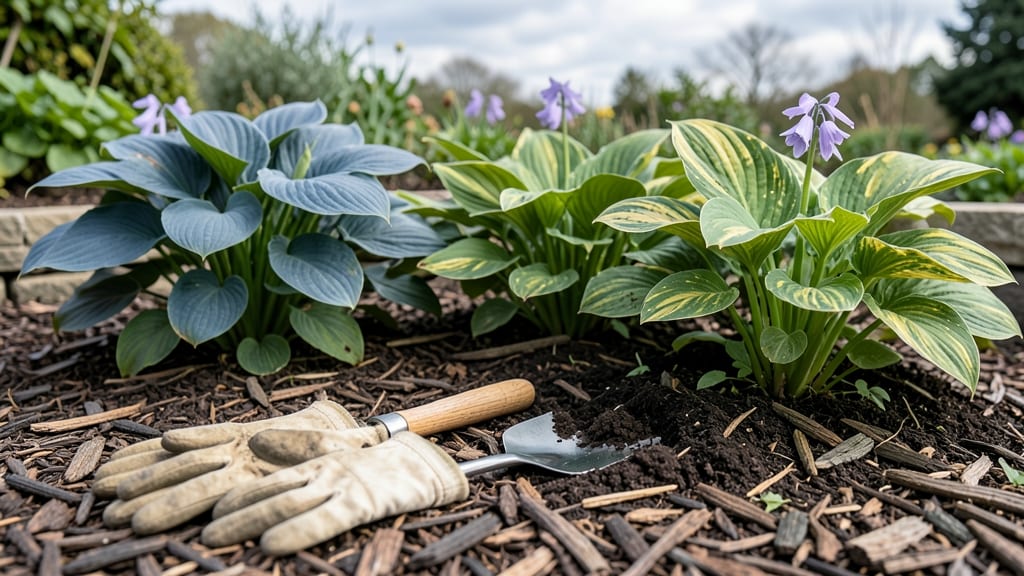
Hostas are perennial plants that regrow every year from underground rhizomes, making them long-lived garden favorites rather than annuals that die after one season.
Hostas earn their reputation as garden workhorses thanks to their underground storage system.
Unlike annuals that sprout, bloom, and die in a single season, hostas store energy in their thick rhizomes during winter. 🌱 This allows them to push fresh shoots through the soil as soon as temperatures rise, often within weeks of spring's arrival.
Their ability to thrive in partial shade—where many plants struggle—also sets them apart from most annuals that demand full sun.
What makes this particularly useful for gardeners is how hostas mature over time. A well-established plant can grow larger each year, developing broader leaves and more dramatic foliage patterns.
This progressive growth is a dead giveaway that you're dealing with a perennial, not an annual that would need replanting annually. The key visual clue? Look for established clumps with multiple growth points—this is the rhizome system at work.
💡 In This Article
- How Hostas Survive as Perennials Through Winter
- Signs Your Hostas Are Thriving as Perennials
How hostas survive as perennials through winter
Hostas' perennial survival strategy begins with their specialized rhizome system, which acts like a natural storage battery. These thick, horizontal underground stems store carbohydrates, nutrients, and moisture during dormancy.
Unlike annuals that rely solely on seeds for regeneration, hostas preserve their entire growth structure underground, allowing them to regenerate each spring. 🌱 The rhizomes contain specialized cells called parenchyma that swell with stored starches—similar to how potatoes store energy—providing the fuel needed for new growth.
Temperature plays a critical role in this process. Hostas thrive in USDA hardiness zones 3-9, meaning they can withstand winter temperatures down to -30°F in their dormant state. When temperatures drop below 50°F, hostas enter dormancy, shedding their leaves while the rhizomes remain active.
This adaptation differs dramatically from annuals, which complete their entire life cycle in one growing season and cannot survive freezing temperatures. The rhizomes' protective layer of cells also prevents dehydration, allowing them to remain viable even during dry winters.
What's fascinating is how hostas manage their energy reserves. During the growing season, they allocate 30-40% of their photosynthetic energy to building rhizome mass, while annuals invest everything in seed production.
This energy storage explains why established hostas can produce larger foliage each year—each rhizome node contains dormant buds that can sprout into new plants. 🌿 This progressive growth pattern is a clear indicator of their perennial nature, as annuals would need to be replanted every year to maintain similar displays.
The leaf dormancy process is equally sophisticated. As temperatures drop, hostas trigger a hormonal response that causes chlorophyll breakdown, turning leaves yellow or brown before they fall. This isn't just random decay—it's an energy conservation strategy where nutrients are systematically transported back to the rhizomes.
The remaining leaf bases form a protective collar around the emerging shoots in spring, shielding them from late frosts and pests. This multi-layered survival mechanism is why hostas can persist for decades in the same location, unlike annuals that must be replanted annually.
Consider the case of a 10-year-old hosta plant in zone 5. While annuals would have completed their life cycle 10 times over, this hosta would have built a complex rhizome network with dozens of growth points, capable of producing foliage up to 2 feet wide.
The plant's ability to expand its rhizome system each year—adding new growth points—demonstrates its perennial advantage. This progressive development is impossible for annuals, which must start from seed each season with no accumulated growth structure.
The cold hardiness factor also explains why hostas thrive in shaded gardens where many annuals fail. While annuals often require full sun to complete their rapid life cycle, hostas can photosynthesize efficiently in 20-50% shade conditions, storing energy gradually for winter survival.
This adaptability is built into their perennial growth pattern, allowing them to flourish where annuals would struggle to establish. 🌿