
Aphids
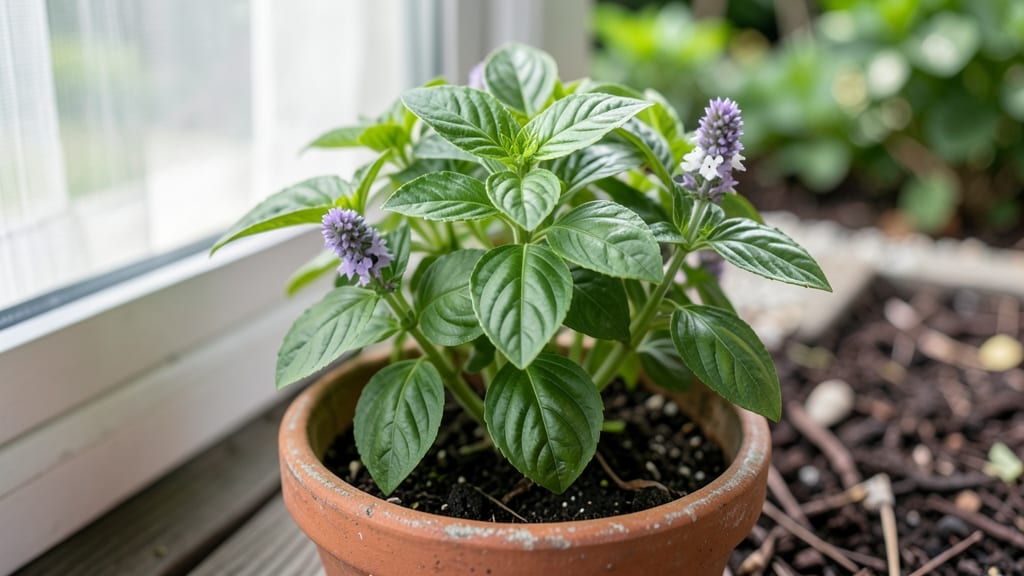
Is basil a perennial? It thrives as a perennial in warm, frost-free climates but acts like an annual in colder regions, dying back when temperatures drop. However, its roots often survive underground, so it can regrow from the same plant each spring if conditions are right.
Basil's growth habits depend entirely on temperature. 🌱 In tropical zones like Florida or California, where winters stay above 30°F, basil grows continuously as a perennial, producing leaves year-round.
But in most temperate regions, frost triggers dormancy—above-ground stems blacken and die, while the root system stays alive beneath the soil. This explains why gardeners often see basil "come back" in spring: the roots have been patiently waiting all winter.
What's fascinating is how basil adapts. Unlike true perennials such as mint or oregano—which have deep, hardy root systems—basil roots are more delicate. They need consistent moisture and protection from freezing to survive.
That's why overwintering techniques (like moving potted plants indoors or insulating garden beds) make all the difference when you want to extend your harvest beyond one season.
💡 In This Article
- Why Basil Dies Back in Cold Climates
- How to Overwinter Basil for Next Year’s Harvest
Why basil dies back in cold climates
The key reason basil behaves as an annual in colder regions comes down to its tropical origins. Native to warm climates like India and Southeast Asia, basil evolved in environments where temperatures rarely drop below 50°F.
When exposed to frost (32°F or lower), the plant's cellular membranes rupture due to ice crystal formation, causing irreversible damage to stems and leaves. This is why you'll see basil stems turn black and crispy overnight during early fall frosts.
Botanically, basil's growth cycle differs from true perennials like mint or oregano. While mint plants develop thick, woody rhizomes that can withstand -10°F temperatures, basil's root system is much more delicate. Its roots contain less protective starch reserves and lack the cold-hardy lignified tissues found in perennial herbs.
The transition to dormancy occurs at 40-45°F nighttime temperatures, triggering a hormonal shift that causes above-ground growth to halt and senesce.
Hardiness zones play a crucial role in determining whether basil will survive winter. In USDA zones 10-11 (where winters stay above 30°F), basil grows as a true perennial. But in zones 5-9—which cover most of the continental U.S.—frost becomes the limiting factor.
What's surprising is that even in these colder zones, basil roots can survive if protected, with some gardeners reporting regrowth from roots that endured 15°F temperatures when properly insulated.
Comparing basil to other Mediterranean herbs reveals its unique sensitivity. Oregano, for example, can tolerate 0°F temperatures thanks to its deep taproot system, while thyme has silvery leaves that reflect sunlight and prevent frost damage.
Basil's large, broad leaves actually concentrate heat during the day but become vulnerable at night when temperatures drop. This is why you'll often see basil plants in containers survive better than those in garden beds—they can be moved to protected locations before frost arrives.
The dormancy process itself is fascinating. When temperatures dip, basil's meristematic cells (growth centers) stop dividing and enter a state of suspended animation. The plant redirects its energy toward root maintenance rather than leaf production.
This explains why you might see a few stubborn leaves survive a light frost—they're not actively growing but are still metabolizing sugars stored in the roots.
What most gardeners don't realize is that basil's dormancy isn't complete. Even in winter, the roots maintain a slow metabolic rate, consuming stored carbohydrates at a rate of about 1-2% per month.
This is why proper soil moisture (but not saturation) during winter is critical—roots need hydration to prevent desiccation while remaining dormant. The balance between too wet (which causes rot) and too dry (which kills roots) is delicate, explaining why overwintering success rates vary so widely.