
Flowers
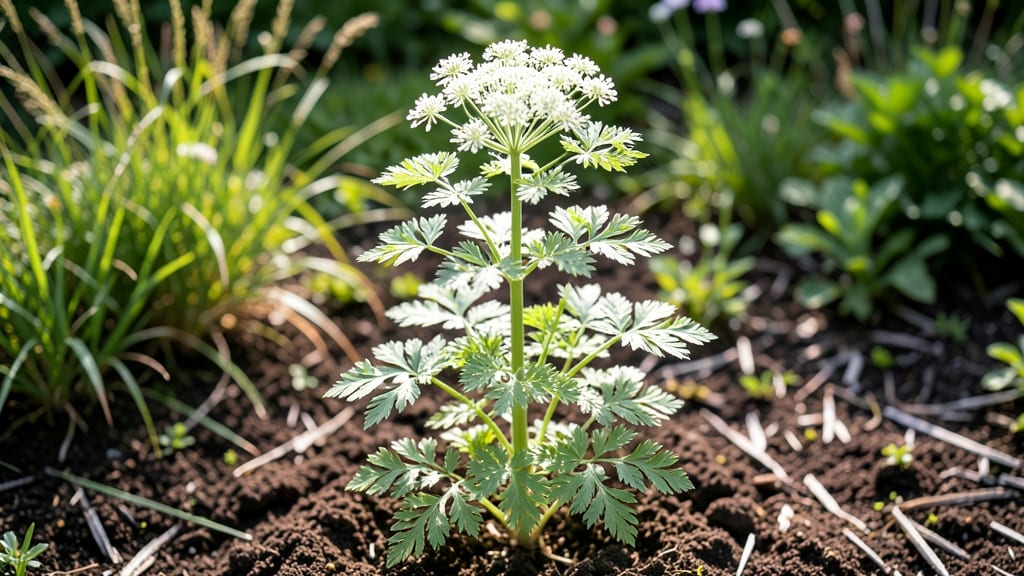
Chervil is not a true perennial in most climates, though it behaves as a biennial or short-lived perennial in ideal conditions. It thrives best as an annual in cooler zones (3-8) due to its sensitivity to frost and heat stress, often bolting or dying back if not overwintered carefully.
Chervil's delicate nature makes it a tricky plant to count on year after year. 🌱 Unlike hardy perennials like thyme or oregano, chervil's thin stems and shallow roots struggle with temperature extremes, especially when winter temperatures drop below 20°F.
Even in its native USDA zones 3-8, it often treats gardeners to just one growing season unless you take special steps to protect it.
The key is understanding its biennial tendencies—it may produce leaves for two years in perfect conditions, but most gardeners treat it as an annual to avoid disappointment.
What sets chervil apart is its rapid bolting—when it flowers and goes to seed—triggered by heat or long days. This makes it particularly challenging in warmer climates where it might bolt before you even notice.
The good news? With proper overwintering techniques like heavy mulching or container growing, you can extend its life, but it'll never match the reliability of true perennials.
💡 In This Article
- Chervil’s Growth Cycle: Why It Fails as a True Perennial
- Overwintering Chervil: Zone-Specific Survival Strategies
Chervil’s growth cycle: why it fails as a true perennial
Chervil’s delicate growth habit stems from its shallow root system—typically no deeper than 6-8 inches—which makes it highly vulnerable to temperature swings. Unlike true perennials like parsley or cilantro, which develop deeper taproots to survive winter, chervil’s fibrous roots freeze easily when exposed to prolonged cold below 20°F.
This is why it often dies back completely in harsh winters, even in its preferred USDA zones 3-8. The plant’s thin stems also lack the structural resilience of hardier herbs, making them prone to snapping under snow or ice accumulation.
The real kicker? Chervil’s rapid bolting response to heat or long daylight hours. When temperatures climb above 75°F or daylight exceeds 14 hours, it triggers flowering within 4-6 weeks, sending up tall, seed-bearing stems that render the leaves bitter and unusable.
This is a survival mechanism in its native Mediterranean climate, but it’s a major headache for gardeners in warmer regions. Compare this to true perennials like thyme, which can endure heat stress and still regrow from their root crowns—chervil has no such recovery mechanism once it bolts.
What makes chervil’s growth cycle even more unpredictable is its biennial tendency in ideal conditions. In perfect scenarios—cool summers, mild winters, and consistent moisture—it may produce edible leaves for 2 years before flowering. However, this requires near-perfect growing conditions that most home gardens simply can’t replicate.
Most gardeners experience it as a short-lived perennial or annual because any stress (frost, drought, or heat) pushes it into its bolting phase prematurely. The plant’s entire life strategy revolves around quick reproduction rather than long-term survival.
Here’s the botanical reality: chervil lacks the cold-hardy adaptations of true perennials. Its leaves contain high levels of volatile oils that actually increase in cold weather, making the plant more susceptible to frost damage.
When temperatures drop below 15°F, these oils can crystallize within the plant tissues, causing cellular damage that’s often irreversible. This is why even in zone 5, chervil frequently dies back completely unless you implement protective measures—something true perennials handle effortlessly through deep root systems and specialized winter dormancy strategies.
Consider this comparison: parsley, a true biennial, develops a thick, carrot-like taproot that stores nutrients and survives winter. Chervil’s roots remain shallow and fibrous, offering no such protection.
When winter arrives, parsley simply goes dormant at the soil line and regrows from its crown, while chervil’s entire structure often freezes solid. This fundamental difference explains why chervil behaves more like an annual in most gardens unless you take extraordinary care to mimic its Mediterranean native conditions.
The takeaway? Chervil’s growth cycle is a delicate balance of temperature, daylight, and moisture that most gardeners simply can’t replicate year after year. Its rapid bolting response and shallow roots make it fundamentally unsuitable for true perennial behavior.
The plant’s entire evolutionary strategy prioritizes quick reproduction over long-term survival—a trait that makes it fascinating but frustrating for home gardeners trying to grow it reliably beyond one season.