
Aphids
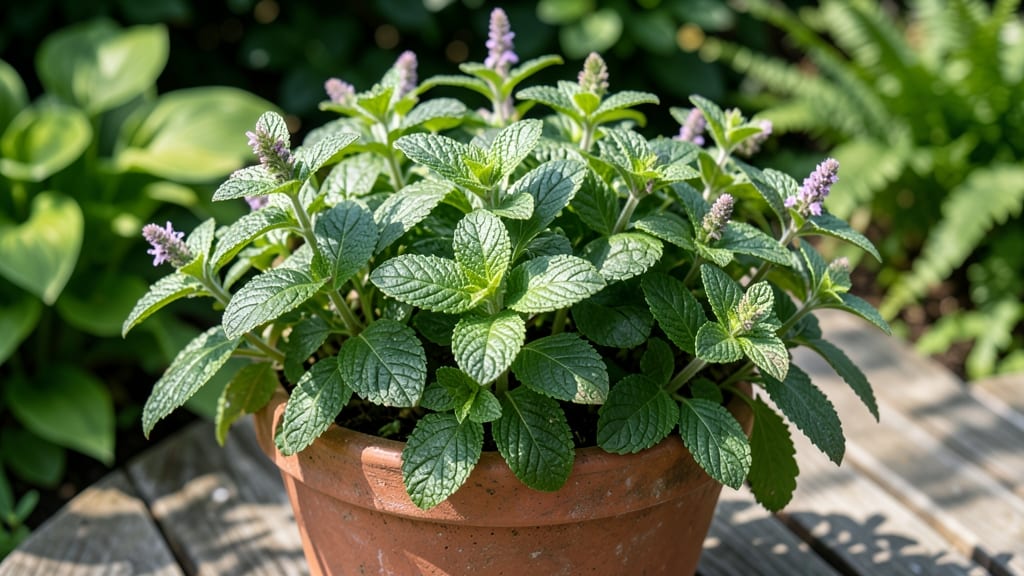
Yes, chocolate mint is a perennial plant that survives winter by dying back to the ground but returns each spring from its hardy root system, making it a long-lived garden favorite with minimal annual maintenance.
This hardy herb thrives in USDA zones 5-9, where its deep roots protect it from freezing temperatures. 🌱 The key to its perennial success lies in its ability to enter dormancy during cold months, conserving energy until warmer weather triggers regrowth.
Unlike annuals that complete their life cycle in one season, chocolate mint's root system stores nutrients year-round, ensuring it bounces back stronger each spring with proper winter care like mulching or light frost protection.
What sets chocolate mint apart is its adaptability—it handles both full sun and partial shade while tolerating a range of soil types. The trade-off? Without regular pruning, it can spread aggressively, but this makes it perfect for ground covers or container gardens where you can control its growth.
I've seen chocolate mint plants in my own garden return for over a decade with just basic seasonal maintenance.
💡 In This Article
- Chocolate Mint’s Perennial Growth Cycle Explained
- Tips for Year-Round Chocolate Mint Care
Chocolate mint’s perennial growth cycle explained
Chocolate mint (Mentha × piperita 'Chocolate') earns its perennial status through a clever survival strategy: deep, fibrous roots that store carbohydrates and nutrients year-round. These roots can extend 12-18 inches below the soil surface, reaching moisture and stability even during drought or frost.
The plant’s ability to enter dormancy—where metabolic activity slows dramatically—allows it to survive temperatures as low as -20°F in protected microclimates, making it hardy in USDA zones 5-9.
The dieback process begins when daytime temperatures drop below 50°F for extended periods. Chocolate mint’s aboveground stems and leaves yellow and wither as the plant redirects energy to its roots, where stored starches act as a winter food reserve.
This dormancy isn’t hibernation—it’s a calculated shutdown of non-essential functions, similar to how deciduous trees shed leaves. The roots remain active enough to absorb residual moisture, preventing desiccation until spring’s warmth triggers regrowth from the crown.
What makes this cycle fascinating is the plant’s hormonal response to light. As daylight shortens in autumn, chocolate mint’s meristem cells (growth points) produce more abscisic acid, a hormone that signals dormancy.
This process is reversible when temperatures rise and daylight lengthens in spring, prompting the roots to push new shoots upward. Unlike annuals that rely on seed germination, chocolate mint’s survival depends entirely on this root-driven regeneration, which is why it can return stronger each year with proper care.
Cold hardiness varies by cultivar, but chocolate mint’s hybrid vigor gives it an edge over its parent species (peppermint and spearmint). For example, while spearmint may struggle in zone 5 winters, chocolate mint’s thicker root crown often recovers even after light frosts.
This resilience explains why it’s a favorite in cottage gardens—it doesn’t just survive winter; it thrives in the seasons that follow with minimal intervention.
One common misconception is that dieback means death. In reality, the aboveground parts are simply sacrificial, while the roots act as a biological battery. Think of it like a tree’s trunk: the visible branches may fall, but the hidden structure holds the key to rebirth.
This is why gardeners often see chocolate mint “come back from the dead” in spring—what appears lost is actually lying dormant just below the soil surface, ready to reclaim its space.
For those in marginal zones (like zone 4), adding 3-4 inches of mulch in late fall can raise soil temperatures by 5-10°F, providing extra insulation. The mulch also suppresses weeds that might compete with the mint’s early spring regrowth.
This simple act turns a potential liability (cold sensitivity) into an opportunity for even heartier returns the following season.
Understanding this cycle changes how you approach chocolate mint in your garden. Instead of treating it as an annual that needs replanting, you’re nurturing a long-term investment—a plant that rewards patience with years of fragrant, low-maintenance growth.
The secret isn’t just surviving winter; it’s emerging from it stronger, ready to spread its signature chocolate-citrus aroma across your landscape.