
Flowers
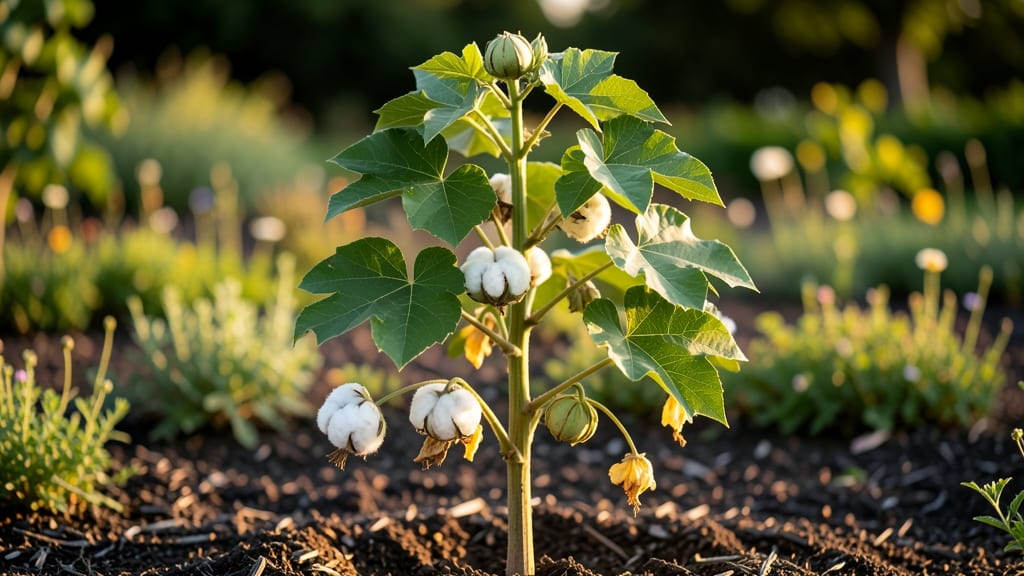
Cotton behaves like a perennial in nature by regrowing from its deep root system each year, though commercial farming treats it as an annual for higher yields. Its hardy roots survive winter dormancy to sprout new growth when conditions improve.
Cotton's natural life cycle explains this behavior—its deep taproot system stores nutrients during dormancy, allowing it to push new shoots when temperatures rise. 🌱 In the wild, cotton plants can live multiple years, but agricultural practices prioritize single-season harvests for efficiency.
Home gardeners can encourage perennial growth by protecting roots from frost and avoiding heavy pruning.
This dual nature makes cotton fascinating: while farmers replant annually, wild varieties demonstrate remarkable resilience. The key difference lies in growing conditions—commercial fields require consistent replanting, while home gardens can nurture cotton's natural longevity with proper care.
💡 In This Article
- Why Cotton Acts Like a Perennial in Wild Growth
- Growing Cotton as a Perennial: Tips for Home Gardens
Why cotton acts like a perennial in wild growth
Cotton's perennial-like behavior stems from its powerful taproot system, which can extend 6-8 feet deep into the soil.
This root structure stores essential nutrients and moisture during dormancy, allowing the plant to survive harsh conditions. 🌱 Unlike true annuals that die completely after seed production, cotton's roots remain viable, ready to sprout new shoots when temperatures rise above 60°F in spring.
The plant's growth cycle follows environmental cues: it enters dormancy when days shorten and temperatures drop below 50°F in fall, then reawakens with longer daylight and warmth.
This natural rhythm explains why wild cotton thrives for 3-5 years without replanting, while commercial varieties are harvested before full maturity to maximize fiber quality.
The key difference lies in how long plants are allowed to grow—wild cotton completes its full life cycle, while farm cotton is cut down at 60-90 days.
Botanists classify cotton as a short-day plant, meaning its flowering triggers when daylight hours shorten. This adaptation helps it time reproduction with optimal growing conditions. In wild environments, cotton plants often develop multiple stems from the same root system, creating dense thickets that can persist for years.
This contrasts sharply with monoculture farming where plants are spaced 12-18 inches apart for mechanical harvesting.
The plant's resilience extends to its ability to regenerate from even small root fragments left in the soil. Farmers combat this natural tendency by practicing deep plowing after harvest to destroy remaining roots, though this disrupts soil structure.
In natural ecosystems, this regrowth ability ensures cotton's survival across generations without human intervention. The trade-off is clear: wild cotton prioritizes longevity while agricultural cotton emphasizes short-term productivity.
Consider the cotton plant's native habitat in subtropical regions where it evolved. These areas experience distinct wet and dry seasons that mirror cotton's growth patterns—vigorous growth during monsoons followed by dormant survival through dry periods.
This adaptation explains why cotton can regrow even after being cut back, as long as 20-30% of the root system remains intact. The plant's ability to "remember" its optimal growing conditions through its root system is what gives it perennial-like characteristics.
What's particularly interesting is how cotton's flowering mechanism ties to its perennial behavior. The plant produces flowers only after reaching a certain maturity level, which takes 90-120 days in ideal conditions. This delayed flowering allows the root system to establish fully before reproductive energy is expended.
In wild settings, this means cotton plants can store energy for multiple flowering cycles across several years, whereas commercial varieties are harvested before reaching this stage.
For those curious about the science, cotton's perennial tendencies are governed by abscisic acid, a plant hormone that regulates dormancy. During cold months, this hormone accumulates in the roots, signaling the plant to conserve energy.
When temperatures rise, another hormone called gibberellin takes over, promoting new shoot growth. This hormonal dance explains why cotton can "wait" for optimal conditions to regrow, much like true perennials.