
Diseases
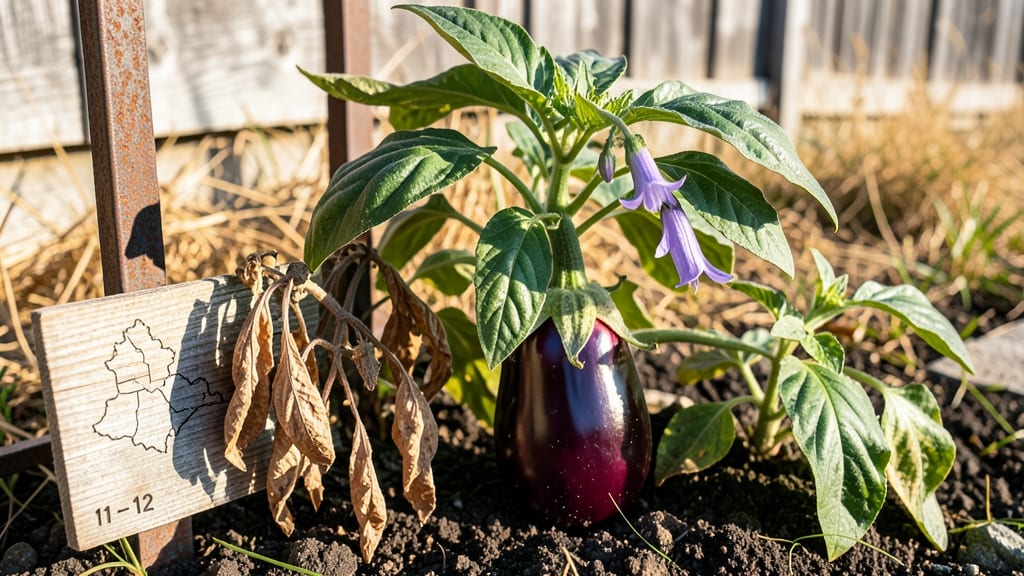
Eggplant behaves like a perennial in warm climates, where its roots survive winter dormancy to regrow when temperatures rise. However, gardeners usually treat it as an annual because cold snaps or frost typically kill the plant entirely in colder regions.
Eggplant's tropical origins explain this behavior—its roots can endure mild winters if protected, much like other solanaceous plants such as tomatoes or peppers. 🌱 The key difference is that eggplant's growth slows dramatically in cooler weather, entering a dormant state rather than dying completely.
In zones with consistent frost, even the roots may not survive, forcing gardeners to replant each season. This is why you'll often see eggplant sold as annuals, despite its botanical classification as a perennial.
For those in warmer climates, the plant's ability to regrow can be a game-changer, offering multiple harvests from a single planting. However, this requires careful attention to soil health and protection during unexpected cold snaps.
Many gardeners in transitional zones successfully overwinter eggplants using thick mulch or container growing, which gives the roots a better chance to survive the winter months.
💡 In This Article
- Why Eggplant Acts Like a Perennial in Warm Zones
- How to Overwinter Eggplant for Year-Round Harvests
Why eggplant acts like a perennial in warm zones
Eggplant's perennial nature stems from its tropical origins in South Asia, where temperatures rarely drop below 50°F for extended periods. The plant's deep, fibrous root system—capable of extending 2-3 feet into the soil—stores nutrients and energy, allowing it to survive winter dormancy in mild climates.
This root structure is similar to other solanaceous perennials like tomatoes and peppers, though eggplant's roots are generally more robust, with some varieties developing woody stems at the base over time. 🌱
The key mechanism is temperature-dependent dormancy. When nighttime temperatures consistently fall below 55°F, eggplant growth slows dramatically, but the roots remain alive, unlike true annuals that die completely.
In zones 9-11 (USDA classification), eggplants often regrow from the same roots each spring, producing fruit for 6-8 months of the year. This contrasts with colder regions where even the roots may succumb to frost, forcing gardeners to replant annually.
What makes eggplant unique is its ability to produce multiple harvests from a single planting in warm zones. Unlike true perennials that require years to establish, eggplant can yield 50-100 fruits in its first growing season from overwintered roots.
The trade-off is that these plants may produce smaller, less vigorous fruit compared to fresh starts, but the convenience and extended harvest window make it worthwhile for dedicated gardeners. 💫
Botanically, eggplant's classification as a perennial is supported by its ability to flower and fruit repeatedly in ideal conditions. In tropical climates, some varieties continue producing year-round with proper care, while in temperate zones, they enter a prolonged dormancy period.
This behavior aligns with other solanaceous plants like potatoes, which also store energy in underground structures to survive adverse conditions.
For gardeners in transitional zones (like 8a-8b), the challenge lies in protecting the roots during unexpected cold snaps. A 6-inch layer of straw mulch can raise soil temperatures by 3-5°F, making the difference between survival and death.
In contrast, true perennials like asparagus have more specialized underground structures (rhizomes) that are better adapted to cold survival, which is why they're easier to overwinter in marginal climates.
One fascinating detail is how eggplant's growth habit changes with age. Young plants focus energy on leaf and root development, while mature plants prioritize fruit production.
This shift explains why overwintered plants may take 4-6 weeks to resume flowering after dormancy breaks—similar to how fruit trees need time to "wake up" in spring. Understanding this cycle helps gardeners time their expectations and interventions appropriately. ✨