
Flowers
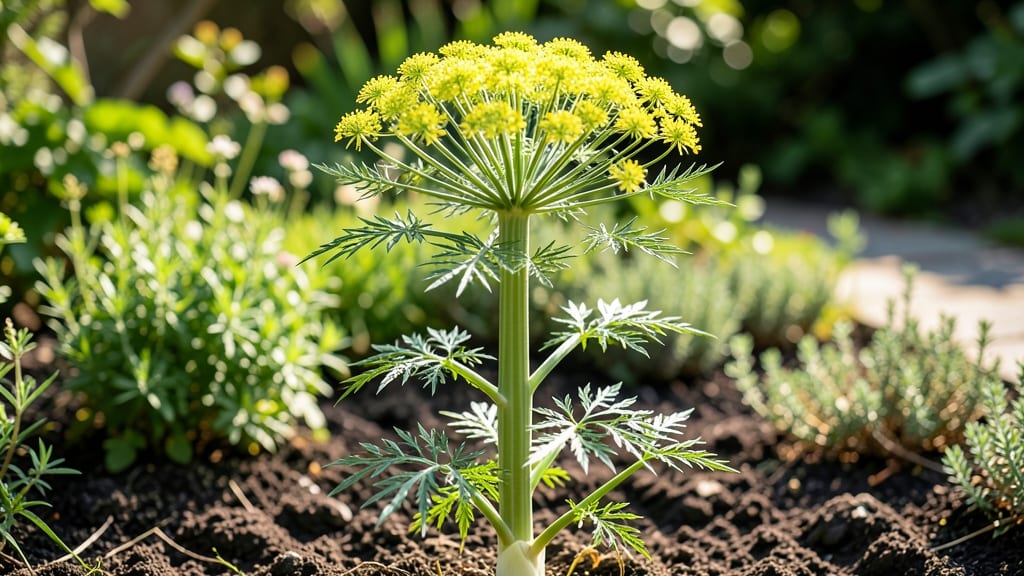
Fennel acts like a perennial because it self-seeds prolifically and often returns each year, but it's botanically classified as a biennial that dies back annually. While its hardy taproot may survive winter, frost and harvest usually kill the above-ground growth, requiring new planting.
Fennel's survival strategy relies on its ability to regenerate through both underground roots and prolific seed production. 🌱 Unlike true perennials that regrow from the same root system year after year, fennel typically completes its life cycle in two years—producing edible leaves in the first year and flowering stems in the second.
However, in many temperate climates, it often self-sows so aggressively that it appears perennial. The key to extending its growing season lies in protecting those hardy taproots from extreme cold and giving it the right growing conditions.
The plant's two-stage growth pattern explains why gardeners often see fennel reappearing each spring. In its first year, it focuses on leaf production, while in its second year, it shifts energy to flowering and seed production.
This biennial behavior means you'll get two harvests from a single planting if you manage it properly. The taproot stores energy that can sprout new growth when conditions improve, but it's not as reliable as true perennial roots.
💡 In This Article
- Fennel’s Life Cycle: Why It Acts Like a Biennial
- How to Extend Fennel’s Growing Season Naturally
Fennel’s life cycle: why it acts like a biennial
Fennel follows a biennial growth pattern that creates the illusion of perennial behavior. In its first year, the plant focuses entirely on producing a dense, aromatic leaf rosette from its thick, white taproot that stores nutrients.
This root can grow up to 12-18 inches deep and 2-3 inches thick, acting like a natural battery for regrowth. The leaves contain volatile oils like anethole, which give fennel its signature licorice flavor and also act as natural pest deterrents during this vegetative stage.
The key botanical mechanism is fennel's apical dominance—a growth regulation system where the central stem suppresses side shoots until the second year. When winter arrives, the above-ground foliage dies back due to frost, but the taproot remains dormant underground.
This is why you'll often see fennel "reappearing" in spring—new shoots emerge from the surviving root. However, unlike true perennials, these regrowth shoots are typically weaker and less productive than the original plant.
In its second year, fennel shifts energy toward reproduction, sending up a 3-6 foot flowering stalk topped with yellow umbrella-shaped flowers. This flowering phase is when fennel produces seeds that scatter prolifically, creating new plants.
The seed dispersal strategy explains why fennel often becomes a "volunteer" plant in gardens—it self-sows so aggressively that it creates the appearance of perennial behavior. Each seed contains enough energy to germinate and establish a new plant within 10-15 days under optimal conditions.
Temperature plays a crucial role in this cycle. Fennel thrives in USDA zones 3-10, but its hardiness varies by climate. In colder regions (zones 3-5), the taproot may survive winter only to produce weak regrowth, while in milder zones (7-10), the plant may complete its full biennial cycle.
The taproot's ability to store up to 20% starch by the end of the first growing season is what makes this regrowth possible, though it's not as robust as true perennial root systems like asparagus or rhubarb.
What most gardeners don't realize is that fennel's "perennial" behavior is actually a survival adaptation. The plant evolved this biennial strategy to maximize both leaf production (for herbivores to eat) and seed production (for propagation) in different years.
This two-phase approach explains why you can harvest fennel leaves for 6-8 months in its first year while still getting seeds for next year's crop—making it behave like a perennial in practical gardening terms.
The taproot's persistence also creates a feedback loop: when you harvest fennel leaves, you're actually stimulating the plant to produce more foliage from the stored energy in the root. This is why cut-and-come-again harvesting works so well with fennel—you're tapping into that underground energy reserve.
However, if you remove the entire plant (including the root), you eliminate the possibility of regrowth, which is why many gardeners choose to leave some plants in place for self-seeding.