
Flowers
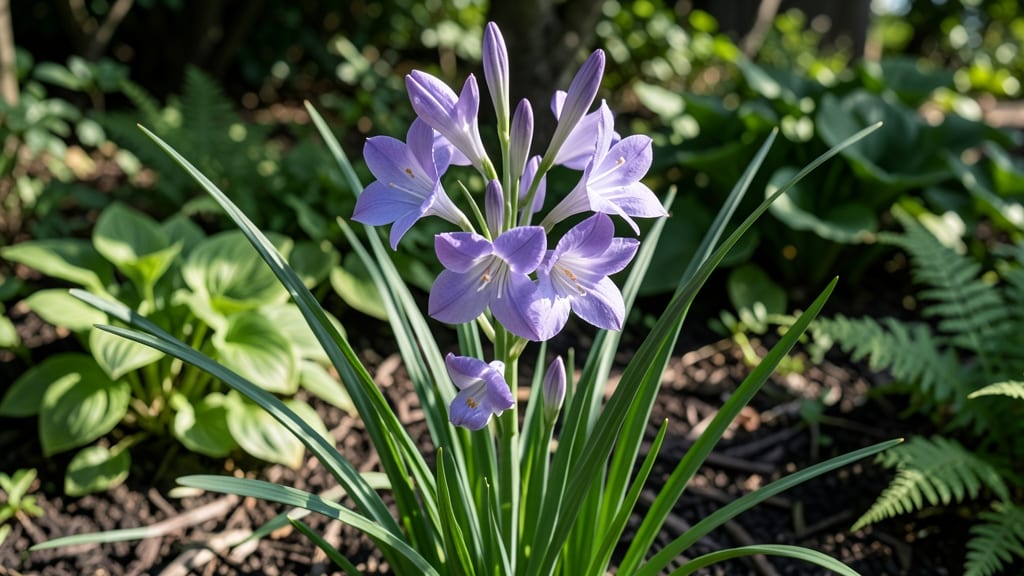
Freesia is not a true perennial in most climates, as it dies back after flowering and cannot survive freezing temperatures. However, in frost-free zones (USDA 9-11), it may regrow from rhizomes under ideal conditions with proper winter care.
Freesia behaves more like a tender bulb than a hardy perennial because its underground rhizomes lack the cold resistance of true perennials like lavender or salvia. 🌱 When temperatures drop below 30°F, these fleshy roots blacken and rot, killing the plant.
The good news? In warmer climates (like Southern California or Florida), freesia can persist for years if you protect the rhizomes during mild winters by storing them in dry peat moss or sand.
What sets freesia apart is its seasonal dormancy cycle. After flowering in spring, the plant naturally slows growth and eventually dies back—unless you intervene. Many gardeners treat it as a semi-perennial, lifting and storing rhizomes each fall to replant in spring.
This two-step process turns what would be an annual into a long-lived garden staple with minimal effort.
💡 In This Article
- Why Freesia Dies in Cold Climates: Root and Temperature Science
- How to Overwinter Freesia as a Semi-Perennial
Why freesia dies in cold climates: root and temperature science
Freesia's underground structure—thick, fleshy rhizomes—is its Achilles' heel when winter arrives. Unlike true perennials like lavender or salvia, which develop deep, woody root systems or insulated crowns, freesia rhizomes store energy in a way that makes them highly sensitive to cold.
These rhizomes contain 60-70% water content, which freezes at 32°F and causes cellular damage through ice crystal formation. 🌡️ When temperatures drop below 28°F, the rhizomes begin to blacken within hours as their cell membranes rupture.
The biological trigger for dormancy in freesia is temperature-dependent, but it's not the same as true perennials.
While plants like hostas enter a protective dormancy at 40°F and can survive -10°F with proper insulation, freesia's natural response is to shut down completely when nights stay below 50°F for more than a week.
This is why you'll see freesia plants in USDA zones 7-8 die back after their first frost—even if they've produced stunning 6-inch spires of fragrant blooms earlier in the season.
Compare this to salvia, which can survive -20°F winters because its roots contain antifreeze proteins that lower the freezing point of its cell fluids. Freesia lacks these adaptations entirely.
The rhizomes' high moisture content also makes them prone to rot if they're exposed to damp, freezing soil—a common issue in marginal zones like USDA 8b, where winter temperatures hover around 15-20°F for weeks. 🌡️ This is why gardeners in these areas must treat freesia like a bulb rather than a perennial.
Another critical factor is the plant's growth cycle. Freesia's flowering period is tightly linked to day length and temperature cues—typically blooming in late winter to early spring when nights are still cool (50-55°F).
Once the plant senses increasing daylight and warmer soil temperatures (65°F+), it shifts all its energy into flower production. By mid-summer, the foliage yellows and dies back naturally, leaving only the rhizomes to survive—but only if protected from frost.
What most gardeners don't realize is that even a single night below 25°F can kill freesia rhizomes left in the ground. The damage isn't always visible immediately—sometimes the plant appears healthy until the next growing season when it fails to sprout.
This delayed failure is why many gardeners mistakenly think freesia is a true perennial that simply needs time to recover. 💀 In reality, the rhizomes have already died, and what appears to be dormancy is actually irreversible decay.
To put this in perspective, consider that true perennials like peonies can survive -30°F winters because their crowns are elevated above the soil line and insulated by mulch. Freesia's rhizomes, however, lie just 1-2 inches below the surface—exactly where frost penetrates most effectively.
This shallow planting depth is ideal for warm climates but becomes a fatal flaw in colder regions.