
Flowers
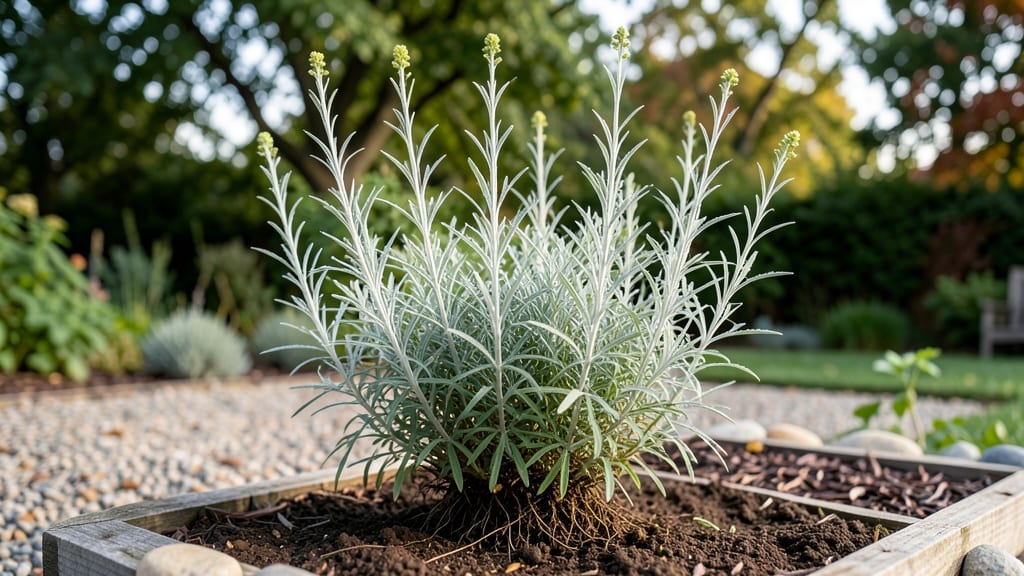
French tarragon is a perennial herb in USDA hardiness zones 4-8, thriving in cool climates but often treated as a short-lived perennial or biennial due to its sensitivity to cold snaps and division stress. Proper overwintering extends its lifespan significantly.
French tarragon (Artemisia dracunculus 'French') earns its perennial label in ideal conditions, but its delicate nature makes it behave more like a biennial in many gardens. 🌱 Unlike its hardier Russian cousin, French tarragon's roots struggle with prolonged freezing, often dying back completely in zones below 4.
The key to keeping it alive for years lies in protective overwintering techniques—think thick mulch layers or container cultivation to move plants to sheltered spots before frost hits.
What sets this herb apart is its cool-weather preference: it thrives in zones where summer heat isn't extreme, but even there, gardeners often divide and replant every 2-3 years to refresh growth.
The good news? With the right care, you can coax 5-7 years of harvests from a single planting—far longer than most people expect for what they assume is a "fussy" herb.
💡 In This Article
- French Tarragon’s Perennial Nature and Cold Hardiness Limits
- Overwintering French Tarragon: Step-by-Step Survival Guide
French tarragon’s perennial nature and cold hardiness limits
The botanical classification of French tarragon (Artemisia dracunculus 'French') confirms it as a true perennial, but its hardiness hinges on precise growing conditions. This herb thrives in USDA zones 4-8, where winter temperatures rarely drop below -30°F to -10°F.
The key difference from Russian tarragon lies in its root system—French tarragon develops a fibrous root structure that's more vulnerable to freezing than the deep, woody roots of its Russian cousin. This makes it behave like a biennial in colder microclimates where temperatures fluctuate near 20°F.
What makes French tarragon particularly sensitive is its crown—the growth point where stems emerge.
When exposed to prolonged freezing (below 15°F for more than 24 hours), this crown can die back completely, even if the roots survive. 🌱 The plant's natural defense mechanism involves going dormant in winter, but this process requires consistent moisture in the soil—dry conditions during cold snaps accelerate damage.
Gardeners in zone 5 often report their French tarragon dying back to the ground only to regrow from the roots in spring, a clear sign of its perennial nature despite temporary setbacks.
French tarragon's growth habit further distinguishes it from Russian varieties. While Russian tarragon can spread aggressively through underground runners, French tarragon grows more upright with slender, arching stems that reach 3-4 feet tall.
This vertical growth makes it more susceptible to wind damage in exposed locations, while its delicate leaves (about 1-2 inches long) are easily bruised by frost.
The herb's preference for well-drained soil with a pH of 6.0-7.5 also means it struggles in heavy clay or waterlogged conditions, which can exacerbate winter stress.
Here's what most gardeners overlook: French tarragon's true hardiness depends on microclimate selection. Even within zone 4, plants grown against south-facing walls or under deciduous trees (which drop leaves before frost) survive better than those in open garden beds.
The 3-4 inch layer of organic mulch becomes critical—it insulates roots from temperature swings that can occur between day and night during early winter. Without this protection, the plant's energy reserves are depleted faster, reducing its ability to regenerate in spring.
Comparing French to Russian tarragon highlights why the former requires more attention. Russian tarragon (Artemisia dracunculus 'Russian') has thicker stems and broader leaves, allowing it to tolerate colder winters (down to zone 3) with minimal protection.
French tarragon's aromatic oils (which give it that signature anise-like flavor) also make it more sensitive to temperature extremes—these volatile compounds can degrade when exposed to freeze-thaw cycles, further reducing the plant's hardiness.
This is why many gardeners in marginal zones opt for container cultivation, where they can move plants to protected locations during winter.
The science behind this sensitivity lies in the plant's cellular structure. French tarragon's cells contain higher concentrations of terpenoids (the compounds responsible for its flavor), which can crystallize and damage cell walls when temperatures drop below 25°F.
This cellular damage is what causes the characteristic brown discoloration on leaves after a hard freeze—something Russian tarragon rarely exhibits. The good news? With proper overwintering, French tarragon can recover completely the following spring, proving its true perennial nature when given the right conditions.