
Aphids
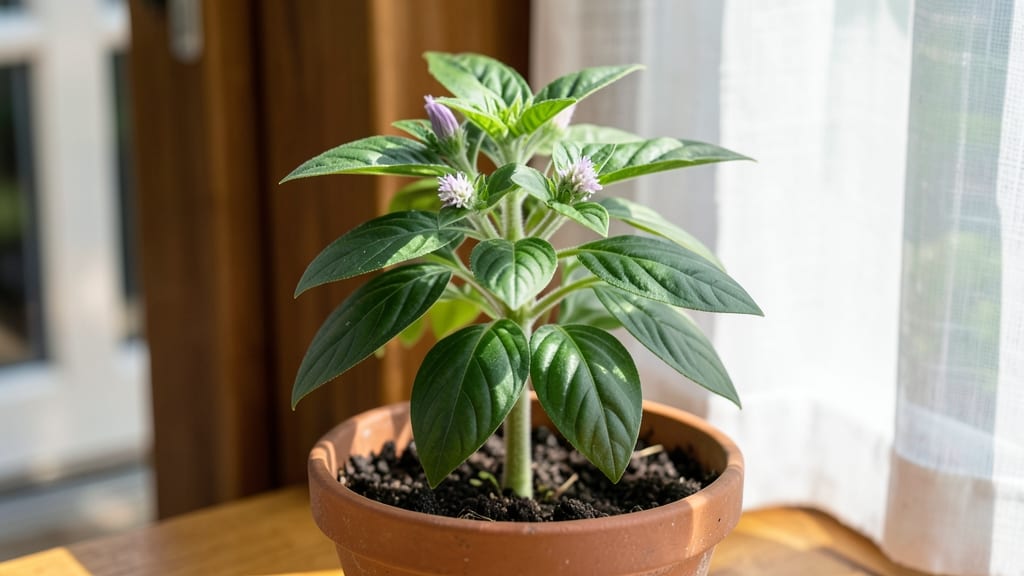
Is holy basil a perennial? It behaves as an annual in cold climates, dying back when frost hits but often regrowing from seeds or cuttings when warmer weather returns. In tropical zones, it thrives year-round as a hardy herbaceous plant with consistent care.
This distinction comes down to temperature tolerance—holy basil, native to tropical regions, can't survive prolonged freezing. 🌱 When nights dip below 30°F, the plant's tender stems and leaves blacken, but its roots may linger underground until spring.
In warmer areas (USDA zones 10-12), it grows continuously, producing fresh leaves year after year with minimal intervention. Even in marginal zones, gardeners can coax reblooms by saving seeds or taking cuttings before the first frost.
What's fascinating is how this herb's growth cycle mirrors its medicinal properties—just like its resilience, holy basil's benefits adapt to seasonal changes. The plant's ability to regenerate makes it a favorite for sustainable gardening, especially when you consider its rapid growth rate once temperatures warm again.
💡 In This Article
- Holy Basil’s Cold-Hardiness and Growth Cycle
- Year-Round Holy Basil Care for Cold Climates
Holy basil’s cold-hardiness and growth cycle
Holy basil, scientifically known as Ocimum tenuiflorum, is classified as a tender perennial—meaning it can live for multiple years in ideal conditions but lacks the cold resistance of true perennials like lavender or rosemary.
Its native tropical habitat (India, Southeast Asia) means it evolved to thrive in 70-90°F temperatures with high humidity. When exposed to frost (32°F or below), the plant's delicate cell membranes rupture, causing the leaves to wilt and stems to blacken within hours.
This is why it behaves like an annual in temperate climates.
The critical temperature threshold sits around 30°F—below this, even the roots struggle to survive without protection. In USDA zones 8-9 (where winters rarely drop below 10°F), holy basil may persist through mild winters if given heavy mulch or wind protection.
However, in zones 7 and colder, the plant typically dies back completely. What's interesting is how the roots sometimes survive dormant until spring, allowing regrowth from the base—this is why many gardeners report "miraculous" reblooms after frost.
Botanically, holy basil's growth cycle follows a monocarpic pattern in cooler climates, where the plant focuses energy on leaf production during warm months and conserves resources during dormancy. In tropical zones, it grows continuously, producing new leaves every 2-4 weeks with minimal stress.
The plant's rapid regrowth after pruning (even in marginal zones) comes from its ability to regenerate from stem cuttings—this is why gardeners often save cuttings indoors before frost to restart growth in spring.
Regional growing zones play a huge role in determining holy basil's behavior. In USDA zones 10-12, it grows as a true perennial, flowering and producing seeds multiple times per year. In zones 8-9, it may survive winters with protection but often needs replanting.
Gardeners in zones 7 and below typically treat it as an annual, though some succeed with creative overwintering methods like container transfers or indoor propagation. The key difference lies in how quickly the plant can recover from frost damage—tropical varieties rebound faster than temperate-adapted strains.
What most people don't realize is how holy basil's growth habits mirror its medicinal properties. The plant's ability to regenerate quickly after pruning (even in cooler climates) parallels its adaptogenic qualities—just as it bounces back from stress, it helps humans manage physiological stress.
This resilience makes it particularly valuable for gardeners in marginal climates who want to maintain a fresh supply year-round with minimal effort.
For visual contrast, compare holy basil's frost response to its cousin, sweet basil (Ocimum basilicum). Sweet basil is even less cold-hardy, typically dying completely when temperatures dip below 30°F, while holy basil's roots sometimes persist.
This difference explains why holy basil is often recommended for sustainable gardening—its ability to regrow from cuttings or seeds makes it more forgiving than many other herbs.