
Tools
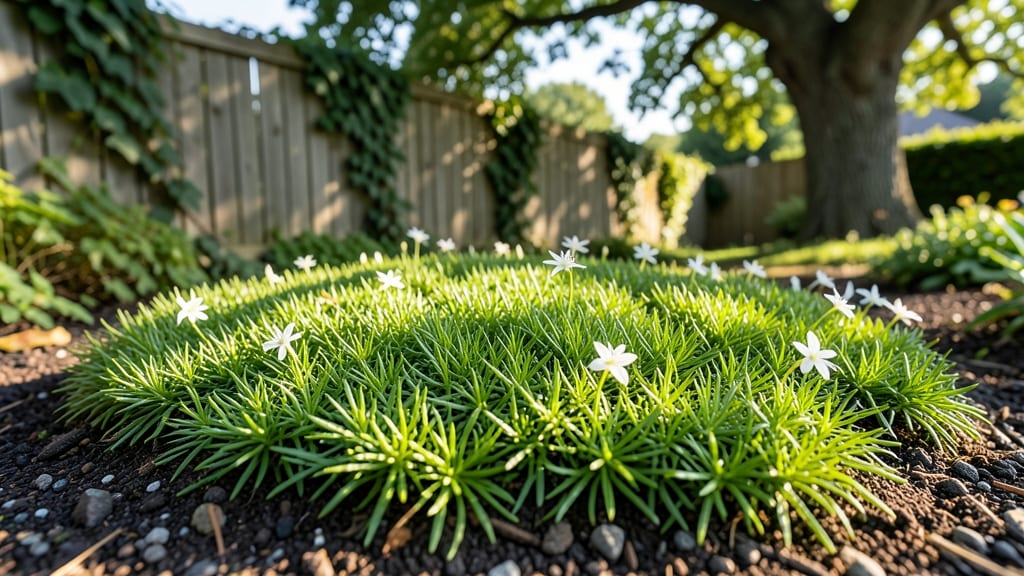
Irish moss isn't a true perennial—it undergoes annual dieback in winter but regenerates each spring through spore release, relying on coastal moisture and shade rather than persistent woody structures.
This seasonal cycle makes Irish moss behave more like an ephemeral plant than a traditional perennial.
Unlike hardy perennials that maintain stems through winter, Irish moss completely retreats into its substrate until conditions improve. 🌿 The key difference lies in its reproduction method—while perennials often regrow from roots or rhizomes, Irish moss depends entirely on spore dispersal, which requires specific humidity levels and temperature cues to trigger germination.
This explains why it thrives in coastal rock pools but struggles in dry inland gardens.
What's fascinating is how this adaptation actually works in its favor. The annual dieback prevents energy waste on maintaining dormant structures, allowing all resources to focus on spore production when conditions are optimal.
This strategy makes Irish moss particularly resilient in its native temperate coastal habitats where seasonal changes are predictable. However, gardeners attempting to cultivate it must replicate these exact conditions—consistent moisture, partial shade, and a sandy or rocky substrate—to encourage reliable regrowth each spring.
💡 In This Article
- Why Irish Moss Appears to Die and Regrow Each Year
- Creating Ideal Conditions for Irish Moss Revival
Why Irish moss appears to die and regrow each year
Irish moss (Chondrus crispus) follows a survival strategy rooted in its marine ancestry, where it releases spores during optimal conditions rather than relying on persistent stems.
Unlike true perennials like ferns or mosses that maintain dormant rhizomes or crowns, Irish moss completely decomposes its above-ground structure in winter, leaving only microscopic spores dormant in its substrate. These spores require specific triggers—typically consistent moisture and cool temperatures between 45-55°F—to germinate, which explains its seasonal dieback pattern.
The biological mechanism involves a photoperiod response: shorter daylight hours in autumn signal the plant to prepare for dormancy, while increased humidity and mild spring temperatures (around 50-60°F) stimulate spore release.
This process creates a carpet of new growth within 4-6 weeks under ideal conditions, unlike hardy perennials that regrow from established roots. The trade-off? Without perfect moisture and shade, the spores may fail to germinate, resulting in apparent "death" rather than true dormancy.
What sets Irish moss apart is its spore-based reproduction cycle, which contrasts sharply with vascular perennials. True perennials like hostas or daylilies store energy in underground structures, allowing them to rebound quickly. Irish moss, however, must rebuild entirely from spores—similar to ferns but without the protective rhizome network.
This makes it more sensitive to environmental fluctuations, particularly prolonged dry periods or direct sunlight exposure, which can sterilize the spores before germination.
Consider this: In its native coastal habitats, Irish moss experiences 90%+ humidity and partial shade from overhanging rocks or seaweed. These conditions create a microclimate where spores remain viable for months.
In contrast, gardeners often struggle because indoor or inland environments rarely replicate this moisture level—even misting systems may not provide the constant dampness required for reliable regrowth. The key insight? Irish moss isn't "dying" annually—it's executing a calculated survival strategy that prioritizes spore production over structural persistence.
To visualize the difference, imagine a fern versus Irish moss: The fern's rhizome acts like a seed bank, while Irish moss's spores are its only insurance policy. This explains why it thrives in tidal zones but often fails in containers without precise care.
The annual dieback isn't a flaw—it's an adaptation to its ephemeral coastal niche, where seasonal changes are the primary environmental cue rather than temperature extremes.
Here's what most gardeners miss: The spores don't just appear—they require three critical factors to activate:
- Moisture: Substrate must remain damp but not waterlogged (think of a wrung-out sponge)
- Temperature: Ideal germination range is 50-60°F—too cold or hot halts spore activity
- Shade: Direct sunlight increases substrate temperature beyond 70°F, which sterilizes spores
When these conditions align, you'll see new growth within 3-4 weeks, proving the plant wasn't truly dead—just patiently waiting for the right moment to return. 🌊