
Planting
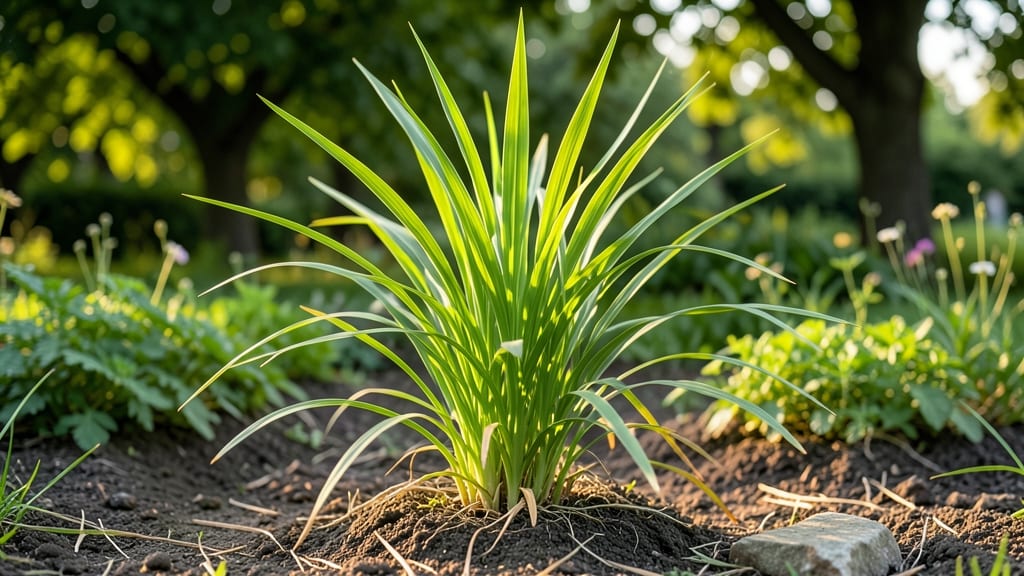
Lemongrass in Zone 8 isn't a true perennial—it typically dies back to the ground each winter but can regrow from its roots if given proper protection or planted in well-draining soil. Temperatures below 20°F often prove fatal, making overwintering strategies like mulching or container cultivation essential.
Lemongrass's tropical origins mean it struggles with Zone 8's cooler winters, unlike hardy perennials like mint or hostas. 🌱 The key to keeping it alive lies in mimicking its natural environment—well-draining soil prevents root rot, while mulching or moving pots indoors during cold snaps can help it survive.
Many gardeners successfully regrow lemongrass each spring by protecting the root crown, though it won't behave like a traditional Zone 8 perennial.
For best results, plant lemongrass in containers that can be moved indoors during winter or use thick mulch to insulate the soil. The plant's ability to regrow depends heavily on these protective measures, as its delicate roots can't withstand prolonged freezing.
With the right care, you can enjoy fresh lemongrass year after year, even in Zone 8's challenging climate.
💡 In This Article
- Why Lemongrass Struggles as a Perennial in Zone 8
- Year-Round Lemongrass Care in Cold Climates
Why lemongrass struggles as a perennial in Zone 8
Lemongrass (Cymbopogon citratus) originates from tropical regions like Southeast Asia and India, where temperatures rarely drop below 50°F and humidity stays high. Its natural environment lacks the seasonal dormancy cycle of true Zone 8 perennials like mint or hostas, which have evolved to survive 20-25°F winters.
Lemongrass, however, treats Zone 8's winter chill as a prolonged shock, triggering metabolic slowdown rather than true dormancy. This is why it dies back to the ground—its above-ground growth can't withstand prolonged exposure to 32°F or below. 🌱
The plant's root system, while hardy in warm conditions, lacks the protective adaptations of cold-hardy perennials. True perennials store energy in underground rhizomes or roots that can regenerate when conditions improve, but lemongrass relies on a more delicate root structure.
When soil temperatures drop below 45°F for extended periods, root activity halts, and the plant becomes vulnerable to cold damage. Even a single hard freeze (28°F) can kill back exposed foliage, while prolonged exposure to 20°F or lower often damages the root crown itself.
Another key factor is lemongrass's water requirements. In its native tropical climate, it thrives with consistent moisture, but Zone 8's winter often brings dry, cold air that desiccates the plant. Unlike drought-tolerant perennials, lemongrass struggles to conserve moisture when its roots can't absorb water efficiently in cold soil.
This dual stress—cold and dehydration—explains why even well-established plants often fail to survive winters without intervention. The plant's inability to enter true dormancy means it can't "shut down" and regrow cleanly in spring like hardy herbs. 💛
Comparing lemongrass to true Zone 8 perennials highlights the challenge. Mint, for example, can survive 15°F winters because its rhizomes store starches and water, while hostas produce thick, insulating leaves that protect their crowns.
Lemongrass lacks these adaptations; its hollow, grass-like stems offer no insulation, and its fibrous roots don't store enough energy to sustain regrowth after severe cold. This is why gardeners in Zone 8 must treat lemongrass more like an annual or a semi-perennial that requires winter protection to survive.
What most people don't realize is how soil type affects lemongrass's winter resilience. In well-draining, sandy loam, roots can escape waterlogged conditions that worsen cold damage, but heavy clay soil traps moisture and conducts cold more efficiently.
The ideal soil for overwintering lemongrass should mimic its tropical origins—light, airy, and slightly acidic (pH 6.0-6.5)—while still providing enough organic matter to insulate roots. Without these conditions, even protected plants may struggle to regrow in spring. ✨
The science behind lemongrass's winter dieback involves cellular damage from ice crystal formation. When temperatures drop below 32°F, water within plant cells begins to freeze, rupturing cell walls and disrupting metabolic processes. Lemongrass's tropical cells lack the antifreeze proteins found in cold-hardy plants, making them particularly vulnerable.
This cellular damage explains why even a single hard freeze can set back regrowth by weeks or months, requiring gardeners to take proactive measures like mulching or container cultivation to prevent such damage.