
Planting
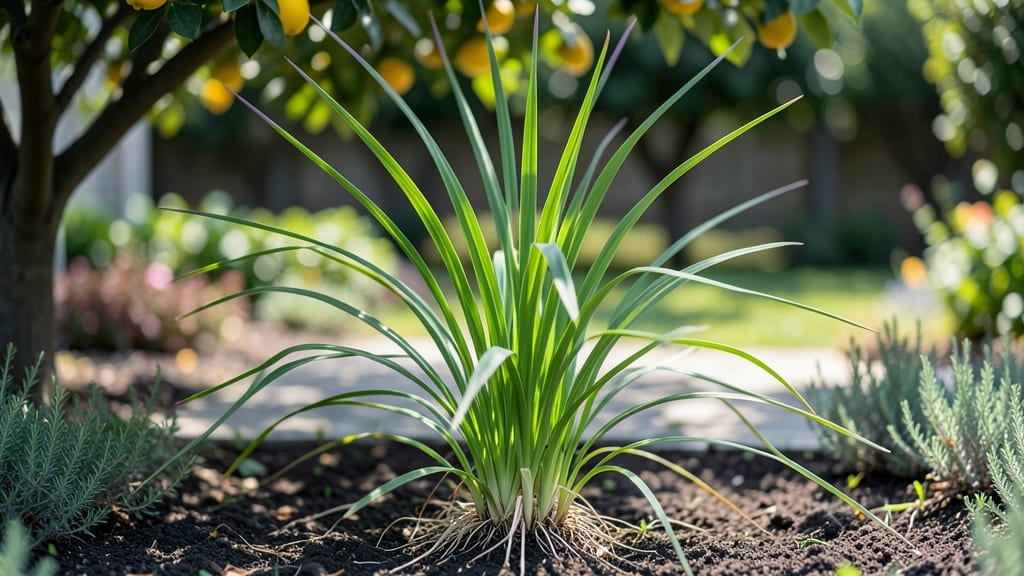
The lemongrass plant is a perennial in tropical climates but behaves as an annual in cold zones, dying back to the ground when temperatures drop below 25°F (-4°C) and regrowing from the root crown if conditions warm again. Hardiness varies by variety and region.
The lemongrass plant is a perennial in tropical climates but behaves as an annual in cold zones, dying back to the ground when frost hits, but the root crown often survives underground to sprout fresh stalks when temperatures rise again in spring.
This makes it behave like an annual in cold zones—though technically it's still a perennial because the root system persists.
What sets lemongrass apart is its remarkable resilience—even after a hard freeze, the roots can regenerate new growth as long as they aren't damaged. This adaptability explains why gardeners in cooler climates often treat it as both a perennial and an annual, depending on winter severity.
The key difference lies in the plant's ability to endure dormancy rather than continuous growth.
💡 In This Article
- Lemongrass Perennial Growth Habits in Different Climates
- Extending Lemongrass Lifespan in Cold Regions
Lemongrass perennial growth habits in different climates
The distinction between lemongrass's perennial nature in warm climates and its annual behavior in colder regions comes down to its biological adaptation to temperature.
In tropical zones where winter temperatures never dip below 50°F (10°C), lemongrass grows continuously as a true perennial, producing new shoots year-round from its robust rhizome system.
The plant's hollow, grass-like stalks emerge from these underground stems, which can extend up to 3 feet (1 meter) deep, storing nutrients and moisture for sustained growth.
In colder climates, the story changes dramatically when nighttime temperatures fall below 25°F (-4°C). At this threshold, the plant's cellular membranes begin to rupture due to ice crystal formation—a process called cytoplasmic freezing. The above-ground stalks turn brown and crisp, but the real drama happens underground.
The root crown (where the rhizomes meet the base of the stalks) contains specialized cells called meristems, which remain dormant but viable if protected from prolonged freezing. These meristems can survive brief exposure to 15°F (-9°C) for short durations, though extended cold damages them permanently.
What's fascinating is how the regrowth process works when spring arrives. The surviving root crown detects rising soil temperatures (typically above 55°F (13°C)) and triggers hormonal signals that activate dormant meristems.
Within 2-4 weeks, new shoots emerge with remarkable speed, often reaching 6-12 inches (15-30 cm) in their first growth cycle.
This rapid recovery explains why gardeners in zones 8-10 can treat lemongrass as a perennial—it's not just about the roots surviving, but their ability to "remember" how to grow when conditions improve.
The plant's ability to regenerate also depends on soil conditions. In well-draining soils with organic matter, the rhizomes establish a stronger network that can better withstand winter stress. Poor drainage or compacted soil, however, accelerates root damage during freeze-thaw cycles.
The contrast between tropical growth (continuous, lush) and cold-zone behavior (dormant, then explosive regrowth) highlights lemongrass's incredible plasticity as a species adapted to both stable warmth and seasonal extremes.
Consider this comparison: In Hawaii's 12-month growing season, lemongrass plants can reach 4-5 feet (1.2-1.5 meters) tall with multiple harvestable stalks simultaneously. In Minnesota's 90-day growing season, the same plant might produce just 2-3 harvests per year but still regrow from the same root system if protected properly.
This adaptability is why lemongrass thrives in 110 countries across tropical and subtropical regions, from Thailand to Brazil, while still finding ways to survive in cooler climates with human intervention.
The key takeaway is that lemongrass's perennial status is climate-dependent. In warm zones, it's a true evergreen perennial; in cold zones, it's a dormant perennial that behaves like an annual due to seasonal dieback.
The root system's resilience is what keeps it classified as a perennial botanically, even when gardeners treat it as an annual in practice. 🌱