
Planting
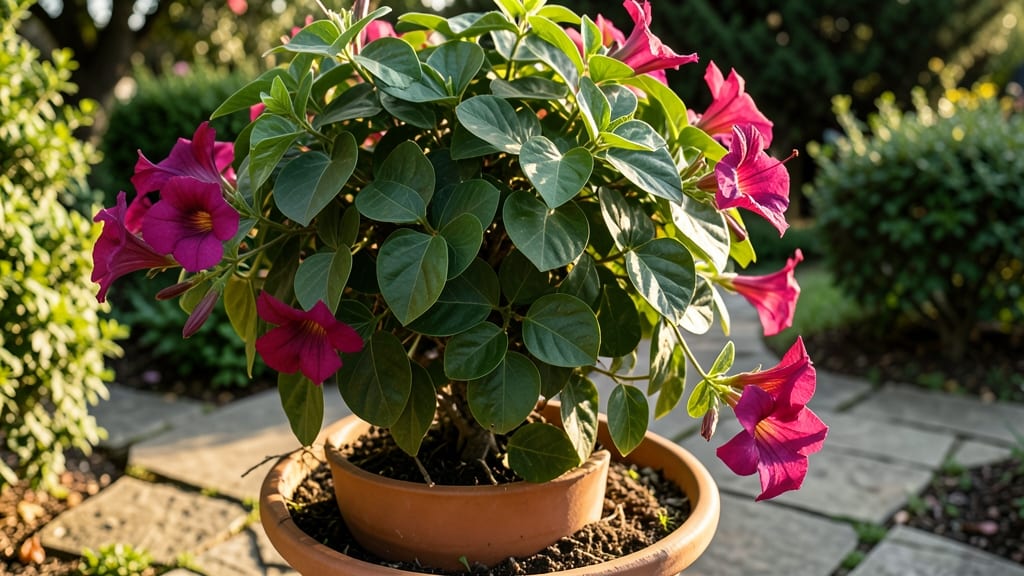
The mandevilla plant is a perennial only in warm climates (USDA zones 9-11), where it survives winter by going dormant and regrowing from roots when temperatures rise. In colder regions, it must be treated as an annual or overwintered indoors to prevent frost damage.
The mandevilla plant's tropical roots explain why it struggles outside its ideal climate range. 🌿 When temperatures dip below 30°F, its delicate stems and leaves freeze, but the root system often survives underground—hence the "dieback" behavior.
This makes it behave like a seasonal perennial in marginal zones (like 8-9), where it regrows each spring from the same roots. However, true hardiness requires consistent warmth, which is why gardeners in colder areas must take extra steps to protect it.
What sets mandevilla apart is its resilience when properly cared for. Unlike true perennials that endure winter above ground, mandevilla's survival strategy relies on underground storage.
This means with the right overwintering techniques—like digging up tubers or moving potted plants indoors—you can enjoy its vibrant blooms year after year, even in colder climates. The key is understanding its limits and working with its natural growth cycle.
💡 In This Article
- Why Mandevilla Dies Back in Cold Weather
- How to Overwinter Mandevilla in Cold Climates
Why mandevilla dies back in cold weather
The mandevilla plant's tropical origins reveal why it struggles in cold climates. Native to South America, it evolved in environments with consistent warmth (65-85°F), where frost never occurs.
When temperatures drop below 30°F, its thin, woody stems and leaves freeze and blacken—this is called "chilling injury," where cellular damage disrupts normal functions. The roots often survive because they're buried deeper, but the above-ground growth dies back completely.
What makes mandevilla unique is its seasonal dieback behavior. In marginal zones (like USDA 8-9), the roots can remain viable underground for months, waiting for spring warmth to regrow.
This explains why it behaves like a perennial in these areas—it's not truly hardy, but its root system acts as a survival mechanism. Unlike true perennials that retain foliage year-round, mandevilla's entire structure collapses in frost, leaving only the roots to restart growth.
The science behind this involves cold sensitivity thresholds. Mandevilla's cells lack the antifreeze proteins found in cold-hardy plants, making them vulnerable to ice crystal formation.
When water inside cells freezes, it expands and ruptures membranes—this irreversible damage explains why the plant can't recover from prolonged exposure to below 28°F. Even brief cold snaps can trigger dieback, which is why gardeners in colder zones must act quickly to protect their plants.
Consider this comparison: A true perennial like peonies can handle -20°F winters because their buds are protected by thick stems and insulating foliage. Mandevilla, however, has no such defenses—its delicate growth habit makes it more akin to a tropical annual than a hardy perennial.
The 30°F threshold is critical: below this, even short exposures can kill the plant's above-ground parts, though roots may linger for months in ideal soil conditions.
What most gardeners don't realize is that mandevilla's dieback isn't just about temperature—it's also about duration of exposure. A single night at 25°F might cause minor damage, but prolonged cold (like a 3-week winter stretch below 32°F) will kill the roots.
This explains why some gardeners in zone 8 report success while others fail: it depends on how consistently the plant experiences freezing conditions. The key is understanding that mandevilla's "perennial" status is conditional—it only behaves like one when protected from sustained cold.
One fascinating detail is how mandevilla's growth cycle mirrors that of bulb plants like dahlias. Both store energy underground during winter and regrow when temperatures rise. However, mandevilla's roots are less robust than dahlia tubers, which can survive -20°F when properly protected.
This makes mandevilla more challenging to overwinter successfully in colder climates, where even well-intentioned gardeners may accidentally expose roots to damaging conditions during storage.