
Aphids
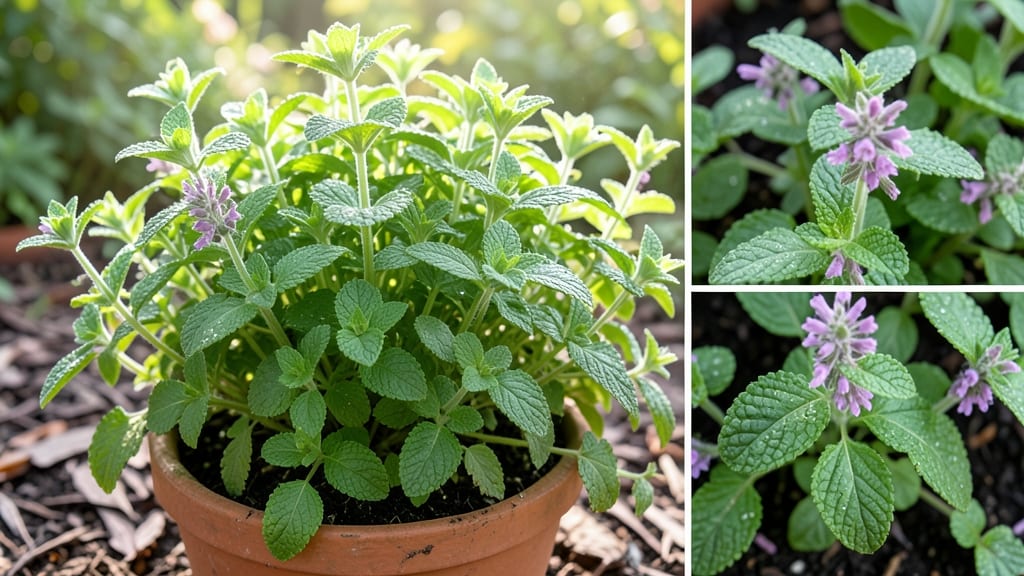
Yes, mint is a perennial plant that thrives year after year, though it typically dies back to the ground during winter months before sprouting fresh growth from its robust root system in spring. Its fast-spreading rhizomes make it return stronger each season unless actively managed.
Mint's perennial nature comes from its underground network of rhizomes—thick, horizontal roots that store nutrients and energy. 🌱 Unlike annuals that complete their life cycle in one season, mint's roots survive freezing temperatures in many climates, allowing it to regenerate when conditions warm again.
This is why you'll often see gardeners swear by mint's persistence, even when the above-ground foliage disappears entirely in winter.
What makes this particularly interesting is how mint adapts to different growing zones. In colder regions (zones 3-7), the plant may go completely dormant, while in milder climates (zones 8-11), it might maintain some green growth year-round.
The key to maintaining healthy perennial mint lies in proper soil drainage and occasional pruning to prevent the rhizomes from becoming overcrowded.
💡 In This Article
- Why Mint Survives Winter Through Its Root System
- Managing Mint’s Perennial Growth in Gardens
Why mint survives winter through its root system
Mint's perennial survival hinges on its specialized underground structure called rhizomes—thick, horizontal roots that function like nature's built-in energy storage system.
These rhizomes store carbohydrates and nutrients produced during the growing season, allowing the plant to endure freezing temperatures that would kill annuals. 🌱 Unlike annuals that complete their life cycle in a single season, mint's rhizomes can remain dormant for months, then quickly regenerate when soil temperatures rise above 40°F in spring.
This hardiness extends across multiple USDA hardiness zones. In colder regions (zones 3-7), mint's rhizomes can survive winter soil temperatures as low as -20°F, though the above-ground growth typically dies back completely. In milder zones (8-11), some mint varieties may maintain partial winter greenery.
The key difference from annuals is that mint's roots continue metabolic activity at reduced levels, preserving the plant's genetic material for next year's growth.
The rhizome system also explains why mint spreads so aggressively—each node along the rhizome can produce new shoots. This horizontal growth pattern creates a dense network that quickly reclaims space after winter dormancy.
Most gardeners notice this when their mint patch emerges 2-3 weeks earlier than surrounding perennials in spring, as the rhizomes begin photosynthesizing before new leaves appear above ground.
What distinguishes mint from other perennials is its ability to regenerate from even small rhizome fragments. A single 1-inch piece of rhizome with a node can produce a new plant, making mint extremely resilient to environmental stresses.
This is why gardeners often find mint popping up years after it was intentionally removed—those persistent rhizomes remain viable in the soil.
Scientifically, this survival mechanism involves a process called bud dormancy, where the plant's apical meristems (growth points) enter a state of reduced activity during cold periods. The rhizomes' high starch content provides the energy needed to "wake up" these meristems when conditions improve.
This is why mint often appears healthier each subsequent year—it's not starting from scratch annually like annuals.
Consider how this compares to annuals like basil or marigolds, which must complete their entire life cycle—from seed to flower to seed production—in just one growing season.
Mint's perennial nature means it can focus its energy on leaf production rather than reproductive structures, resulting in that familiar abundant growth gardeners love (or sometimes curse for being too invasive).
This biological advantage explains why mint has been cultivated for thousands of years across diverse climates, from Mediterranean regions to temperate North American gardens. The plant's ability to "reset" each winter while maintaining its genetic integrity is a masterclass in botanical persistence. 💫