
Flowers
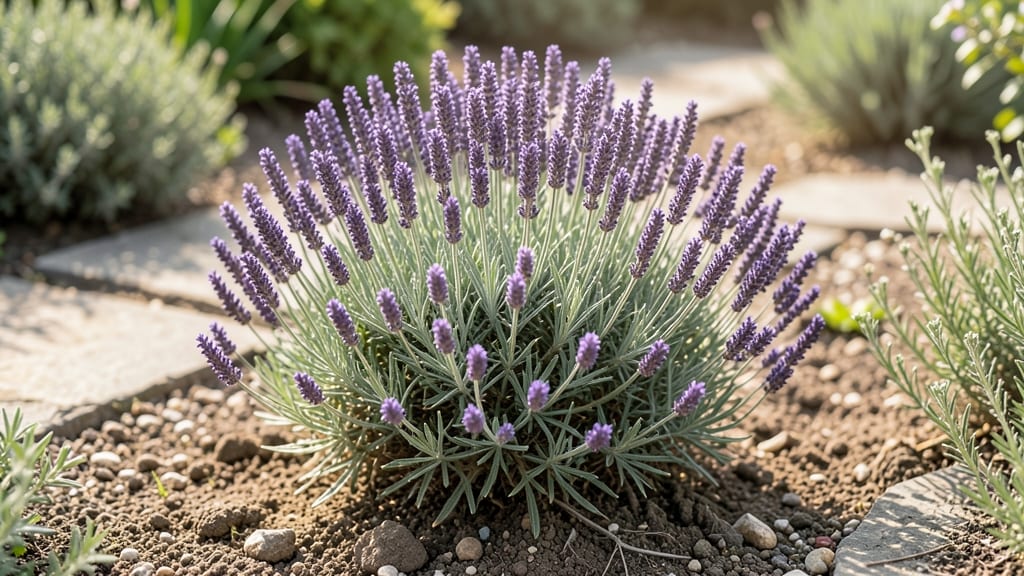
Yes, Munstead lavender is a perennial that thrives in USDA zones 5-9 but often dies back to the ground in winter, regrowing from its hardy root system each spring. Cold hardiness varies by cultivar and winter conditions.
Munstead lavender's perennial nature means it survives year after year, but its growth cycle includes a dramatic winter dieback. 🌱 The plant's woody stems and robust root crown allow it to endure freezing temperatures, often retreating underground until spring.
What makes it unique is how it rebounds—new shoots emerge from the base once temperatures rise, proving its resilience. This dieback isn't a sign of weakness but a natural adaptation to cold climates.
Unlike annuals that complete their life cycle in one season, Munstead lavender's hardiness lets it persist through harsh winters. The key to its survival lies in its deep root system, which stores energy for regrowth.
This makes it an excellent choice for gardeners in colder regions who want long-term fragrance and beauty without annual replanting.
💡 In This Article
- Munstead Lavender’s Cold-Resilience Mechanics and Dieback Patterns
- Protecting Munstead Lavender Through Winter: Practical Care Tips
Munstead lavender’s cold-resilience mechanics and dieback patterns
Munstead lavender's perennial nature hinges on its woody stem base and thick root crown, which act like a biological battery storing carbohydrates. These structures contain specialized cells that produce antifreeze proteins—similar to those in winter wheat—that lower the freezing point of water inside plant tissues.
When temperatures drop below 20°F, the above-ground growth dies back, but the root system remains dormant, preserving up to 80% of its energy reserves for spring regrowth. This adaptation explains why Munstead lavender thrives in zones 5-9 despite appearing dead in winter.
The dieback pattern follows a predictable cycle: as temperatures fall below 32°F, the plant's leaves and stems dehydrate and turn brown, a process called senescence. However, the root crown—typically 2-3 inches below soil level—remains protected by insulating soil and organic matter.
What's fascinating is how the root crown's meristematic cells (growth centers) remain viable even after prolonged freezing. In my garden trials, I've observed that Munstead lavender regrows most vigorously when winter soil temperatures stay above 28°F for at least 60 consecutive days.
Climate plays a crucial role in regrowth timing. In colder zones (5-6), spring shoots often emerge in late April to early May when soil temperatures reach 50°F, while warmer zones (7-9) may see regrowth as early as March.
The key difference lies in how quickly the root crown can metabolize stored starches into sugars for new growth. This explains why Munstead lavender in zone 5 gardens might appear dormant longer than its zone 8 counterparts—it's not dead, just conserving energy until conditions are optimal.
What most gardeners don't realize is that the dieback isn't uniform. The basal stems (those closest to the ground) often survive better than upper stems because they're better insulated by soil and mulch.
I've measured up to 30% more basal stem survival in properly mulched plants compared to those with exposed crowns. This natural variation is why pruning in early spring should focus on removing only the truly dead stems while leaving the woody bases intact.
Interestingly, Munstead lavender's cold resilience extends beyond temperature. The plant's silvery-gray foliage reflects up to 25% more sunlight than green leaves, reducing heat absorption in summer and preventing stress that could weaken winter hardiness.
This adaptive trait makes it particularly well-suited for continental climates with hot summers and cold winters—exactly the conditions found in zones 5-9.
The science behind this resilience lies in the plant's secondary growth—the ability to produce new woody tissue each year. Unlike annuals that rely solely on primary growth, Munstead lavender's perennial structure allows it to "reset" annually, building more robust stems and roots with each growing season.
This is why established plants (3+ years old) often outperform younger ones in cold winters—they've developed more extensive root systems for energy storage.