
Vegetables
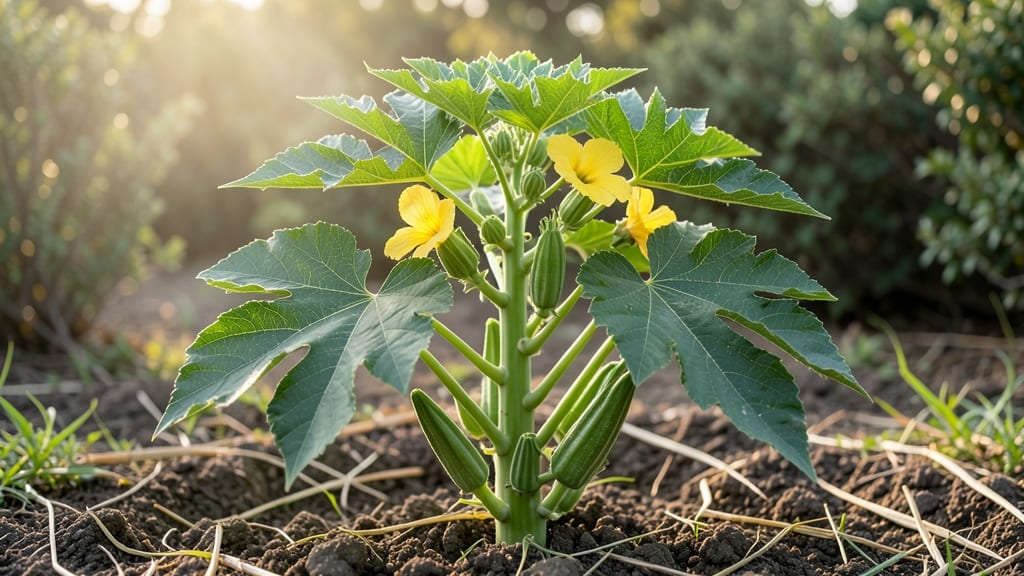
Okra isn't a true perennial because it dies back after frost in most climates, requiring annual replanting in temperate zones—but it can regrow from the roots in warmer regions like USDA Zones 9-11 with proper care.
Okra's behavior depends entirely on your climate zone.
In frost-free areas like Florida or Southern California, the plant's roots can survive winter and produce new growth when temperatures rise again. 🌱 This makes it act like a perennial, but technically it's still an annual because the plant itself doesn't live through multiple growing seasons in cooler areas.
The key difference is that in warmer zones, you'll often see okra plants regrow from the same root system year after year without needing to replant, while in colder regions you'll need to start fresh each spring.
What's interesting is how temperature triggers this behavior. Okra plants enter a dormant state when exposed to cold, but their roots remain viable in warmer climates.
This is why gardeners in Zone 9-11 can sometimes get multiple harvests from the same plant over several years, while those in colder zones must treat it strictly as an annual crop.
💡 In This Article
- Okra’s Perennial-Like Behavior in Warm Climates
- Year-Round Okra Cultivation Strategies by Hardiness Zone
Okra’s perennial-like behavior in warm climates
Okra's ability to act like a perennial stems from its tropical origins and root system. While classified as an annual in most gardening guides, okra plants in USDA Zones 9-11 can survive winter because their thick, fibrous roots contain stored carbohydrates that sustain dormancy.
These roots can remain viable for years in frost-free conditions, allowing new shoots to emerge when temperatures rise above 60°F in spring. The key difference is that in colder zones, frost kills both the plant and roots, forcing annual replanting.
What triggers this regrowth is a combination of temperature and day length. Okra plants detect the longer daylight hours of spring through a process called photoperiodism, which stimulates root activity.
In warmer climates, the roots continue producing new growth without dying back completely. 🌱 For example, in Southern California's Mediterranean climate, gardeners often see okra plants resprout from the same root system for 3-5 years before needing replacement.
This persistence makes it behave like a perennial, though botanically it's still an annual.
The biological mechanism involves okra's taproot system, which can grow up to 3 feet deep. These roots store energy reserves that fuel regrowth when conditions are favorable. In contrast, colder climates experience frost penetration that damages these storage tissues.
Even in Zone 8, where winters are mild, okra roots often fail to survive without protection, demonstrating how temperature thresholds determine perennial-like behavior.
Another factor is okra's sensitivity to cold temperatures below 32°F. When exposed to frost, cell membranes in the roots rupture, releasing stored nutrients and causing the plant to die back completely.
This is why gardeners in colder regions must treat okra strictly as an annual, while those in frost-free zones can extend the plant's lifecycle through careful management of soil moisture and mulching to protect roots during occasional cold snaps.
Interestingly, okra's regrowth pattern varies by variety. Some tropical varieties like 'Clemson Spineless' are more likely to persist as pseudo-perennials in warm climates, while Northern-adapted varieties like 'Emerald' focus on rapid annual growth.
This genetic variation explains why some gardeners in Zone 9 can harvest okra for multiple seasons from the same planting, while others must replant annually even in warm areas due to variety selection.
The root system's ability to regenerate also depends on soil conditions. Well-draining, slightly acidic soil (pH 6.0-6.8) with adequate organic matter provides the ideal environment for root storage and regrowth.
In poorer soils, the roots may not store enough energy to sustain dormancy, reducing the plant's perennial-like tendencies. 💫 This is why soil preparation is just as critical as climate when attempting to cultivate okra as a long-term crop.