
Planting
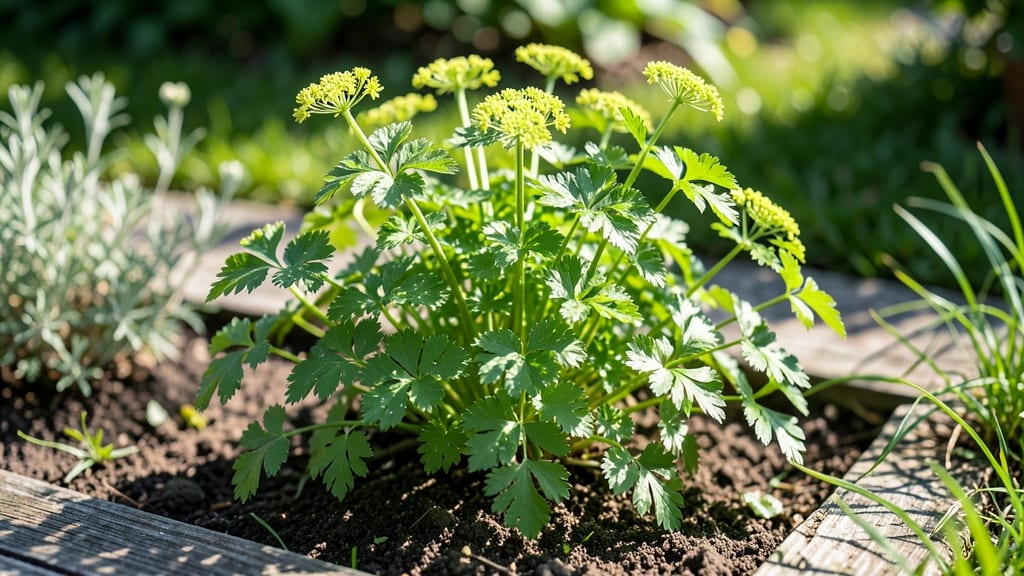
Parsley isn't a true perennial plant—it's biennial, meaning it completes its life cycle in two years. However, in frost-free climates, it can act like a perennial by producing edible leaves for 1-2 years before flowering and dying back.
While parsley doesn't regrow from the same root system year after year like true perennials (such as chives or oregano), its leafy growth habit in mild winters often makes it seem like one. 🌱 The key difference lies in its reproductive cycle—parsley flowers and sets seed in its second year, then typically dies.
Gardeners in colder zones often treat it as an annual, but with proper winter protection (like mulch or containers), you can coax multiple harvests from the same plant. This makes it a practical "perennial-like" herb for many home gardens.
💡 In This Article
- Parsley’s Life Cycle: Biennial vs Perennial Behavior Explained
- Extending Parsley’s Lifespan: Cold-Hardy Growing Tips
Parsley’s life cycle: biennial vs perennial behavior explained
Parsley (Petroselinum crispum) follows a biennial life cycle, meaning it produces leaves during its first growing season and then flowers, sets seed, and dies in its second year. This two-stage process begins when the plant germinates from seed, growing a rosette of leaves in its first year.
Unlike true perennials (such as chives or oregano), parsley doesn't regenerate from the same root system annually—it's designed to complete its reproductive cycle within two years. 🌱
The key difference lies in its flowering behavior. In Year 2, parsley sends up a tall flowering stalk (often 2-3 feet tall) that produces seeds, after which the plant typically dies.
However, in frost-free climates (USDA Zones 8-10), parsley may delay flowering for 2-3 years, extending its leaf production period. This is why it appears perennial in mild winters—it simply hasn't triggered its reproductive cycle yet.
True perennials like chives or cilantro regrow from the same root system year after year, forming new leaves from their crowns. Parsley lacks this regenerative ability—once it flowers, the plant's energy shifts entirely to seed production, leaving little energy for leaf regrowth.
The exception occurs when gardeners cut back flowering stalks promptly, which can sometimes coax a second round of leaf growth before the plant dies back.
What makes parsley unique is its ability to self-seed prolifically. Even after the parent plant dies, dropped seeds can germinate and produce new plants the following spring.
This natural propagation is why parsley often feels like a perennial—it creates the illusion of continuous growth through its offspring, even if the original plant doesn't survive multiple winters. 🌿
For gardeners in colder climates, this biennial nature means parsley must be treated as an annual or overwintered carefully. Without protection, frost will kill the plant before it can complete its cycle.
The plant's hardiness zone range (USDA Zones 3-11) reflects this adaptability—it can survive winters in Zone 3 if properly protected, but its reproductive cycle remains tied to its two-year design.
Consider this comparison: While chives (a true perennial) might regrow from the same clump for 5+ years with minimal care, parsley's lifespan is tied to its flowering trigger. In frost-free zones, this trigger gets delayed, creating the "perennial-like" behavior that confuses many gardeners.
The plant's true nature only reveals itself when winter temperatures drop below 20°F, forcing it to complete its biennial cycle.