
Flowers
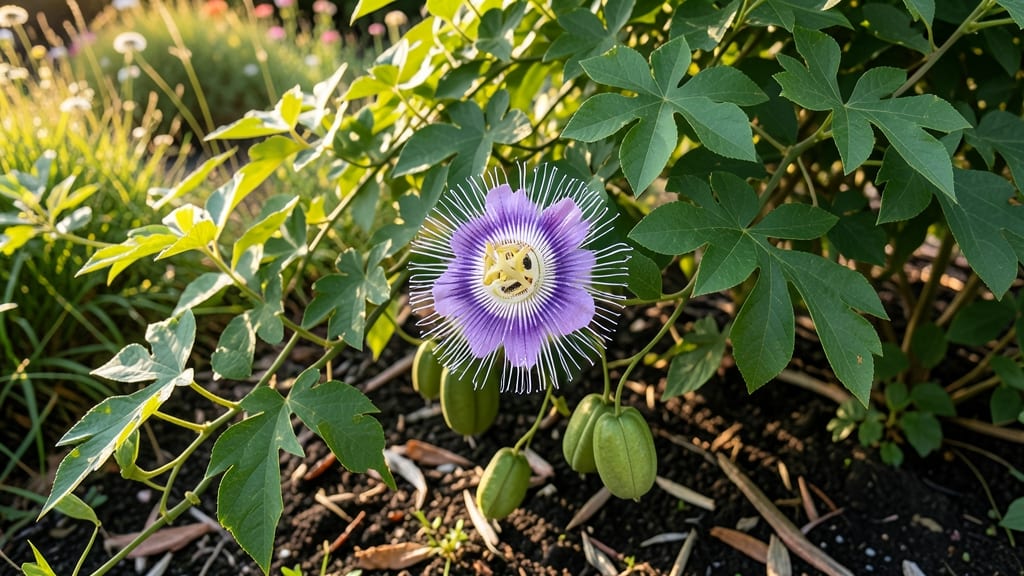
Passion flower is a perennial vine that dies back to the ground in winter but regrows from its roots each spring, making it a hardy, long-lived plant for gardeners in suitable climates.
Yes, passion flower absolutely qualifies as a perennial because its underground root system stores energy through winter dormancy. 🌱 Unlike annuals that complete their lifecycle in one season, passion vines rely on their tuberous roots to push out new growth when temperatures rise.
This dieback cycle isn't a sign of weakness—it's an adaptation that allows them to thrive for decades in zones 7-11 with proper care.
The key difference from annuals is that passion flowers don't need replanting each year. Their roots remain dormant but viable underground, ready to burst with new shoots when conditions improve. This makes them ideal for gardeners seeking low-maintenance vines with striking foliage and flowers.
💡 In This Article
- Passion Flower’s Winter Dieback Cycle Explained
- Caring for Passion Flower Through Seasons
Passion flower’s winter dieback cycle explained
Passion flower's survival strategy hinges on its specialized tuberous root system, which functions like a biological battery. During winter, the plant's above-ground vines and leaves yellow and wither—a process called senescence—but the roots remain alive underground, storing carbohydrates and nutrients.
These roots can swell to 2-3 inches in diameter, resembling small potatoes, and contain enough energy to fuel regrowth when temperatures rise above 50°F in spring.
The dieback isn't random—it's triggered by shorter daylight hours and cooler temperatures, which signal the plant to conserve energy. 🌱 What makes this fascinating is how these roots can remain dormant for months without losing viability.
Studies show passion flower roots can survive 6-8 weeks of freezing temperatures (down to 15°F) in well-drained soil, though prolonged exposure to 0°F or below risks damage. This hardiness explains why passion flowers thrive in Mediterranean climates where winters are mild but distinct.
What distinguishes passion flowers from annuals is their ability to regenerate from these roots each season. Unlike annuals that complete their lifecycle in one growing period, passion flowers use their root systems to "remember" their location and push out new shoots when conditions are favorable.
This persistence can continue for 10-20 years or longer with proper care, making them one of the most long-lived vines in garden landscapes.
The plant's classification as a perennial stems from this root-based survival mechanism. While the foliage may appear completely dead in winter, the roots remain metabolically active at reduced levels, maintaining cellular integrity.
This dormancy phase isn't hibernation in the strict sense—it's more like a strategic energy-saving mode that allows the plant to outlast harsh conditions while preparing for rapid regrowth in spring.
Climate adaptability plays a crucial role in this cycle. In warmer zones (9-11), passion flowers may experience only partial dieback, with some leaves persisting through mild winters.
In cooler zones (7-8), the entire vine typically dies back to the ground, but the roots remain protected by their insulating soil layer. This flexibility explains why passion flowers can thrive across such diverse climates, from Florida's subtropical regions to parts of California's coastal areas.
What most gardeners don't realize is that this dieback cycle actually benefits the plant's health. The winter dormancy period allows for root system renewal and disease resistance buildup. When spring arrives, the roots send up new shoots with vigor, often producing more abundant flowers than the previous season.
This natural renewal process is what makes passion flowers such reliable perennials in garden settings.