
Flowers
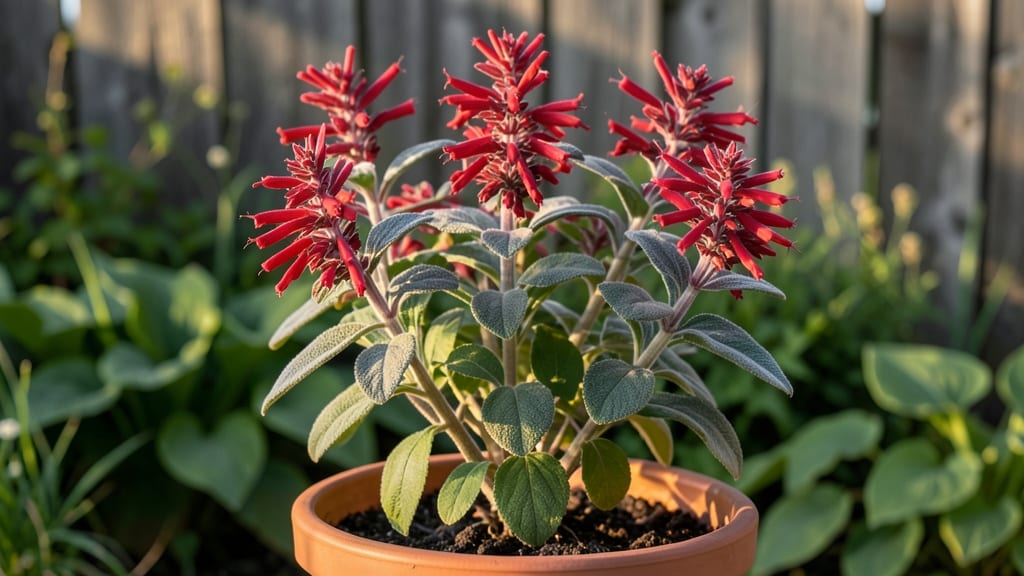
Pineapple sage behaves as a perennial in USDA zones 8-10, where it often goes dormant in winter but regrows vigorously each spring. In colder zones like 7, it may require protection to survive the season.
Pineapple sage's hardiness depends on where you live.
In warmer climates, its woody stems and roots stay alive underground, ready to burst back to life once temperatures rise. 🌱 The plant's leaves may turn brown and crisp in frost, but the root system remains intact—this is why it comes back stronger every year.
In cooler regions, gardeners often treat it as a tender perennial, bringing it indoors or using mulch to shield the roots from freezing.
What makes pineapple sage unique is its ability to adapt. While it thrives as a true perennial in zones 8-10, even in zone 7, you can extend its life with simple winter care. The key is protecting its root system, which is far more resilient than its delicate leaves.
Many gardeners swear by cutting back the plant in fall and covering the base with straw or leaves—this mimics its natural dormancy cycle and keeps it alive for another growing season.
💡 In This Article
- Why Pineapple Sage Dies Back in Winter
- How to Overwinter Pineapple Sage in Cold Climates
Why pineapple sage dies back in winter
Pineapple sage (Salvia elegans) follows a natural dormancy cycle where its above-ground growth slows dramatically in response to temperatures below 40°F. The plant's woody stems and roots contain specialized cells that store carbohydrates, allowing them to survive winter even when leaves turn brown and crispy.
This process is similar to how many bulbs and perennials enter dormancy—it's not death, but a strategic survival mechanism triggered by shorter daylight and colder air.
The plant's evergreen leaves (which stay green year-round in warmer climates) are particularly vulnerable to frost. When temperatures drop below 28°F, the leaves lose moisture rapidly and become brittle, but the root system remains alive underground.
What's fascinating is how this dormancy actually strengthens the plant: The cold temperatures break seed dormancy in many plants, and pineapple sage responds similarly by storing energy reserves that fuel its explosive regrowth in spring. 🌱
In zones 8-10, pineapple sage behaves as a true perennial because the roots and lower stems remain alive throughout winter. The plant's ability to regenerate from these woody bases is what makes it so resilient—even after complete leaf loss.
This is why you'll often see gardeners in Southern California or Florida growing pineapple sage as a long-lived shrub that comes back year after year with minimal care. The key difference in colder zones is that the plant's survival mechanisms get tested more severely.
What most gardeners don't realize is that pineapple sage's dormancy is actually beneficial for its long-term health. The cold period acts like a natural pruning process, removing old growth and encouraging new, more vigorous shoots in spring.
This is why many gardeners report their pineapple sage plants getting larger and bushier each year—even after winter dieback. The plant's ability to regenerate from its root crown (the thickened base where stems emerge) is what makes it such a reliable garden subject in warmer climates.
Here's what happens at the cellular level: When temperatures drop, the plant's meristematic cells (growth centers) become dormant, but they don't die. These cells are protected by a waxy cuticle layer that reduces water loss, while the roots continue to absorb moisture from the soil.
The plant's metabolic rate slows to about 10% of its summer activity level, conserving energy until warmer temperatures signal the start of new growth. This biological adaptation is what allows pineapple sage to bounce back so vigorously each spring.
One interesting comparison is with other salvias like Mexican bush sage (Salvia leucantha), which is also perennial but handles cold differently. While pineapple sage's leaves are its weak point, Mexican bush sage's woody stems are more cold-tolerant.
This is why pineapple sage needs more winter protection in zone 7 than its hardier cousins. The plant's tropical origins (it's native to Mexico's highlands) mean it's adapted to warm winters but can handle brief cold snaps if the roots stay protected.
The bottom line is that pineapple sage's winter dieback isn't a sign of failure—it's part of the plant's natural cycle. In ideal conditions (zones 8-10), this process happens automatically, but in cooler climates, gardeners need to provide the right conditions to support this dormancy.
Understanding this growth pattern helps explain why pineapple sage often comes back stronger than ever after winter, with fresh new growth that can be even more flavorful than previous seasons. 🌿