
Flowers
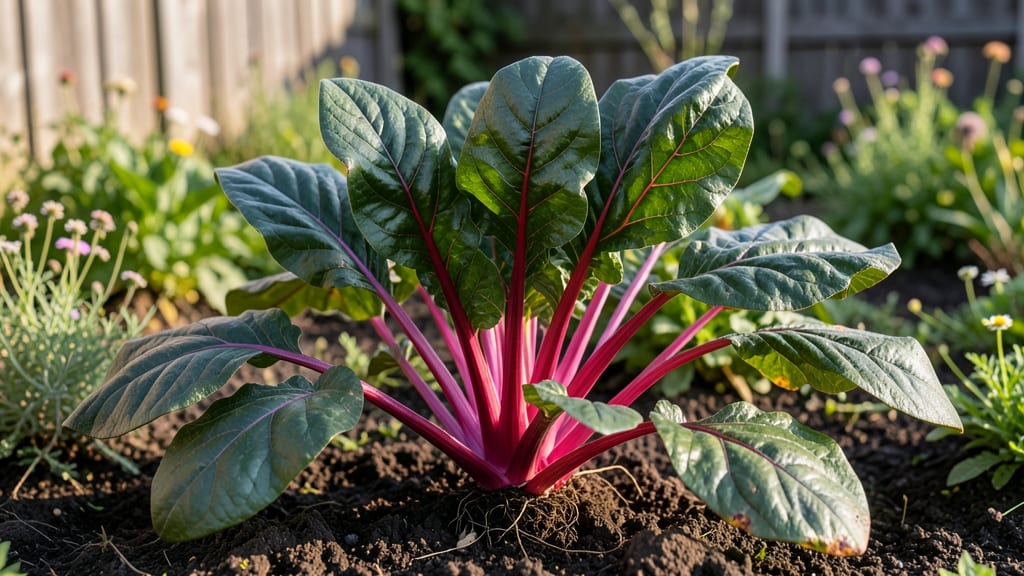
Swiss chard behaves as a perennial in warm climates but is usually treated as a biennial or short-lived perennial in cooler regions, where it produces edible leaves and stems across multiple harvests before flowering or declining. With the right care, you can prolong its productive life significantly.
Swiss chard's classification as a perennial depends entirely on your growing zone. 🌱 In USDA hardiness zones 8-10, it thrives year-round, sending up new shoots from the same roots season after season.
However, in colder regions (zones 3-7), frost triggers its biennial cycle—meaning it completes its life cycle in two years unless you take protective measures.
The key to extending its lifespan lies in consistent soil moisture, regular harvesting to encourage regrowth, and protecting it from extreme cold with mulch or row covers.
What sets Swiss chard apart is its remarkable adaptability. Unlike true perennials that die back but regrow from the same crown, Swiss chard often produces a second flush of growth when cut back properly.
This makes it behave like a semi-perennial in many gardens, where you can enjoy harvests for 12-18 months with minimal effort. The trade-off? Neglecting it leads to bolting (flowering) within 60-90 days in cooler climates, so staying proactive is essential.
💡 In This Article
- How Swiss Chard’s Growth Cycle Differs by Climate
- Extending Swiss Chard’s Lifespan in Gardens
How Swiss chard’s growth cycle differs by climate
Swiss chard's botanical classification as a biennial stems from its natural life cycle in temperate climates. In its first year, it focuses on leaf and stem growth, storing energy in its thick, taproot-like base. This root system can survive mild winters in zones 5-7, allowing regrowth in spring.
However, the true perennial behavior emerges in warmer zones (8-10), where the plant continues vegetative growth year-round without the stress of freezing temperatures that trigger bolting.
The science behind bolting reveals why climate matters so much. Swiss chard detects daylight length through a process called photoperiodism—when days shorten in autumn, it perceives this as a signal to flower and set seed.
In cooler regions, this happens within 60-90 days of planting, while warmer climates delay or prevent bolting entirely. The plant also responds to temperature stress: exposure to 25°F or below for prolonged periods can kill the crown, ending its life cycle prematurely.
What makes Swiss chard unique is its ability to regenerate when cut back properly. Unlike true biennials that die after flowering, Swiss chard often produces a second growth flush when you harvest leaves at 1/3 of the plant's height.
This semi-perennial behavior explains why gardeners in cooler zones can enjoy harvests for 12-18 months with consistent care, even though the plant technically completes its life cycle in two years.
In warm climates, Swiss chard behaves more like a true perennial because it never experiences the cold stress that triggers bolting. The plant continues producing new leaves from the same root system, similar to how rhubarb or asparagus behave.
This is why you'll find Swiss chard growing wild in Mediterranean regions—it thrives in 70-85°F temperatures with minimal seasonal interruption, making it a reliable crop for year-round harvesting.
For gardeners in transitional zones (6-7), the key difference lies in winter protection. Without insulation from mulch or row covers, Swiss chard's crown may freeze back completely, requiring replanting.
But with proper protection, it can survive winters and resume growth in spring, effectively extending its productive lifespan beyond the typical biennial cycle.
Consider this comparison: In zone 9, Swiss chard might produce harvestable leaves for 365 days per year with minimal care, while in zone 5, the same plant would complete its life cycle in 24 months without intervention.
The climate doesn't change the plant's botanical classification, but it dramatically alters how gardeners must manage it to maximize yields.