
Flowers
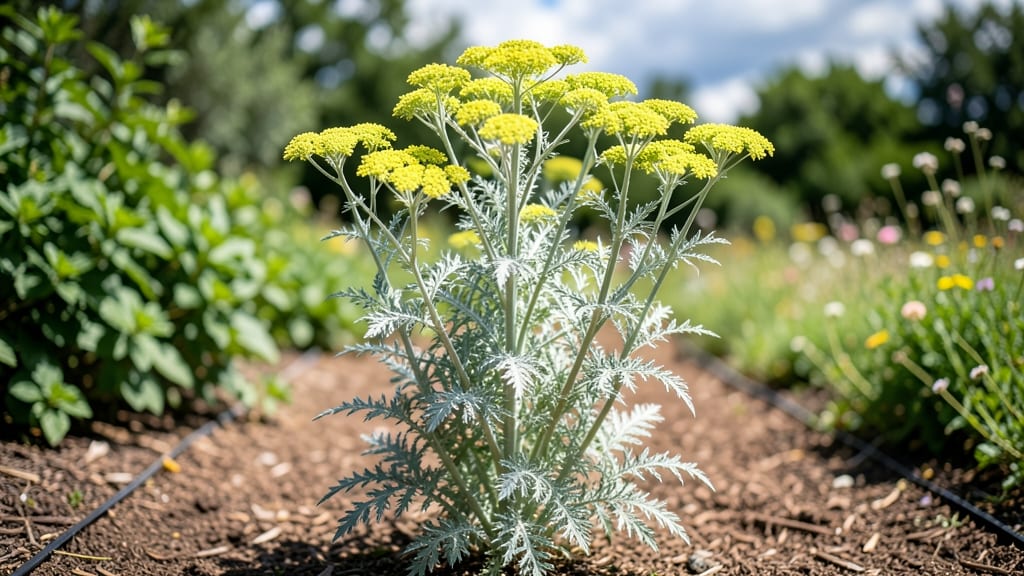
Yes, wormwood is a perennial herb that dies back to the ground each winter but reliably regrows from its hardy root system in spring, thriving in USDA zones 3-9 with proper care.
Wormwood earns its perennial status through its deep, woody root system that stores energy and nutrients underground during dormancy. 🌱 Unlike annuals that complete their life cycle in one season, wormwood plants simply "sleep" through winter, emerging stronger when temperatures rise.
This hardiness means you can plant it once and enjoy its aromatic foliage for years—though some varieties like common wormwood (Artemisia absinthium) may need winter mulch in colder zones to prevent freeze damage.
The key to long-term success lies in understanding its natural dormancy cycle rather than treating dieback as a sign of failure.
What sets wormwood apart from other perennials is its ability to regenerate from even small root fragments. This makes it incredibly resilient for gardeners who might accidentally cut back too much during late-season pruning.
For best results, I recommend planting in well-draining soil with full sun exposure—these conditions help the roots establish deeply, which is crucial for surviving harsh winters. The plant's aromatic leaves also act as a natural pest deterrent, reducing the need for chemical interventions once established.
💡 In This Article
- How Wormwood’s Root System Ensures Perennial Growth
- Caring for Wormwood Over Multiple Seasons
How wormwood’s root system ensures perennial growth
Wormwood’s perennial nature stems from its specialized root system, which includes both a deep taproot and extensive lateral roots that spread horizontally. This structure allows it to access water and nutrients from multiple soil layers, while the taproot stores carbohydrates during dormancy—similar to how asparagus or peonies overwinter.
The root system of common wormwood (Artemisia absinthium) can reach depths of 3-4 feet, while varieties like tarragon (Artemisia dracunculus) develop shallower but denser root networks. These adaptations enable the plant to survive freezing temperatures down to -25°F in protected conditions.
The real magic happens in how wormwood manages its energy reserves. During autumn, the plant converts stored sugars into complex carbohydrates that protect cellular structures from cold damage—a process called cold acclimation.
This is why wormwood leaves yellow and drop in winter: the plant is conserving energy in its roots rather than wasting it on above-ground growth. 🌿 Unlike annuals that rely on seeds for regeneration, wormwood’s roots contain meristematic tissue capable of producing new shoots when conditions improve.
Even if the top growth dies back completely, the root crown (the thickened base where roots meet stems) remains alive and ready to sprout.
Cold tolerance varies significantly between wormwood cultivars. For instance, Artemisia absinthium handles colder climates better than Artemisia vulgaris (mugwort), which may require more winter protection.
The key difference lies in their native habitats: absinthium originates from mountainous regions of Europe where temperatures regularly drop below freezing, while mugwort thrives in warmer Mediterranean climates.
This is why gardeners in USDA zone 4 often need to mulch wormwood heavily (with 4-6 inches of straw or leaves) to prevent freeze damage to the root crown.
What most people don’t realize is how wormwood’s root system actually benefits from regular dieback. The annual cycle of growth and dormancy helps prevent disease buildup in the soil.
When the plant dies back naturally, it forces any pathogens to decompose over winter, reducing the risk of soil-borne infections in spring. This natural renewal process is why wormwood often thrives for 5-10 years with minimal intervention, provided the soil remains well-draining and not waterlogged during winter.
For visual learners, imagine the root system as a tree’s trunk and branches: the taproot is the trunk (deep and stable), while the lateral roots are the branches (spreading out to gather resources). This structure gives wormwood its characteristic resilience.
Even if you accidentally cut back the plant in late fall, as long as 1-2 inches of the root crown remains intact, new shoots will emerge in spring. This makes wormwood one of the most forgiving perennials for gardeners who might be heavy-handed with pruning.
The science behind this perennial survival strategy involves a hormone called abscisic acid (ABA), which wormwood produces in higher concentrations than annual plants. ABA helps regulate dormancy by closing stomata (leaf pores) and redirecting nutrients to the roots.
When spring arrives, the rising temperatures trigger the production of gibberellins—a growth hormone that signals the roots to send up new shoots. This hormonal dance is what turns wormwood’s winter dormancy into a strategic survival mechanism rather than a sign of weakness.