
Flowers
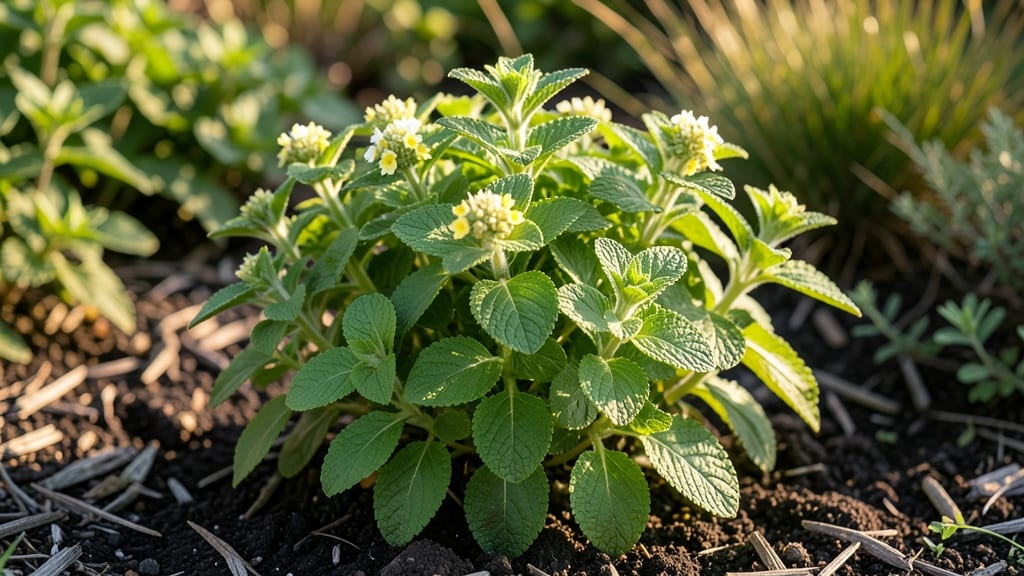
Determining whether lemon balm is annual or perennial depends on your climate: it's a hardy perennial in most regions, returning every spring from its deep root system, but may appear annual-like in warmer zones due to aggressive self-seeding that creates dense patches.
Lemon balm's true nature as a perennial becomes clear when you understand its rhizomatous root system, which stores energy underground through winter dormancy in USDA zones 3-9. 🌱 The plant may look completely dead in cold months, but those roots are waiting patiently for warmer temperatures to send up new shoots.
What often confuses gardeners is its tendency to spread aggressively through self-seeding, especially in mild climates where it may produce new plants annually from dropped seeds rather than relying on root regrowth.
This dual behavior explains why some gardeners mistake lemon balm for an annual—it can create dense stands of new plants each year through seed propagation, while the original mother plant continues its perennial cycle underground.
The key difference lies in how it reproduces: true perennial regrowth comes from roots, while annual-like behavior comes from seeds.
💡 In This Article
- Lemon Balm’s Perennial Growth Cycle Explained
- Managing Lemon Balm’s Self-Seeding Behavior
Lemon balm’s perennial growth cycle explained
Lemon balm (Melissa officinalis) thrives as a perennial thanks to its rhizomatous root system, which spreads horizontally underground like a network of energy storage cells.
These roots can extend 2-3 feet in all directions, allowing the plant to survive winter dormancy in USDA hardiness zones 3-9—meaning it can handle temperatures as low as -40°F when properly established.
The roots store carbohydrates during the growing season, which fuel regrowth when temperatures rise above 40°F in spring.
What makes lemon balm appear "dead" in winter is its complete above-ground dieback, a survival strategy called deciduous perennialism. Unlike evergreens, it sheds all leaves and stems, conserving energy underground.
This process is triggered by short daylight hours and cold temperatures, which signal the plant to enter dormancy. The roots remain alive but metabolically inactive, with respiration rates dropping to near-zero—a state that can last 4-6 months in harsh winters.
When spring arrives, the roots detect rising soil temperatures and begin sending up new shoots within 7-14 days.
The plant’s cold hardiness comes from its ability to produce antifreeze proteins in its roots, similar to how some trees survive freezing. These proteins prevent ice crystal formation in cell walls, which would otherwise rupture tissues.
In warmer climates (zones 8-9), lemon balm may not experience full dormancy, instead growing year-round with slower growth during cooler months. This is why it often looks like an annual in these regions—it doesn’t die back completely but may still self-seed aggressively.
One fascinating aspect is how lemon balm regenerates from just a small root fragment. Even if you accidentally dig up a piece of rhizome as small as 1 inch long, it can produce a new plant when replanted.
This makes it incredibly resilient—gardeners in zone 5 have reported lemon balm returning after being completely mowed down in winter, with new growth appearing from hidden root crowns just below the soil surface.
The plant’s growth cycle follows a predictable pattern: spring regrowth (March-April), peak flowering (June-July), seed production (July-August), and autumn decline (September-October).
The key to its perennial success lies in this underground persistence—while other plants might die back to the ground, lemon balm’s roots remain viable for 5-10 years or more with proper care.
This is why experienced gardeners often say lemon balm is "the plant that never quits"—it always finds a way to come back.
Understanding this cycle helps explain why lemon balm can outlive gardeners’ expectations. Even if you don’t see it for months during winter, those roots are patiently waiting, ready to burst back to life when conditions improve.
This persistence is what truly defines lemon balm as a perennial powerhouse in temperate climates. 💛