
Flowers
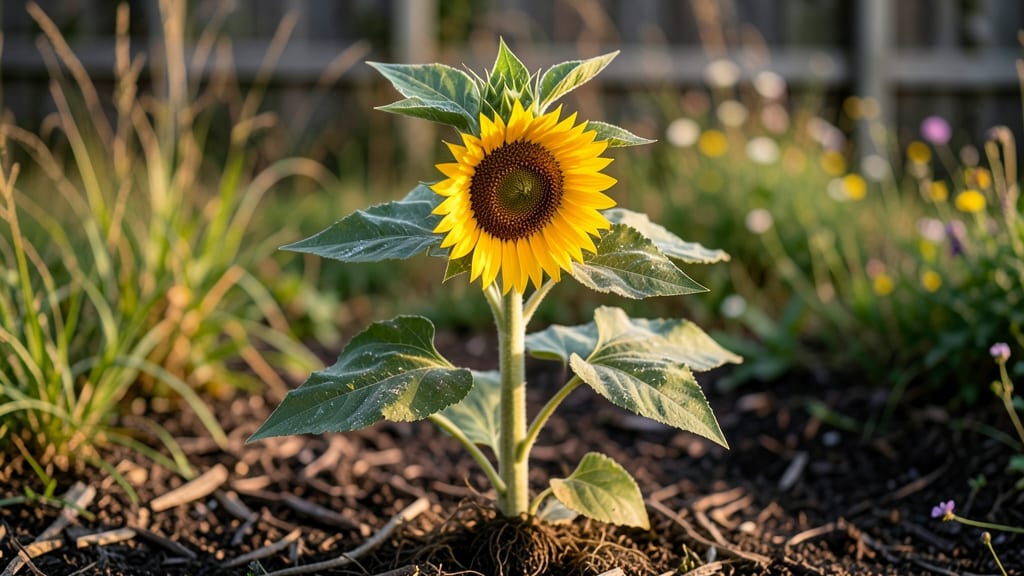
Mexican sunflowers (Tithonia rotundifolia) act as annuals in most regions, but their ability to regrow from the base in mild winters reveals a clever semi-perennial survival trick. These plants rely on hardy roots and self-seeding to bounce back after cold snaps, though they'll still die back completely in frost-prone areas.
Mexican sunflowers aren't what you'd call true perennials—they thrive as annuals in most climates, but their secret weapon is resilience. 🌱 The key lies in their root systems, which can survive light frosts, allowing new shoots to emerge when temperatures rise.
In frost-free zones, they'll often regrow from the base, creating a semi-perennial effect. This makes them perfect for gardeners who want vibrant summer color without the commitment of a true perennial.
What sets them apart is their self-seeding habit. Even if the plant dies back completely, dropped seeds can sprout fresh growth the following season. This natural propagation strategy means you might not need to replant every year, especially in warmer areas.
For gardeners in colder regions, strategic planting near structures or using mulch can help protect those hardy roots during winter.
💡 In This Article
- Why Mexican Sunflowers Die Back Annually
- Maximizing Mexican Sunflower Regrowth in Cold Climates
Why Mexican sunflowers die back annually
The Mexican sunflower's annual dieback stems from its tropical origins and genetic adaptation to warm climates. These plants evolved in Central America where temperatures rarely dip below 40°F, making them highly sensitive to frost.
When nighttime temperatures drop below 32°F, the plant's cellular membranes begin to rupture, triggering a rapid breakdown of chlorophyll and nutrient reserves. This process, called freeze-induced senescence, causes the above-ground growth to blacken and collapse within 24-48 hours of exposure.
What makes this fascinating is how their root systems differ from true annuals. While most annuals die completely, Mexican sunflowers develop a thick, fibrous root crown that can survive light frosts down to 28°F for short periods.
This root zone contains meristematic tissue—undifferentiated cells capable of regenerating new shoots when conditions improve. In frost-free zones (USDA zones 9-11), these roots often produce new growth by early spring, creating the illusion of perennial behavior.
The plant's growth cycle also reveals clever timing adaptations. Mexican sunflowers prioritize reproductive energy over vegetative growth, producing thousands of seeds per plant that can remain viable for 2-3 years in soil. This self-seeding strategy ensures genetic continuity even when the parent plant dies back.
The trade-off is that in colder climates, the seeds may not germinate until summer heat returns, explaining why these plants often appear later in the season than true perennials.
Comparing them to true perennials like black-eyed Susans (Rudbeckia hirta) highlights the difference: while perennials store energy in rhizomes or tubers for years, Mexican sunflowers rely on annual seed production and root resilience.
Their leaves also contain latex-like compounds that can make them slightly toxic to livestock, an evolutionary trait that may protect them from grazing while they regenerate. This dual strategy—seed production and root survival—explains why they thrive in disturbed soils and poor conditions where true perennials might struggle.
What most gardeners don't realize is that this dieback isn't a flaw—it's an adaptation. The rapid above-ground death actually concentrates nutrients in the root system, giving new shoots a nutritional advantage when they emerge.
In tropical climates where they grow as true perennials, this process happens continuously, while temperate climates trigger the annual cycle we observe. The key difference lies in chilling requirements: Mexican sunflowers need no cold stratification to germinate, meaning they'll sprout as soon as soil temperatures reach 60°F.
Understanding this mechanism helps explain why Mexican sunflowers often reappear mysteriously in gardens year after year—even when you didn't plant them. Those persistent volunteers are evidence of both the seeds you missed and the roots you didn't notice.
For gardeners in marginal climates, this dual survival strategy means you can enjoy their vibrant orange-red blooms without the maintenance of true perennials, while still benefiting from their ecological resilience.