
Flowers
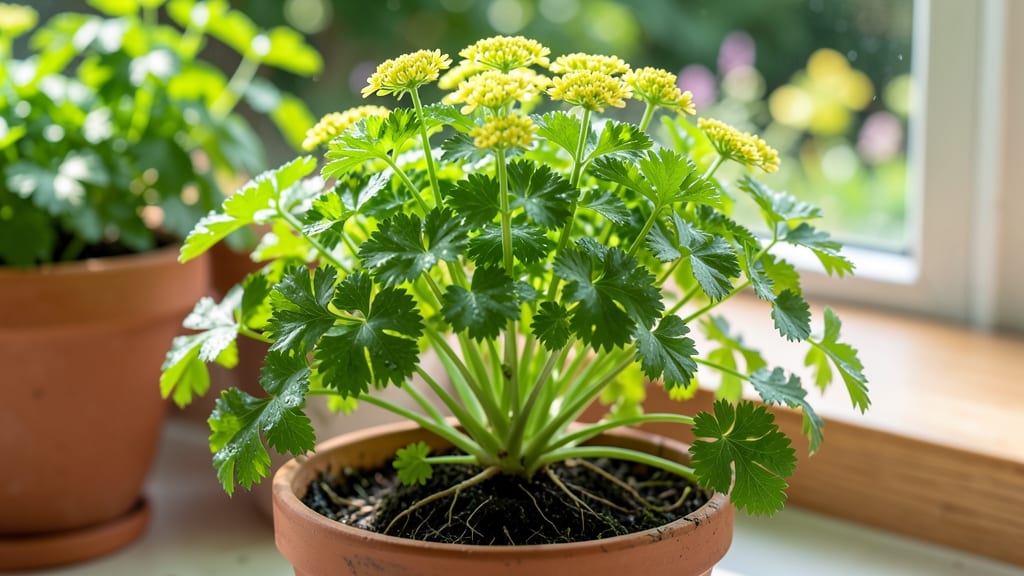
Determining whether parsley is a perennial or annual depends on your climate: it grows as a biennial in most regions but can act as a perennial in USDA Zones 3–9 with winter mulch protection. Its growth cycle and frost hardiness determine whether it returns year after year.
Parsley's classification as a biennial means it completes its life cycle in two years under normal conditions. 🌱 In its first year, it focuses on leaf production, while the second year is dedicated to flowering and seed production—after which it dies.
However, in milder climates where winter temperatures rarely drop below 10°F, parsley can survive and regrow, effectively behaving like a perennial. This is why gardeners in warmer zones often treat it as a long-lived herb rather than an annual.
The key to extending parsley's lifespan lies in proper winter care. Using thick mulch or even a protective layer of straw can shield the roots from extreme cold, allowing the plant to bounce back in spring.
I've found that curly parsley varieties tend to be slightly more resilient than flat-leaf types, though both can thrive with the right conditions. The secret is mimicking nature—parsley evolved in Mediterranean climates where winters are mild, so replicating those conditions in colder regions is what makes it perennial.
💡 In This Article
- Parsley’s Growth Cycle: Biennial vs Perennial Behavior
- How to Extend Parsley’s Lifespan as a Perennial
Parsley’s growth cycle: biennial vs perennial behavior
Parsley follows a biennial life cycle by default, meaning it completes its growth in two distinct stages. During its first year, all energy goes into developing a robust root system and lush foliage—those vibrant green leaves you harvest for cooking.
The plant stores energy in its roots and taproots, preparing for the next phase.
In botanical terms, this is called the vegetative stage, where photosynthesis fuels growth without flowering. 🌱 What's fascinating is how parsley's leaves contain high levels of apigenin (up to 0.3% dry weight), an antioxidant that actually protects the plant's cells during this storage phase.
The second year marks the reproductive stage, where parsley shifts focus to flowering and seed production. You'll notice tall stems emerging (up to 24-36 inches tall) topped with delicate yellow-green flowers that attract pollinators. This flowering triggers the plant's final growth spurt before it dies back.
The key difference between biennial and perennial behavior comes down to temperature tolerance: in climates where winter temperatures drop below 10°F for prolonged periods, the root system freezes and the plant dies completely.
But in milder winters (like those in USDA Zone 7), the roots often survive and regrow in spring.
Here's where climate plays a starring role: parsley originates from Mediterranean regions where winters rarely drop below freezing. In those natural conditions, it behaves like a perennial because the roots remain viable year-round. 💛 The challenge for gardeners in colder zones is replicating this Mediterranean environment.
The plant's natural frost tolerance sits around 20-25°F—just above the lethal threshold for most garden herbs. This explains why parsley often dies back in Zone 5 but thrives in Zone 8 without special care.
What most gardeners don't realize is that parsley's flowering stage is actually its Achilles' heel. Once it flowers, the plant's energy is diverted from leaf production to seed creation, making the leaves bitter and less desirable. This is why commercial parsley is typically harvested before flowering begins.
The timing of this transition depends on daylight hours—parsley is a long-day plant, meaning it flowers in response to increasing daylight (typically after 14 hours of daylight), which explains why it flowers earlier in northern latitudes.
Consider this comparison: in a biennial cycle, parsley lives for two years and dies after flowering. In a perennial scenario (with protection), it can live for 3-5 years or more, producing leaves each spring from the same root system.
The difference comes down to whether the roots survive winter dormancy. For example, in my Zone 6 garden, parsley with 4 inches of mulch often returns for 2-3 years, while unprotected plants die after their first winter.
The science behind this involves something called cold acclimation. As temperatures drop, parsley increases its production of protective sugars and proteins in its roots, similar to how apples develop more antioxidants when exposed to cold.
This natural adaptation helps explain why some parsley varieties (particularly curly types) have slightly better cold tolerance than others. The flat-leaf varieties tend to be more tender and require more protection to survive winter.