
Flowers
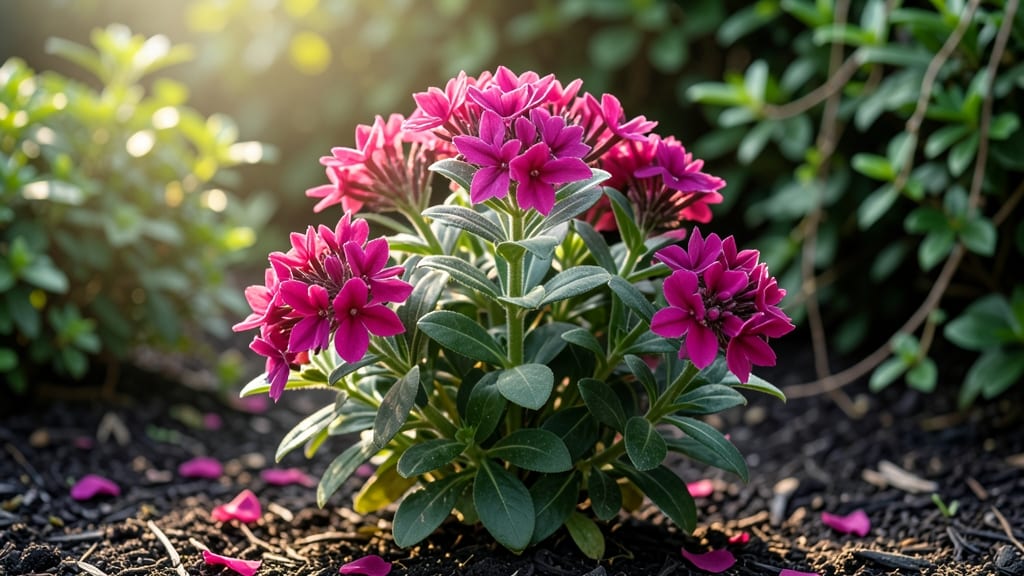
Pentas flowers behave as tender perennials in frost-free zones but function as annuals in colder regions, since they die back to the ground when temperatures drop below 50°F. Their roots often survive mild winters, enabling regrowth when spring warmth returns.
Pentas flowers are classified as tender perennials because they can't survive harsh winters like true perennials, yet their roots frequently endure mild frost. 🌱 In zones with occasional freezes, gardeners often treat them as annuals, replanting each spring.
The key difference lies in their dormancy cycle—when temperatures drop, the foliage blackens, but the roots remain alive beneath the soil, ready to sprout again when conditions improve.
This adaptability makes pentas ideal for container gardening in colder climates. Simply move potted plants indoors before the first frost and resume outdoor placement once nighttime temperatures stay above 50°F.
With proper care, you can enjoy their vibrant blooms year after year, even in regions where winter kills back the plant completely.
💡 In This Article
- Understanding Pentas Flower Cold Sensitivity and Dormancy
- Year-Round Pentas Care: Extending Blooms Beyond Frost
Understanding pentas flower cold sensitivity and dormancy
The pentas flower's reaction to cold stems from its tropical origins in Africa and Asia, where temperatures rarely dip below 50°F. When exposed to frost, the plant's cells begin producing abscisic acid, a plant hormone that signals dormancy.
This triggers the leaves and stems to blacken and wilt—not because the plant is dead, but because it's conserving energy in its roots and rhizomes. Unlike true perennials that store nutrients in woody stems or bulbs, pentas relies on its fibrous root system to survive winter.
In mild winters where temperatures hover around 32-40°F for short periods, pentas roots can endure without damage. Studies show that pentas roots remain viable even after 2-3 weeks of 32°F exposure, provided they're protected by mulch or soil insulation.
This is why gardeners in USDA Zones 9-11 often see their pentas resprout in spring, while those in colder zones must replant annually. The key difference between pentas and true perennials is that pentas lacks cold-hardy structural tissues like woody stems or thick bark.
What makes pentas unique is their ability to regenerate from just a small portion of surviving root. Even if 90% of the foliage dies back, the remaining root system can send up new shoots when temperatures rise above 55°F.
This resilience explains why pentas often bounce back faster than many true perennials after winter damage. For comparison, a true perennial like lavender might take weeks to recover, while pentas can show new growth within 2-3 weeks of warm weather returning.
The dormancy process also affects the plant's water needs. During winter, pentas roots reduce metabolic activity by up to 70%, meaning they require minimal water—only enough to prevent complete desiccation. This is why overwatering dormant pentas can lead to root rot.
In contrast, true perennials often maintain some growth activity throughout winter, requiring more consistent moisture. The pentas' ability to shut down completely makes it more drought-tolerant during dormancy than many other perennials.
Color plays a subtle but important role in pentas' cold response. The plant's deep green foliage contains high levels of chlorophyll, which helps protect cells from cold-induced damage. However, when temperatures drop below 40°F, chlorophyll breaks down rapidly, causing the characteristic blackening you see.
This isn't decay—it's the plant's way of shedding damaged tissue to focus energy on root survival. The same mechanism occurs in other tender perennials like bougainvillea and hibiscus, though pentas handles cold slightly better due to its smaller, more compact growth habit.
Understanding this biological process helps explain why pentas thrives in warm climates but struggles in freezing conditions. The plant's entire lifecycle revolves around temperature cues—when nights stay above 50°F, it grows vigorously; when they drop below 45°F, it enters survival mode.
This adaptability is what makes pentas such a popular choice for container gardening in colder regions, where gardeners can simply move plants indoors before frost hits.