
Flowers
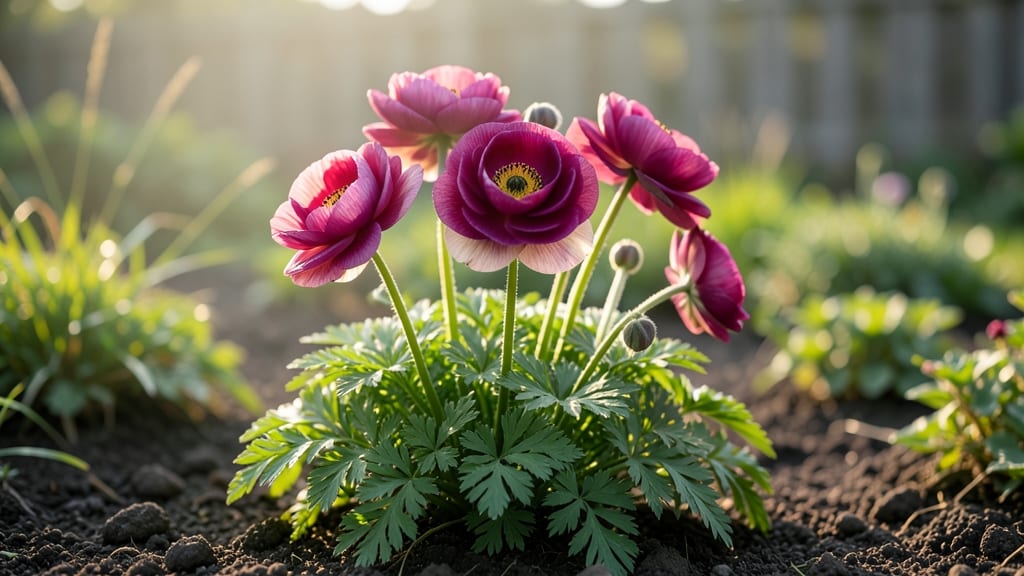
Deciding whether ranunculus flowers are perennial or annual depends on your climate: they're true perennials in mild winters but act like annuals in cold regions, where their delicate tubers freeze and must regrow each season. With proper storage or overwintering, you can coax them back year after year.
Ranunculus tubers are the key to understanding their lifecycle—these thickened roots store energy but lack frost resistance. 🌱 In zones 7-10, they naturally overwinter underground, emerging each spring as perennials.
However, gardeners in colder zones (3-6) typically dig up tubers after foliage dies back, dry them, and store them in cool conditions until replanting. This "annual" treatment actually preserves their perennial nature by protecting the tubers from freezing.
The secret lies in timing: tubers must be fully mature (when foliage yellows) before digging, and storage conditions (40-50°F with good airflow) prevent rot. I've found that even in marginal climates, with this care, ranunculus can reliably return for 3-5 years—far longer than most gardeners expect from "annuals."
What sets ranunculus apart is their ability to adapt: while they won't survive harsh winters in the ground, their tuber-based growth strategy makes them more resilient than many true annuals.
This hybrid behavior explains why they're often misclassified—gardeners see dead plants in spring but don't realize the tubers are still viable below!
💡 In This Article
- Why Ranunculus Tubers Die Back in Winter
- How to Overwinter Ranunculus for Repeat Blooms
Why ranunculus tubers die back in winter
The ranunculus's tuber system is its Achilles' heel in cold climates. Unlike hardy perennials like peonies or hostas that store nutrients in thick, woody roots, ranunculus tubers are fleshy and water-rich—similar to potatoes but more delicate.
These tubers contain minimal protective compounds like antifreeze proteins found in cold-hardy plants. When temperatures drop below 25°F, the cell membranes in these tubers rupture, causing irreversible damage. 🌱
This dieback isn't accidental—it's part of ranunculus's natural dormancy cycle. In their native Mediterranean and Middle Eastern climates, they experience mild winters where tubers remain dormant but unfrozen. The key trigger for regrowth is consistent soil temperatures above 45°F in spring, which signals the tubers to break dormancy.
In colder regions, this natural process is interrupted by frost, forcing gardeners to intervene with storage or replanting.
What makes this especially tricky is the timing of tuber maturation. Ranunculus foliage dies back naturally in late summer/early fall, but the tubers often aren't fully hardened off until 6-8 weeks later.
Digging too early (when tubers still contain high moisture) leads to rot during storage, while waiting too long risks frost damage. This narrow window explains why many gardeners give up—what appears to be an annual is actually a perennial struggling against climate mismatches.
Comparing ranunculus to true perennials like daylilies highlights the difference: daylilies develop deep, fibrous root systems that can regenerate from small fragments, while ranunculus tubers are more like "energy banks" that must be carefully preserved.
The tubers' lack of protective bark or insulating layers means even light freezes can compromise their viability, making them behave like annuals in cold zones despite their perennial classification.
Interestingly, ranunculus tubers share some traits with dahlias—another tuberous perennial often treated as annual in cold climates. Both require similar storage conditions (cool, dark, and dry) to survive winter.
The main difference is that dahlia tubers are slightly more cold-tolerant (20°F threshold) and can sometimes survive in-ground with heavy mulching, while ranunculus tubers are more sensitive. This biological fragility is what forces gardeners into annual treatment, even though the plants themselves are perennials.
Here's what's actually happening at the cellular level: when tubers freeze, ice crystals form in the extracellular spaces first, but as temperatures drop further, these crystals grow and pierce cell walls.
The ranunculus tuber's high water content (about 80% by weight) makes this damage more severe than in woody perennials. Once thawed, these ruptured cells can't repair themselves, leading to the plant's apparent death—until you give the tubers a chance to regrow in warmer conditions. 💫