
Flowers
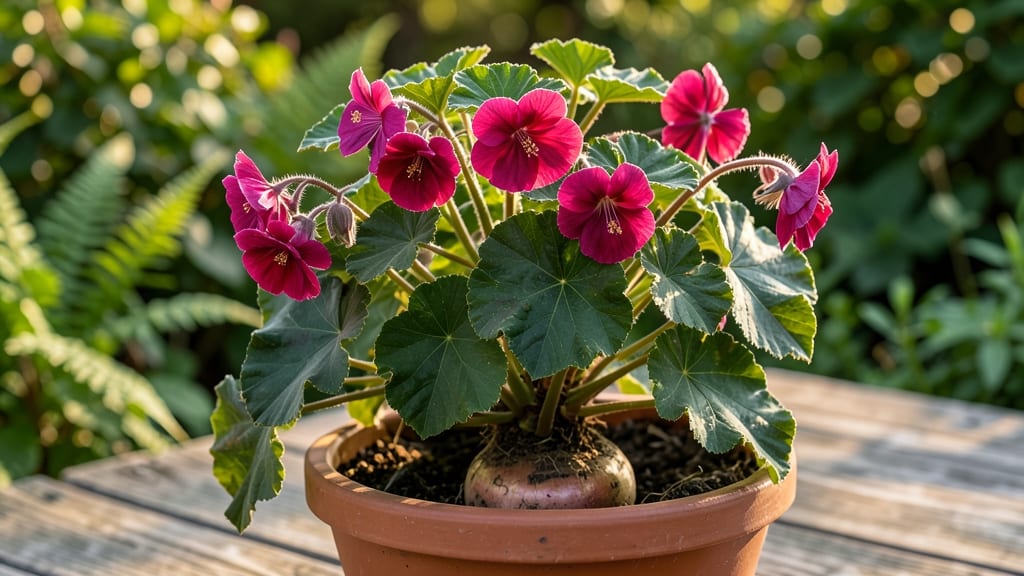
Whether tuberous begonia is annual or perennial depends on your climate: it dies back in winter but regrows from tubers in frost-free zones, while cooler areas treat it as a seasonal plant.
This behavior comes down to the plant's natural survival mechanism—tuberous begonia stores energy in underground tubers during cold months. 🌱 In zones where winter temperatures stay above 60°F (15°C), these tubers remain dormant but viable, sprouting anew when warmth returns.
The key difference is frost: any freeze will kill the plant back to the ground, forcing gardeners in colder regions to treat it as an annual or dig up tubers for overwintering.
For example, in USDA Zone 10 and warmer, tuberous begonia thrives year-round with minimal care, while Zone 7 gardeners must either lift tubers before frost or mulch heavily to protect them. The 60°F (15°C) threshold isn't arbitrary—it's the minimum temperature where tubers can sustain metabolic activity without dying back completely.
💡 In This Article
- How Tuberous Begonia’s Life Cycle Works Across Climates
- Zone-Specific Care for Winterizing Tuberous Begonia
How tuberous begonia’s life cycle works across climates
The tuberous begonia’s life cycle hinges on its underground storage organs—thick, potato-like tubers that act as energy reserves. When daytime temperatures drop below 60°F (15°C), these tubers enter dormancy, halting above-ground growth.
This isn’t just a seasonal pause; it’s a survival strategy where the plant redirects resources to preserve its root system until conditions improve. The 60°F (15°C) threshold is critical because below this, cellular respiration slows dramatically, forcing the plant into a low-energy state.
In frost-free zones (like USDA Zones 10-12), tubers remain dormant but viable throughout winter, ready to sprout when warmth returns. The key difference is that these zones never experience freezing temperatures—even light frost (32°F/0°C) can kill exposed foliage and trigger full dieback.
This is why tuberous begonia thrives as a perennial in these areas: the tubers maintain enough metabolic activity to survive winter’s mild chill without complete shutdown. 🌿 In contrast, colder climates (Zones 7-9) experience true winter dormancy where tubers must be protected from freezing soil.
The biological mechanism involves hormonal shifts: as temperatures drop, the plant increases production of abscisic acid, a stress hormone that triggers dormancy. This hormone slows growth, thickens cell walls in tubers, and reduces water loss—similar to how deciduous trees prepare for winter.
What’s fascinating is how quickly this process reverses: when soil warms above 60°F (15°C), tubers resume growth within 2-4 weeks, producing new shoots from dormant buds along their surface.
This life cycle explains why tuberous begonia behaves differently in various climates. In frost-free zones, the plant maintains a continuous growth cycle with minimal intervention, while colder regions require active winter care. The 60°F (15°C) temperature isn’t just a random number—it represents the metabolic "on/off" switch for tuber activity.
Gardeners in marginal zones (like Zone 9) often experience partial dieback even without frost, as cooler winters may not provide enough warmth to sustain tuber viability.
Consider this comparison: In Miami (Zone 10b), tuberous begonia grows year-round with only light pruning needed in summer. Meanwhile, in Atlanta (Zone 7b), gardeners must either dig up tubers before 32°F (0°C) or use heavy mulch to prevent soil freezing.
The same plant species responds differently based solely on temperature exposure—a perfect example of how climate dictates plant behavior. 🌡️
The tuber’s structure plays a crucial role too. Unlike fibrous roots, tubers store starches and nutrients in specialized cells that can remain viable for years if properly stored. This explains why some gardeners in colder climates successfully overwinter tubers indoors—even after multiple seasons of dormancy.
The plant’s ability to "reset" each growing season from these stored reserves is what makes tuberous begonia so adaptable across such diverse climates.