
Flowers
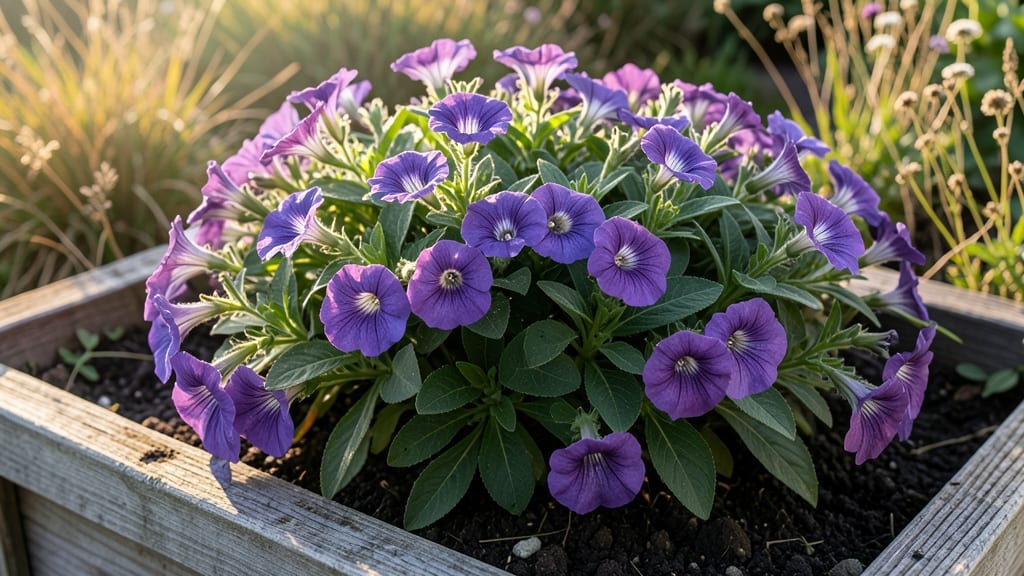
Are wave petunias annuals or perennials? They're annuals in most regions but can become perennials in USDA Zones 10-12, where they'll regrow and rebloom if frost-free. Their tropical roots make them frost-sensitive, though careful overwintering can extend their lifespan.
Wave petunias thrive in warm climates because their delicate foliage can't survive freezing temperatures. 🌿 In cooler areas, they typically complete their life cycle in one season, but gardeners in frost-free zones often see them return year after year.
The key difference lies in their root system—tropical varieties like Wave petunias struggle with cold snaps that trigger dormancy in hardier plants. Even in mild winters, a single frost can kill them back to the ground, which is why most gardeners treat them as annuals unless they take special precautions.
For those in marginal zones (like Zone 9), overwintering indoors with proper light and humidity can trick the plant into thinking it's still summer.
I've had success keeping mine alive through winter by moving potted plants to a sunny window or under grow lights—just avoid letting the soil dry out completely.
This approach lets you enjoy continuous blooms if you replant cuttings in spring, though the first flush of flowers may be smaller than fresh seedlings.
💡 In This Article
- Why Wave Petunias Die Back in Cold Climates
- How to Extend Wave Petunia Blooms Beyond One Season
Why Wave petunias die back in cold climates
Wave petunias originate from tropical regions where temperatures rarely drop below 50°F, making their foliage and stems highly sensitive to frost. When temperatures fall below 32°F, ice crystals form in the plant's cells, rupturing their delicate membranes—a process called freeze-induced dehydration.
This damage triggers a rapid breakdown of cellular structures, causing the plant to blacken and die within hours. 🌡️ Unlike hardy perennials like lavender (which survives down to -15°F), Wave petunias lack the protective mechanisms to withstand even light frosts.
Their shallow root systems—typically growing only 6-12 inches deep—compound the problem. These roots can't access deep moisture or nutrients during cold snaps, leaving the plant vulnerable. Compare this to Supertunia varieties, which have slightly deeper roots and can tolerate brief exposures to 28°F without immediate death.
However, even these hardier types will suffer stunted growth or death if frost persists for more than 24 hours. The key difference lies in their genetic adaptation: Wave petunias prioritize rapid bloom cycles over cold resistance.
What most gardeners don't realize is that Wave petunias also experience physiological shock from sudden temperature drops. Even if the thermometer doesn't hit freezing, a 10°F drop overnight can trigger stress responses that weaken the plant's immune system.
This makes them susceptible to fungal diseases like powdery mildew, which thrive in the damp conditions that often accompany early fall. The plant's natural defense mechanisms—like waxy leaf coatings—simply aren't designed for temperate climates. 🌧️
Another critical factor is their dormancy trigger. Unlike true perennials (such as coneflowers), Wave petunias don't enter a protective dormant state when days shorten. Instead, they continue growing until killed by frost, which means their energy reserves are always directed toward flowering rather than cold storage.
This biological trade-off explains why they're classified as annuals in all but the warmest zones—they've evolved to maximize bloom time rather than survive winter.
For visual comparison, imagine a tropical orchid versus a hardy peony: the orchid's vibrant blooms come at the cost of cold sensitivity, while the peony's resilience means smaller flowers.
Wave petunias occupy the orchid end of this spectrum, with their compact, mounding growth habit (typically 12-18 inches tall) designed for warm-season display rather than winter survival.
This explains why they're often used as seasonal fillers in garden beds, where their bright colors provide instant impact but aren't meant to persist.