
Plants
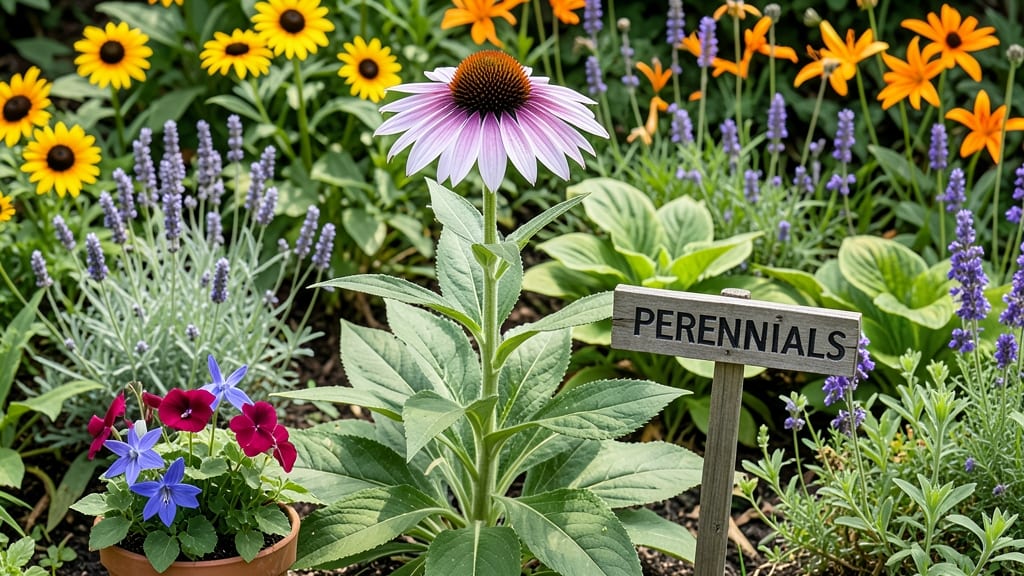
Perennials are plants that regrow each year from the same root system, living for multiple seasons unlike annuals or biennials. They offer long-term beauty and require less replanting, thriving in gardens with proper care.
Perennials thrive because their root systems stay alive underground even during harsh winters or dry spells. 🌱 Unlike annuals that complete their life cycle in one season, perennials store energy in their roots, allowing them to sprout fresh growth each spring.
This makes them perfect for gardeners who want consistent color and structure without yearly replanting. Many popular garden favorites like lavender, hostas, and daylilies fall into this category, offering both beauty and resilience.
What makes perennials particularly appealing is their ability to adapt to local climates over time. Once established, they develop deeper roots that access water more efficiently, making them drought-tolerant once settled.
This hardiness means less work for gardeners in the long run, though proper soil preparation and sunlight consideration are key during the initial planting phase. For beginners, starting with low-maintenance varieties like sedum or Russian sage can provide stunning results with minimal effort.
💡 In This Article
- How Perennial Plants Survive Year After Year
- Choosing Perennials for Your Garden Climate
How perennial plants survive year after year
At the heart of a perennial's survival is its sophisticated root system, which acts like a biological battery. Unlike annuals that invest all their energy into producing seeds in one season, perennials allocate resources to developing extensive root networks that can reach 3-6 feet deep in mature plants.
These roots store carbohydrates (like starches and sugars) during the growing season, creating an energy reserve that fuels regrowth when conditions improve. 🌱 Think of it as nature's version of hibernation—except instead of sleeping in a cave, the plant's roots remain dormant underground while the above-ground parts die back.
The key mechanism is dormancy, a survival strategy triggered by environmental cues like temperature drops or reduced daylight. During winter, perennial roots enter a state of metabolic slowdown, reducing water and nutrient demands while protecting vital tissues from freezing.
Some perennials, like peonies, even develop specialized root structures called corms or rhizomes that contain growth hormones pre-loaded for spring. This biological preparation allows them to emerge within 2-4 weeks of warm weather, often before annuals even germinate.
Seasonal adaptation gives perennials a competitive edge over annuals and biennials. While annuals complete their entire life cycle in 3-12 months and biennials take 2 years to flower and set seed, perennials have evolved to extend their lifespan by 5-100+ years in some cases.
For example, creeping charlie (Glechoma hederacea) can live for decades, spreading aggressively through its underground stolons. This longevity means perennials develop deeper, more complex root systems each year, making them more resilient to drought and soil compaction than their short-lived counterparts.
Contrast this with annuals, which focus all their energy on rapid above-ground growth and seed production within a single season. Their roots are shallow (typically 1-2 feet deep) and don't store energy for future growth.
Biennials represent a middle ground—they grow leaves in their first year but delay flowering until their second year, storing energy in a swollen taproot. However, neither can match the perennial's ability to regenerate from the same root system year after year. 🔥
What most gardeners don't realize is how perennials optimize their growth cycles. In spring, they prioritize leaf production to capture sunlight for photosynthesis, while in summer they focus on flowering and seed production. By autumn, they shift energy back to root development, preparing for winter dormancy.
This cyclical pattern explains why established perennials often bloom more prolifically each year—they're not just repeating the same growth pattern, but actually improving their root infrastructure with each passing season.
Consider the case of hostas, which can live for 50+ years in ideal conditions. Their fibrous roots spread outward in all directions, creating a dense network that stabilizes the soil and prevents erosion.
This root structure also allows hostas to recover quickly from damage, whether from pests, weather, or accidental mowing. The trade-off? Their slow initial establishment period (typically 2-3 years) compared to annuals that flower within weeks.
But once mature, perennials offer gardeners a self-sustaining, low-maintenance solution that annuals simply can't match.