
Vegetables
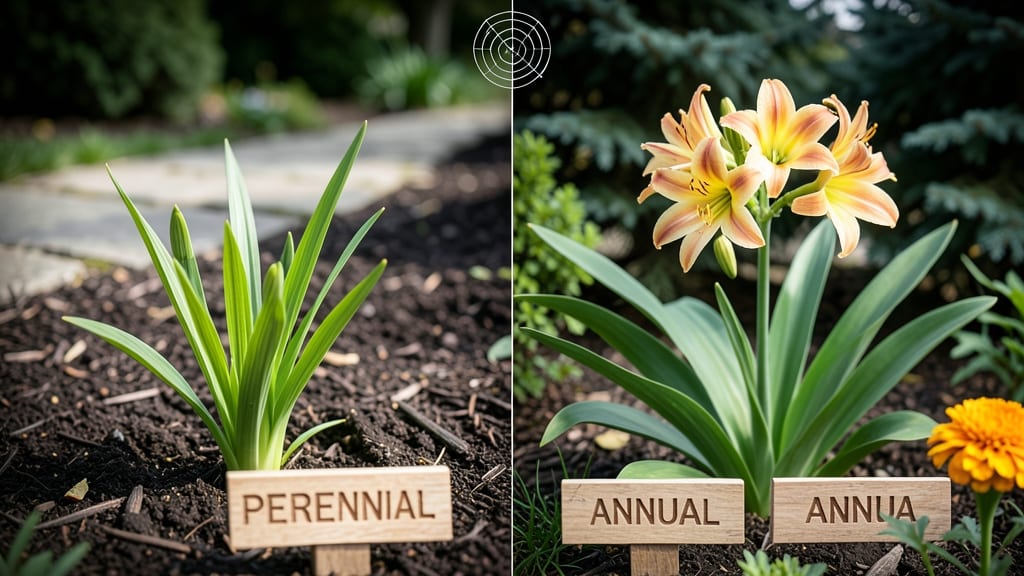
"Per" in perennial means through or during, defining plants that live for multiple years, regrowing from the same root system annually. This prefix distinguishes them from annuals (one-year lifespan) or biennials (two-year cycles), ensuring consistent foliage or flowers each season.
The prefix "per" in perennial comes from Latin roots that literally mean "through the years," reflecting how these plants persist across multiple growing seasons. 🌱 Unlike annuals that complete their life cycle in one season or biennials that take two years, perennials rely on underground roots or rhizomes to survive winter dormancy, then emerge stronger each spring.
This built-in resilience makes them ideal for gardeners seeking low-maintenance plants that deliver seasonal interest without yearly replanting.
Understanding this distinction helps you choose plants that match your gardening goals. For example, hostas and daylilies return year after year, while marigolds (annuals) must be replanted annually. The "per" prefix isn't just linguistic—it's a biological promise of longevity that transforms your garden into a self-sustaining ecosystem.
💡 In This Article
- Etymology and Botany Behind the Term Perennial
- How to Identify Perennial Plants vs. Annuals in Your Garden
Etymology and botany behind the term Perennial
The word "perennial" traces its roots to Latin, where "per" means through and "annus" means year—literally "through the years."
This linguistic foundation perfectly captures how these plants defy seasonal death, persisting through winter's dormancy to reemerge each spring. 🌿 The term first appeared in 16th-century botanical texts to describe plants that survived multiple growing seasons, contrasting sharply with annuals that complete their life cycle in just 6-12 months.
Botanically, the "per" prefix reflects a plant's survival strategy: perennials develop specialized underground structures like rhizomes (horizontal roots), tubers (storage organs), or corms (solid stems) that store nutrients. These structures can remain viable for years—some asparagus crowns, for example, produce shoots for 15-20 years from a single planting.
The root system's ability to regenerate above-ground growth each season is what truly distinguishes perennials from their short-lived counterparts.
What makes this mechanism fascinating is how it works at the cellular level. Perennial plants enter a state of dormancy during winter, where metabolic activity slows dramatically—sometimes to just 1-5% of normal rates.
This survival adaptation allows them to withstand freezing temperatures (down to -20°F for hardy species like peony) while preserving energy reserves. When spring arrives, these stored nutrients fuel rapid regrowth, often within 2-4 weeks after thawing.
Consider the contrast with annuals: their entire life cycle—from seed germination to seed production—occurs in a single growing season. Perennials, however, allocate energy differently, prioritizing root development over seed production in their first year.
This shift becomes evident in their second and third years, when they devote more energy to flowering and foliage growth, creating the lush, long-lasting displays gardeners love. 🌸
The term "perennial" wasn't just a botanical curiosity—it became a gardening game-changer. Before the 18th century, most garden plants were annuals, requiring complete replanting each year. The introduction of perennials like lavender and roses revolutionized landscape design by offering year-after-year color with minimal replanting.
This longevity also made perennials economically advantageous, as they reduced the need for constant seed purchases and labor-intensive replanting.
Modern plant science has even identified "perennialization" as a breeding goal for crops like wheat and corn, where researchers attempt to create perennial versions of annual grains.
The challenge lies in maintaining the plant's ability to regenerate while preserving its yield potential—a testament to how deeply the "per" concept has influenced both botany and agriculture. For gardeners, this means choosing perennials isn't just about aesthetics; it's about investing in plants that grow smarter with each passing season.