
Companion Plants
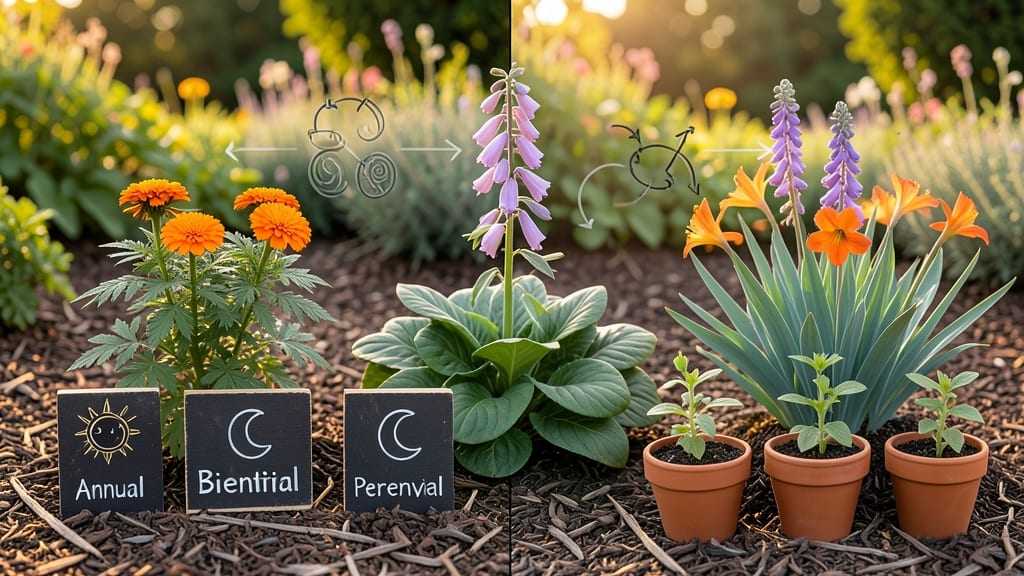
The difference between annual, biennial, and perennial plants lies in their lifespan and growth cycles: annuals complete their life cycle in one season, biennials take two years, and perennials regrow yearly from the same root system. Each type has unique planting and care requirements for optimal growth.
The key distinction between these plant types is their life cycle duration and how they allocate energy. Annuals focus all their growth on flowering and seeding within a single season, often dying after producing seeds.
Biennials, like carrots or parsley, store energy in their roots during the first year to fuel flowering and seed production in the second.
Perennials, such as lavender or hostas, develop deep root systems that persist year after year, allowing them to regrow from the same base. 🌱 This difference directly impacts how you plan your garden—annuals offer quick seasonal color, biennials provide staggered blooms, and perennials deliver long-term structure and beauty with minimal replanting.
Understanding these growth patterns helps you choose plants that fit your timeline and gardening goals. For example, if you want vibrant summer blooms that you can replace easily, annuals like marigolds are perfect. Need a plant that thrives with less attention?
Perennials like coneflowers will reward you for years with minimal effort. The right choice depends on your climate, maintenance preferences, and whether you prioritize short-term impact or long-term investment.
💡 In This Article
- Lifespan and Growth Cycle Breakdown of Annuals, Biennials, and Perennials
- Gardening Tips for Planting and Maintaining Annual, Biennial, and Perennial Species
Lifespan and growth cycle breakdown of annuals, biennials, and perennials
The fundamental difference between these plant types lies in their biological strategies for survival and reproduction. Annuals, like zinnias or sunflowers, complete their entire life cycle—from seed germination to flowering, seed production, and death—in just one growing season.
Their rapid growth is fueled by a "live fast, die young" approach, where all energy is directed toward producing seeds before the first frost. This strategy is particularly effective in unpredictable climates where plants can't afford to waste energy on long-term structures.
Biennials, such as foxgloves or onions, take a more strategic two-year approach. During their first year, they focus on building robust root systems and leafy growth while storing energy in specialized tissues.
This stored energy allows them to flower and set seed in their second year, often triggered by environmental cues like shorter daylight hours. The classic example is parsley—its first year produces only leaves, while the second year brings delicate white flowers.
This delayed flowering gives biennials a survival advantage in cooler climates where a single season might not provide enough warmth for complete maturation.
Perennials, including plants like peonies or black-eyed Susans, have evolved an entirely different survival strategy. They develop deep, extensive root systems that persist year after year, allowing them to regenerate above-ground growth annually from the same base.
This persistence requires significant energy investment in root development during the first growing season, but pays off with decades of growth. For instance, some herbaceous perennials like hostas can live for 20+ years, while woody perennials like shrubs may live for centuries.
The trade-off is that perennials typically grow more slowly than annuals during their initial establishment phase.
Climate plays a crucial role in determining which plant types thrive in your region. Annuals dominate in warm climates with short growing seasons, where they can complete their life cycle before winter arrives.
Biennials often flourish in temperate zones with distinct seasonal changes, while perennials excel in regions with mild winters that allow them to remain dormant but alive underground.
For example, in Zone 5 where winters are harsh, biennials like hollyhocks might struggle to complete their second-year flowering, while hardy perennials like coneflowers thrive with proper winter protection.
Here's how these growth patterns manifest in physical characteristics: Annuals tend to have soft, herbaceous stems that can't survive freezing temperatures, while biennials develop stronger stems in their second year to support flowering. Perennials often produce woody stems or thickened root structures that can withstand freeze-thaw cycles.
The leaf structure also differs—annuals typically have thinner leaves optimized for rapid photosynthesis, while perennials often develop thicker, more leathery leaves that can store water and nutrients during dormancy periods.
Understanding these biological mechanisms helps explain why some plants behave differently in your garden. For example, if you plant biennial carrots in their first year expecting edible roots, you'll be disappointed—they'll produce only leafy tops until their second year.
Similarly, trying to overwinter annual marigolds will result in frost damage, while perennials like lavender will simply go dormant and regrow in spring. The key is matching your planting expectations to each plant's natural growth timeline.
The energy allocation strategies of these plants also explain their different maintenance requirements. Annuals need frequent watering and fertilization to support rapid growth, while perennials benefit from less frequent but deeper watering that encourages root development.
Biennials require careful management of their first-year growth to ensure they have enough energy reserves for flowering the following season. This understanding allows gardeners to tailor their care routines precisely to each plant type's needs, maximizing success and minimizing frustration.