
Flowers
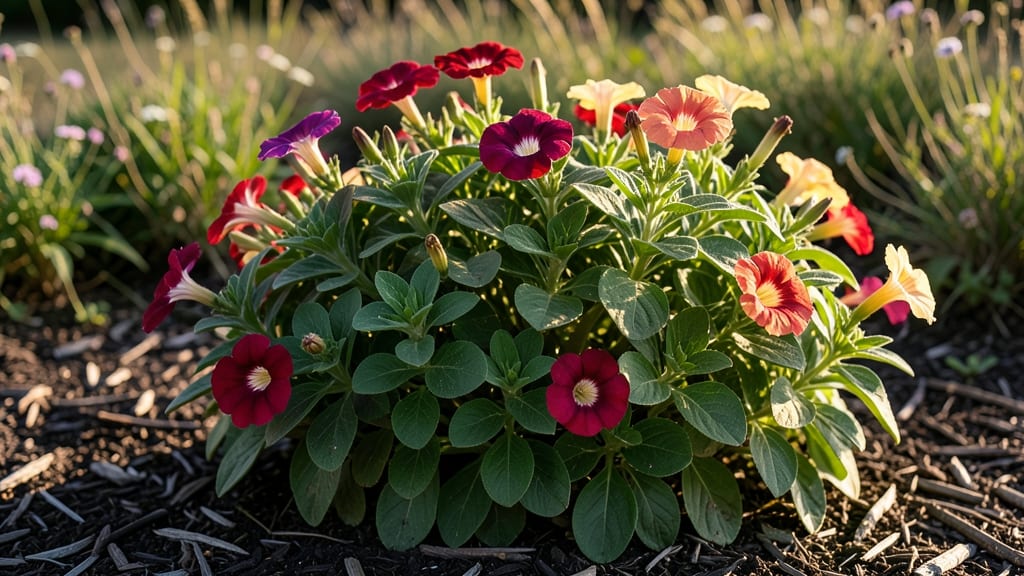
Whether the four o'clocks are perennials or annuals depends on your climate: they're annuals in colder regions but perennials in warm, frost-free zones (USDA zones 9-11), returning each year from their tuberous roots. In cooler areas, replanting seeds annually keeps the blooms coming.
This dual nature comes from their underground storage organs—thick, potato-like tubers that store energy. In warmer climates, these tubers survive winter's mild chill, sending up new shoots each spring. 🌱 The key difference? Frost kills tubers in colder zones, forcing gardeners to replant seeds every year.
Even in perennial zones, a hard freeze can wipe them out, so protecting them with mulch or bringing tubers indoors during unexpected cold snaps extends their lifespan.
For gardeners in transitional zones (like 8 or 10), the solution is simple: dig up tubers before the first frost, store them in dry peat moss or sand, and replant them next spring.
This mimics their natural perennial behavior while adapting to your climate's limitations. The result? Four o'clocks that bloom reliably year after year with minimal effort.
💡 In This Article
- Why Four O’Clock Plants Act Like Perennials in Warm Climates
- Pro Tips for Extending Four O’Clock Blooms Year-Round
Why four o’clock plants act like perennials in warm climates
Four o’clock plants (Mirabilis jalapa) thrive as perennials in warm climates because their growth cycle revolves around tuberous roots—thick, potato-like storage organs that act like nature’s energy banks. These tubers store carbohydrates, proteins, and water during the growing season, allowing the plant to survive dormant periods.
In USDA zones 9-11, where winter temperatures rarely drop below 30°F, the tubers remain viable underground, protected by the soil’s insulation. This is why you’ll see four o’clocks returning year after year without replanting—it’s not magic, it’s biology! 🌱
The key difference between annual and perennial behavior comes down to frost sensitivity. In colder zones (USDA 7 and below), even light freezes (28°F) can kill tubers, forcing the plant to complete its life cycle in a single season.
However, in frost-free zones, the tubers enter a dormant but alive state, conserving energy until spring’s warmth triggers new shoots. Think of it like a bear hibernating—it’s not dead, just waiting for the right conditions.
The tubers can even survive for years if left undisturbed, though their vigor may decline after 3-5 years.
Here’s where climate plays a starring role: In transitional zones (like USDA 8), four o’clocks can act as short-lived perennials—they’ll return for 2-3 years before needing replanting. This happens because occasional light frosts may not kill the tubers outright but weaken them over time.
The plant’s natural defense mechanism kicks in when temperatures drop below 40°F, prompting the tubers to shut down growth and prioritize survival. This adaptive strategy explains why some gardeners in marginal zones report sporadic regrowth—it’s a battle between the plant’s resilience and winter’s severity. ❄️
What most gardeners don’t realize is that soil temperature matters just as much as air temperature. Tubers need the ground to stay above 45°F to avoid chilling injury, which can cause rot. In warm climates, the soil rarely drops this low, creating ideal conditions for perennial growth.
Meanwhile, in cooler regions, the ground freezes solid, making it impossible for tubers to survive. This is why four o’clocks in zone 5 behave like annuals—they simply can’t endure the winter conditions. The plant’s entire strategy hinges on this delicate balance between energy storage and environmental survival.
For a real-world example, consider two gardens: one in Miami (zone 11) and one in Denver (zone 5). In Miami, the same four o’clock plant might produce blooms for a decade with minimal care, while in Denver, gardeners must replant seeds every spring.
The difference? Miami’s tubers never face freezing soil, while Denver’s do. This isn’t just about temperature—it’s about consistency. Four o’clocks thrive where the environment stays within their comfort zone year-round. 🌿
The botanical term for this behavior is "geophyte"—a plant that stores nutrients underground to survive harsh conditions. Four o’clocks are classic geophytes, and their tuber-based strategy is what makes them so adaptable. While they can’t handle frost, they’ve evolved to dominate warm, stable climates where other plants might struggle.
This is why they’re often found in tropical and subtropical regions, where they’ve flourished for centuries without human intervention. Understanding this mechanism helps explain why some gardeners in zone 8 see sporadic returns—it’s not random, it’s the plant’s way of pushing its limits. 💡