
Flowers
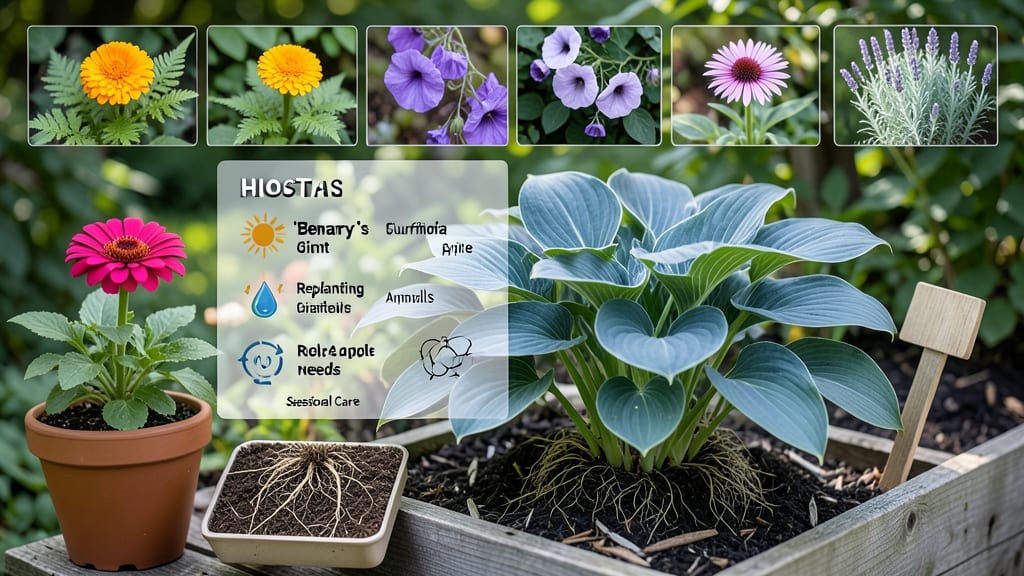
The difference between annuals and perennial flowers is their lifespan: annuals thrive for just one growing season, producing vibrant blooms before dying back, while perennials regrow each year from their root systems, delivering seasonal color with less replanting effort.
The key distinction isn't just how long they live, but how they grow. Annuals like marigolds or zinnias pack their entire life cycle into a single season, making them perfect for quick color bursts in gardens or containers.
Perennials, on the other hand, like coneflowers or black-eyed Susans, store energy underground during winter, then burst back to life each spring with minimal intervention. This difference directly impacts your gardening strategy—annuals need regular replanting for continuous blooms, while perennials build their presence over time with less maintenance. 🌸
For gardeners, this means annuals are ideal for seasonal displays or filling gaps quickly, while perennials create long-term beauty with less replanting. Many gardeners combine both for year-round interest—annuals for summer pops and perennials as foundational plants that return reliably.
💡 In This Article
- Annual vs Perennial Flower Lifecycles Explained
- Gardening Strategies for Annuals and Perennials
Annual vs perennial flower lifecycles explained
Annual flowers follow a dramatic one-season lifecycle where they germinate, grow, bloom, set seed, and die—all within a single growing season. This rapid cycle is genetically programmed; for example, marigolds complete their entire life span in about 90-120 days from seed to seed production.
The trade-off for this speed is that annuals pour all their energy into producing flowers and seeds quickly, often sacrificing structural growth. This is why many annuals like zinnias or petunias have delicate stems that can't support themselves without stakes.
Perennials, however, operate on a completely different timeline. They develop underground storage organs—roots, rhizomes, or tubers—that act like biological batteries, storing carbohydrates and nutrients during their dormant phase. Peonies, for instance, can live for decades, with some specimens over 100 years old still producing stunning blooms.
The key biological mechanism is their ability to photosynthesize and store energy throughout the growing season, then enter dormancy when temperatures drop below 40°F, only to regrow from their robust root systems when conditions improve.
Seasonal cues trigger these cycles. Annuals respond primarily to temperature and daylight changes, with most germinating in spring when soil temperatures reach 60-70°F.
Perennials, however, have more complex timing: they must balance growth with energy storage. Day-neutral perennials like coneflowers bloom continuously when temperatures are favorable, while others like daffodils time their blooms to early spring before leafing out.
This biological clock ensures perennials emerge just as annuals begin to fade, creating natural succession in gardens.
Climate plays a crucial role in these differences. Annuals thrive in regions with short growing seasons because they can complete their cycle before frost. In warmer climates, some annuals may even self-seed and return the following year, blurring the line between true annuals and short-lived perennials.
Perennials, meanwhile, must adapt to freeze-thaw cycles. Hardy perennials like lavender can survive winters with -20°F temperatures, while tender perennials like cannas die back to their rhizomes when temperatures drop below 30°F.
What most gardeners don't realize is how these lifecycles affect flower structure. Annuals often have lighter, more ephemeral blooms because their energy goes into reproduction, while perennials invest in sturdy stems and foliage that can support multiple blooming cycles.
For example, a sunflower (annual) might produce 1,000 seeds in its single season, while a black-eyed Susan (perennial) might produce fewer seeds but return with 50-100 flowers each year for decades. 🌻
The practical implication is that annuals deliver immediate gratification with bold, showy blooms, while perennials offer long-term investment with gradual beauty. This biological difference explains why gardeners often use annuals for seasonal color and perennials as foundational plants that create structure and return year after year.