
Planting
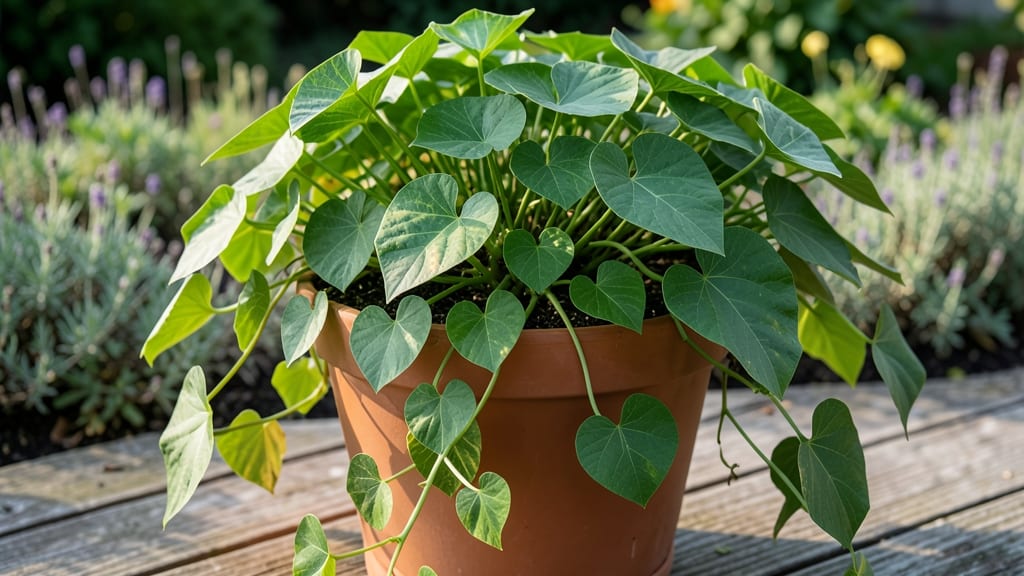
This sweet potato vine plant acts like a perennial—it dies back to the ground each winter but survives through tuberous roots, sprouting fresh growth when temperatures rise, though gardeners often replant it annually for easier management.
The sweet potato vine plant behaves as an annual or perennial depending on conditions. Its survival strategy relies on underground storage roots, which store energy during dormancy.
Unlike true annuals that complete their lifecycle in one season, sweet potato vine simply goes dormant in cold weather, then re-emerges when soil temperatures warm. 🌱 The key difference is that while it behaves like a perennial in ideal climates, its delicate nature makes annual replanting practical in frost-prone zones where winter kill risk exists.
Many gardeners mistakenly treat it as an annual because the above-ground foliage dies completely, but the roots remain viable. With proper care—like protecting tubers from freezing or propagating cuttings indoors—you can extend its lifespan indefinitely. This dual nature makes it a flexible choice for both short-term and long-term gardeners.
💡 In This Article
- Why Sweet Potato Vine Dies Back and Regrows
- How to Overwinter Sweet Potato Vine for Year-Round Growth
Why sweet potato vine dies back and regrows
The sweet potato vine's lifecycle hinges on its tuberous roots, which act like natural energy banks. These thickened roots store carbohydrates, proteins, and water during dormancy—similar to how sweet potatoes themselves survive winter.
When soil temperatures drop below 50°F, the plant undergoes cold-induced dormancy, causing the above-ground vines to yellow and die back. This isn't death—it's a survival strategy. The roots remain alive underground, conserving energy until warmth returns. 🌱
This process differs from true annuals, which complete their entire lifecycle in one season. Sweet potato vine simply pauses growth, unlike plants like marigolds that die completely after flowering. The tuberous roots can remain viable for years, sprouting new shoots when soil temperatures reach 60-65°F.
In tropical climates, this plant grows continuously, while in temperate zones, it follows this seasonal pattern. The key difference is that true perennials also develop woody stems or crowns, while sweet potato vine relies entirely on its storage roots.
What triggers regrowth? It's primarily temperature-dependent. The roots detect rising soil warmth through specialized cells that monitor ethylene gas production—a natural plant hormone that signals growth resumption. This is why you often see new shoots appearing in early spring, sometimes even before the last frost.
The plant's ability to regenerate from just a small root fragment (as little as 1 inch) makes it incredibly resilient. 💫
However, this dormancy comes with risks. If the roots freeze solid (below 20°F), they can die back permanently. This is why gardeners in colder climates often treat it as an annual—replanting new tubers each spring provides more reliable results.
The trade-off is that annual replanting ensures you always get fresh, vigorous growth without the uncertainty of overwintering. In milder climates, the plant can truly act as a perennial, returning year after year with minimal care.
One fascinating aspect is how the plant allocates resources. During active growth, it prioritizes vine production over root storage. When temperatures drop, the plant shifts energy production to the roots, creating a natural carbohydrate reserve that can sustain it for months.
This dual-purpose system explains why sweet potato vine can be both a decorative ground cover and a food source—its roots are edible (though not as sweet as store-bought sweet potatoes). The plant's ability to balance growth and storage makes it uniquely adaptable to different growing conditions.
For gardeners, understanding this lifecycle means you can time your planting strategies more effectively. If you're in a transitional climate, you might choose to plant in early spring when soil temperatures are consistently above 60°F, giving the roots time to establish before winter.
Or, you could take cuttings from established plants in late summer and root them indoors, effectively creating your own perennial stock. The plant's flexibility is part of what makes it such a popular choice for both containers and garden beds. ✨