
Flowers
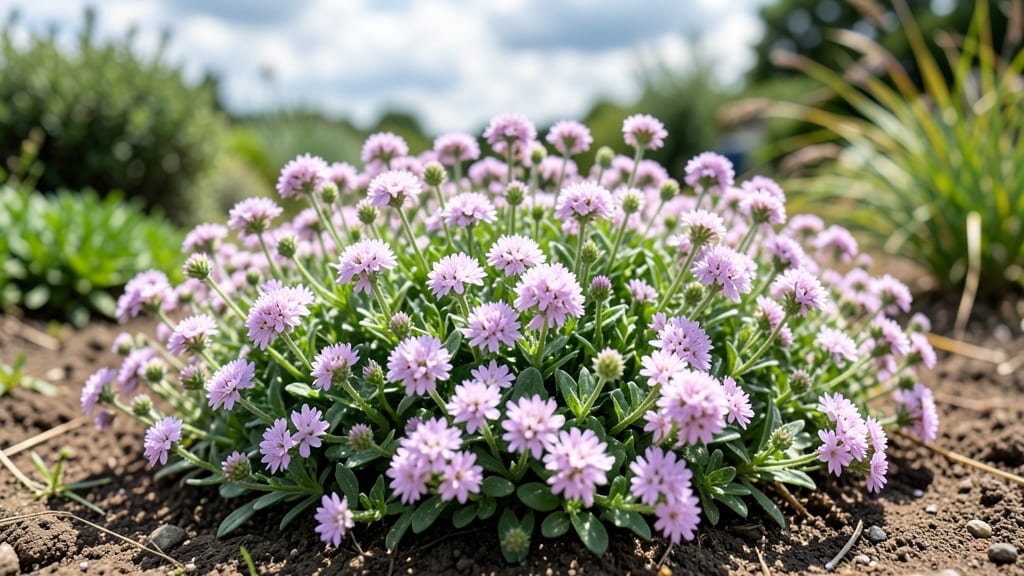
True alyssum flower perennials return each year in cooler regions, showcasing lobed leaves and delicate clusters of white, pink, or purple blooms, while most gardeners confuse annual types like Lobularia maritima for perennials.
Perennial alyssum varieties actually belong to different genera like Aurinia or Berteroa, not Lobularia—the latter being the classic annual "sweet alyssum" we know. 🌸 The key difference lies in their cold tolerance: true perennials survive winters in zones 4-8, while annuals bolt in heat and freeze in frost.
I've seen gardeners keep Lobularia coming back in mild climates, but it's still technically annual behavior.
For reliable perennials, look for Golden Tuft or Snowdrift varieties—they develop deeper root systems and tolerate 10-20°F temperatures. These hardy types also bloom later in the season when annuals fade, giving you extended color. The trade-off? Perennial alyssum grows slower and may need winter mulch in colder zones.
💡 In This Article
- Key Botanical Differences Between Perennial and Annual Alyssum
- Best Perennial Alyssum Varieties for Long-Term Garden Success
Key botanical differences between perennial and annual alyssum
The most reliable way to distinguish true perennial alyssum from annual varieties is by examining their leaf structure and root systems.
Perennial types like Aurinia saxatilis (golden alyssum) have deeply lobed, almost fern-like leaves that grow in dense rosettes, while annual Lobularia maritima leaves are simpler with rounded lobes and a more sprawling habit.
The perennial leaves also feel slightly waxier due to a protective cuticle that helps them survive winter desiccation.
Root depth is another game-changer. True perennials develop taproots that can extend 12-18 inches deep, allowing them to access moisture during dry spells and store nutrients for regrowth.
Annuals, however, only develop shallow fibrous roots (6 inches max), which is why they bolt and die when stressed. 🌱 This root difference explains why perennial alyssum thrives in USDA zones 4-8 while annuals struggle below zone 7.
Growth habit reveals their life cycles too. Perennial alyssum grows more slowly in spring but forms woody stems at the base by late summer, creating a semi-woody base that persists through winter.
Annuals, meanwhile, grow rapidly in cool weather but produce hollow stems that collapse when temperatures rise above 75°F. I've noticed this firsthand when my 'Snowdrift' perennial variety regrew from the same spot year after year, while my 'Sweet Alyssum' plants always needed replanting.
Flower clusters also differ subtly. Perennial types often have smaller, denser flower heads (about 0.5 inches across) that appear later in the season, while annuals produce more open clusters (0.75 inches) that bloom prolifically in spring.
The perennial blooms also tend to have a slightly stronger honey scent, which attracts pollinators like hoverflies during their later bloom period when annuals have faded.
Cold tolerance is the ultimate test. True perennials can handle 10-20°F temperatures with proper mulching, while annuals begin dying at 28°F unless heavily insulated. The key mechanism here is their ability to produce antifreeze proteins during cold snaps—something annuals lack.
This is why you'll see perennial alyssum peeking through snow in late winter while annual varieties have long disappeared.
One common misidentification occurs with Berteroa incana (hoary alyssum), which looks like an annual but is actually a short-lived perennial that may self-seed aggressively. The difference? True perennials like Aurinia species return from the same root system each year, while Berteroa relies on seed germination.
This explains why some gardeners think they have perennials when they're actually dealing with persistent annuals.