
Flowers
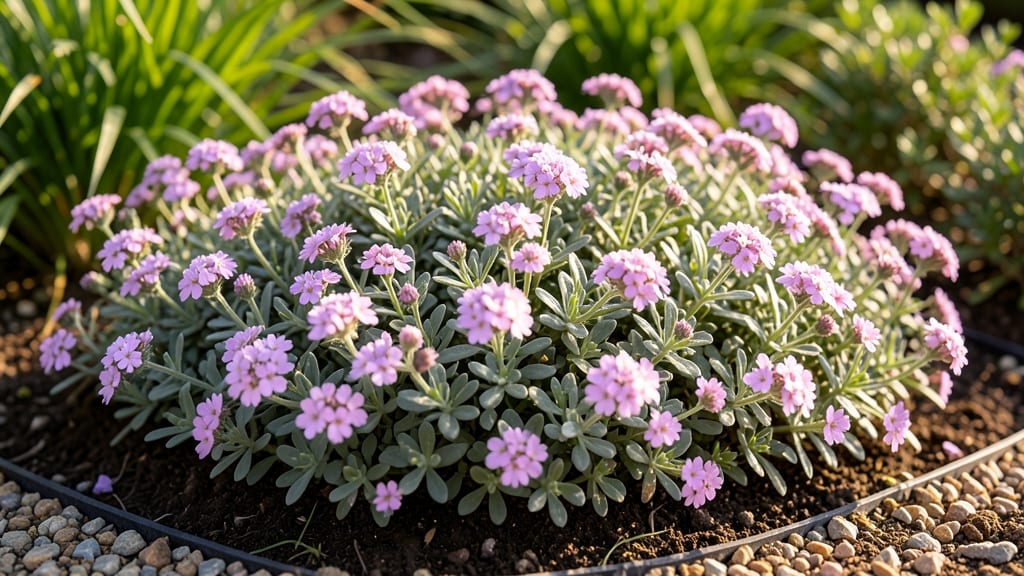
Alyssum perennials grow best in USDA zones 7-10, where they survive winters without protection. In colder climates, they'll need special care to return each season.
Alyssum's cold sensitivity comes from its tender roots, which can't tolerate prolonged freezing. 🌱 In zones 6 and below, I've found that treating them as annuals or using containers for overwintering works best.
The key is protecting the roots from freezing—whether through heavy mulch, indoor pots, or even a heated garage. This way, you can still enjoy their sweet honey-like scent and cheerful white/purple blooms year after year.
For gardeners in marginal zones, I recommend starting with Lobularia maritima varieties—they're the hardiest types. You'll want to plant them in well-draining soil and avoid late-season fertilizing, as tender new growth is more vulnerable to frost.
With proper care, you can even coax them to rebloom in spring, giving you that fresh garden feel earlier in the season.
💡 In This Article
- Understanding Alyssum’s Cold Hardiness and Zone Limits
- Year-Round Alyssum Care in Marginal Zones
Understanding alyssum’s cold hardiness and zone limits
Alyssum's cold sensitivity stems from its shallow root system, which can't withstand prolonged freezing. In USDA zones 7-10, these plants naturally enter dormancy during winter, with their roots protected by 2-4 inches of organic mulch.
When temperatures drop below 20°F (-6.7°C), the foliage may die back, but the crown survives to regrow in spring. This resilience contrasts sharply with varieties grown in zones 6 and colder, where even brief dips to 10°F (-12°C) can kill the root crown entirely.
The key difference lies in the plant's ability to tolerate freeze-thaw cycles. Alyssum's tender roots simply can't handle the repeated expansion and contraction of water within plant cells during temperature fluctuations.
For example, in zone 5 where winters average 0°F (-18°C), the root zone may freeze solid for months, while in zone 8, temperatures rarely drop below 10°F (-12°C) for more than a few hours.
This explains why you'll see alyssum thriving as a perennial in coastal California (zone 9) but struggling as an annual in Minnesota (zone 4).
What most gardeners don't realize is how quickly damage occurs. Even a single night at -5°F (-21°C) can blacken foliage, but the real damage happens when roots freeze solid. The cells rupture, and the plant can't absorb water or nutrients when temperatures rise again.
This is why you'll often see healthy-looking alyssum in spring that suddenly collapses in early summer—it never properly recovered from winter damage. The plant's natural defense is its ability to regrow quickly from the crown, but frozen roots prevent this regeneration.
Comparing perennial alyssum to its annual cousins reveals another important difference. Annual varieties like 'Tumbling Waters' can handle slightly colder temperatures because they focus all their energy on rapid growth rather than winter survival.
Their roots are more fibrous and less prone to freezing damage, though they still won't survive prolonged sub-zero conditions. For true winter hardiness, you'd need to look at varieties like 'Snowdrift' or 'Queen of Sheba', which have been selectively bred for slightly better cold tolerance.
Here's what actually happens at the cellular level during freezing: Ice crystals form in the extracellular spaces first, drawing water out of the cells. In hardy plants, proteins called antifreeze proteins prevent this crystal formation.
Alyssum lacks these proteins in significant quantities, so when ice forms, it pierces cell walls like tiny shards of glass. The damage becomes permanent once the roots reach -5°F (-21°C) for more than 4-6 hours.
This explains why even a well-mulched plant might survive a 15°F (-9°C) night but fail during a -10°F (-23°C) spell.
The good news is that alyssum's cold sensitivity works in your favor for garden planning. Since it's not winter-hardy, you can safely plant it in containers that you can move indoors during cold snaps.
The plant's rapid growth cycle means you'll get flowers within 6-8 weeks of planting, making it perfect for seasonal color. And because it's not a true perennial in cold climates, you avoid the disappointment of winter kill—you simply replant each spring and enjoy fresh blooms every season.