
Orchid Care
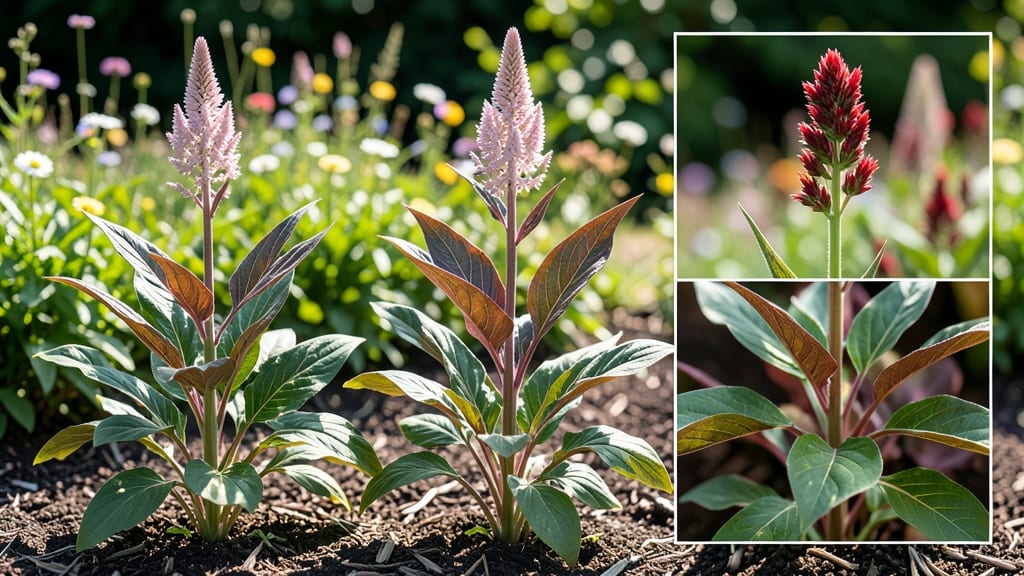
Determining whether amaranthus is annual or perennial depends on its variety: most amaranthus plants are annuals, completing their life cycle in one growing season, though some may regrow from roots if cut back early. Their winter dieback stems from cold sensitivity, not perennial persistence.
Amaranthus plants are classified as annuals because they thrive in warm conditions and cannot survive freezing temperatures. 🌱 Unlike true perennials such as Swiss chard or kale, which regrow from their roots year after year, amaranthus plants die back when exposed to frost.
However, some varieties—like certain types of amaranthus tricolor—may produce new growth from their base if protected from cold, creating the illusion of perennial behavior. This regrowth is temporary and not true perennialism.
Understanding this distinction helps gardeners plan their planting schedules.
For example, in colder climates, you might need to start new plants each spring rather than relying on overwintering. 💫 The key is recognizing that while amaranthus may seem resilient, its true nature as an annual means it won’t return reliably without replanting.
💡 In This Article
- Why Amaranthus Dies Back in Winter
- How to Extend Amaranthus Harvests Year-Round
Why amaranthus dies back in winter
Amaranthus plants originate from tropical and subtropical regions, where temperatures rarely drop below 50°F (10°C). This genetic heritage explains their inability to tolerate frost—when temperatures fall to 32°F (0°C) or lower, the plant’s cellular structure freezes, causing irreversible damage.
Unlike true perennials such as Swiss chard or kale, which have developed cold-hardy adaptations like antifreeze proteins in their cells, amaranthus lacks these survival mechanisms. Its leaves and stems contain high moisture content (80-90%), which expands when frozen, rupturing cell walls and leading to rapid dieback.
The plant’s life cycle is tightly linked to warm seasons. In spring, amaranthus germinates quickly—some varieties emerge within 5-7 days at 70-85°F (21-29°C)—and grows aggressively to produce seeds before winter arrives. This rapid growth strategy is a survival tactic in its native habitat, where frost is rare.
The seeds themselves are the plant’s only means of overwintering, lying dormant until temperatures rise again. 🌱 What confuses gardeners is that some amaranthus varieties may produce new shoots from the base if cut back early in the season, but these are not true regrowth—they’re actually new plants emerging from seeds that fell to the ground.
Comparing amaranthus to true perennials like kale reveals stark differences in cold tolerance. Kale, for instance, can withstand temperatures down to -10°F (-23°C) thanks to its ability to produce protective sugars and proteins that stabilize cell membranes. Amaranthus, however, lacks these adaptations.
Even in mild winters, where temperatures hover around 35-40°F (2-4°C), the plant will gradually yellow and die, unable to photosynthesize efficiently in cooler conditions. This is why gardeners in colder climates often treat amaranthus as an annual, replanting each spring rather than expecting it to return year after year.
Another key factor is the plant’s reproductive strategy. Amaranthus invests heavily in seed production rather than vegetative survival, a trait common among annuals. By the time fall arrives, the plant has already allocated most of its energy to forming seeds, leaving little reserve for cold resistance.
True perennials, on the other hand, prioritize root and stem storage—think of the thick, woody bases of asparagus or the fibrous roots of rhubarb—which allow them to regrow each spring. Amaranthus simply doesn’t have this capacity, making its winter dieback a biological inevitability rather than a flaw.
For gardeners in transitional climates, this annual nature can be frustrating, especially when amaranthus thrives so vigorously in summer. However, understanding the science behind its dieback helps explain why even the hardiest varieties—like amaranthus caudatus (love-lies-bleeding)—won’t survive winter outdoors.
The plant’s tropical origins are its defining characteristic, and without artificial protection (like a greenhouse), it will always revert to its annual life cycle. 💫 This knowledge allows gardeners to work with the plant’s biology rather than against it, using techniques like succession planting or container growing to extend the harvest season despite its limitations.