
Flowers
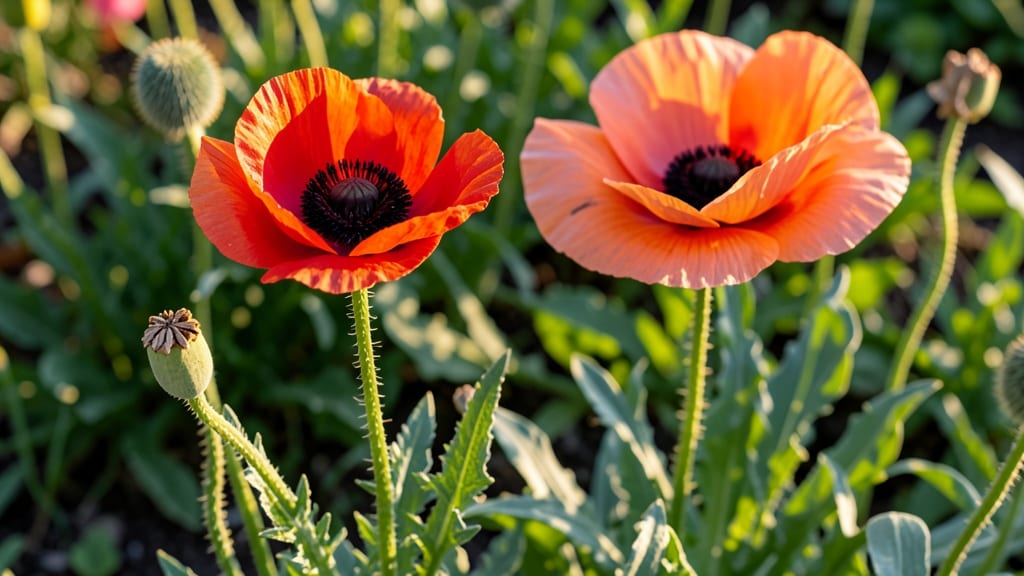
Poppy flowers are annual or perennial plants that complete their life cycle in one growing season, though some varieties self-seed prolifically, returning year after year with minimal gardener intervention. Their post-bloom dieback is a natural survival strategy, not a sign of poor health.
This annual classification might seem confusing when poppies keep reappearing in your garden, but it's all about their clever survival tactics. 🌱 Most poppies produce thousands of tiny seeds before dying back, which scatter naturally to create new plants.
The key difference between annuals and perennials lies in their root systems—poppies develop deep taproots that store energy, allowing their offspring to thrive even when the parent plant disappears. What looks like failure is actually a brilliant reproductive strategy designed for long-term persistence.
If you're hoping to enjoy poppies year after year, focus on creating ideal growing conditions during their single growing season. These plants thrive in well-drained soil with full sun exposure, and they actually prefer minimal care once established.
The secret to their return lies in letting the seed pods mature fully on the plant—removing them too soon cuts off the self-seeding process that keeps your garden blooming.
💡 In This Article
- Why Poppies Die Back After Blooming: The Annual Life Cycle Explained
- Encouraging Poppy Flowers to Return Year After Year: Self-Seeding Secrets
Why poppies die back after blooming: the annual life cycle explained
The annual life cycle of poppies begins with a burst of energy focused entirely on reproduction. Unlike perennials that allocate resources to both growth and survival structures, poppies prioritize seed production over their own longevity.
This strategy is evident in their rapid growth pattern—from seed to full bloom in just 6-8 weeks under ideal conditions. The plant's entire energy reserves are directed toward developing flowers and seed pods, leaving nothing for root systems to persist through winter.
The deep taproot system poppies develop is their only "perennial" trait—this root stores nutrients and water, but it doesn't regenerate the plant itself.
When the above-ground parts die back, they leave behind thousands of tiny seeds (up to 10,000 seeds per plant in some varieties) that contain all the genetic material needed for next year's growth.
This is why you often see poppies returning year after year—they're not the same plants, but their offspring thrive in the same location.
Contrast this with true perennials like peonies, which develop underground rhizomes that store energy and regenerate the plant annually. Poppies skip this stage entirely, instead betting everything on prolific seed production.
Their short lifespan is actually an evolutionary advantage in disturbed environments—where competition is fierce, producing many offspring quickly increases survival odds for at least some seeds.
What most gardeners mistake for failure is actually a highly efficient survival mechanism. The rapid dieback after blooming isn't a sign of poor health—it's the plant completing its life cycle perfectly.
Even the seed pods play a role in this strategy: they often remain on the dying plant until they're fully mature, ensuring maximum seed viability before dispersing through wind or wildlife.
Consider the California poppy (Eschscholzia californica) as a prime example. This species thrives in wildfire-prone areas where annual plants have a natural advantage—they complete their life cycle before fires occur, leaving behind seeds that can germinate in the nutrient-rich soil afterward.
Their bright orange blooms serve a dual purpose: attracting pollinators for reproduction while also signaling to other plants about environmental conditions through chemical cues.
The key insight is that poppies trade longevity for reproductive success. Their entire existence is a sprint toward seed production, with no energy wasted on maintaining living tissue beyond that critical moment. This makes them perfectly adapted to environments where conditions are unpredictable from year to year.